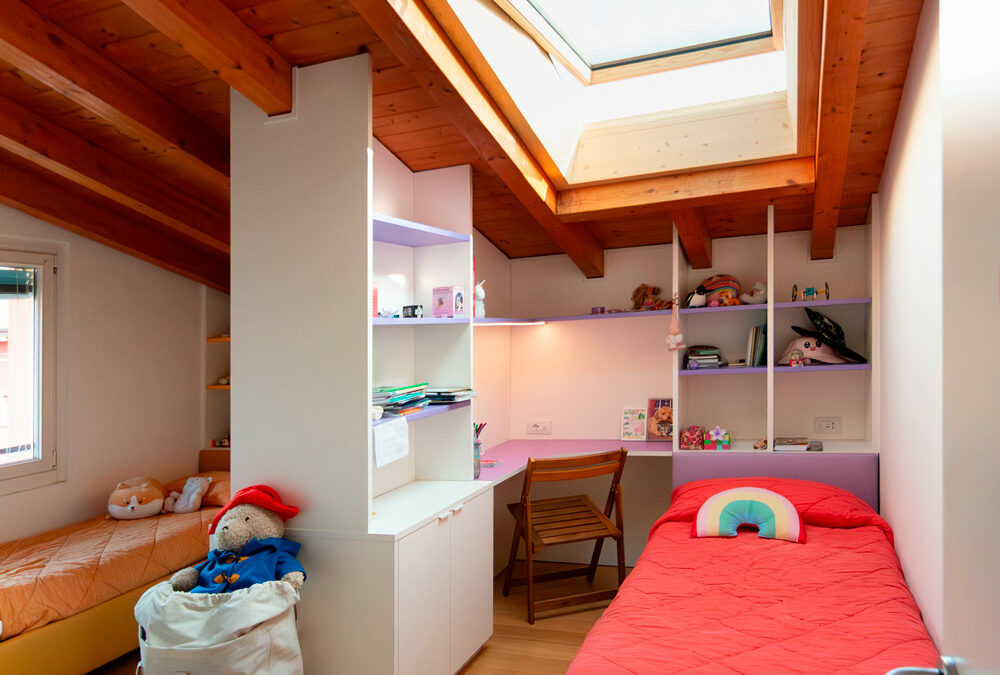
Shared bedroom, a Space-saving solution

Shared bedroom, a Space-saving solution

Designing a shared children’s bedroom requires careful listening, attention to individual needs and a deep understanding of space. When the room is located in an attic, with varying heights and sloping ceilings, the challenge becomes even more engaging.
In this project, we transformed a modern yet intimate attic into a functional, bright and perfectly organized space-saving bedroom, designed to welcome two children of different ages and support them in their everyday life.
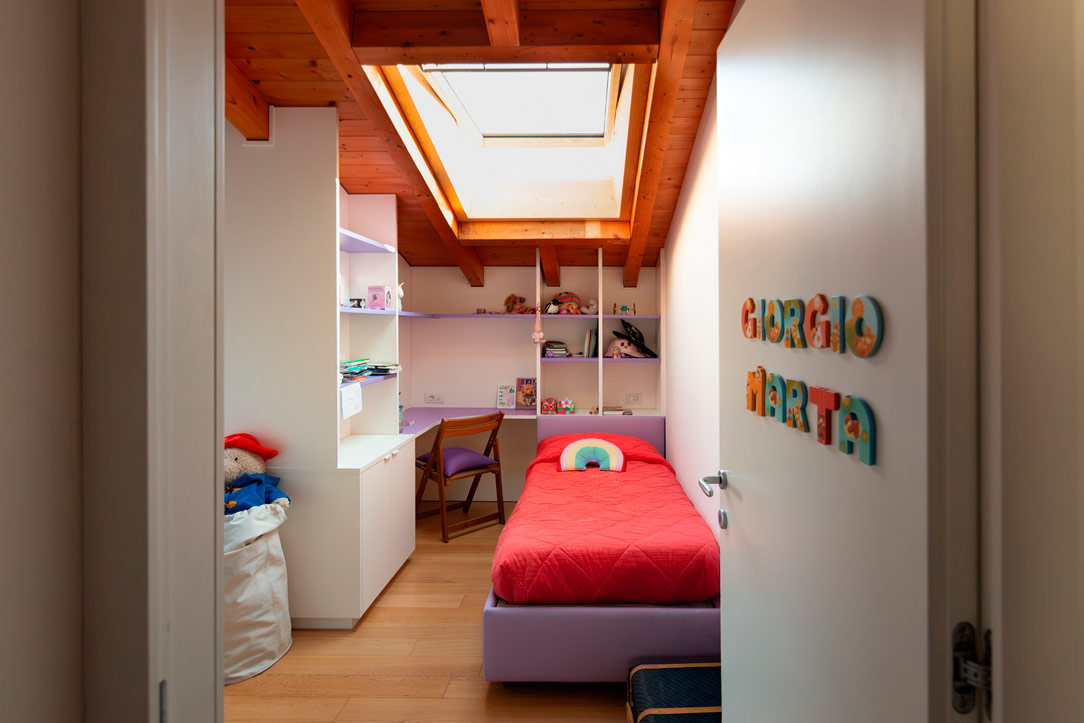
Shared bedroom

Two distinct areas within one space

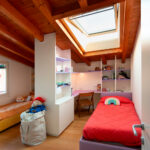
The bedroom benefits from two valuable sources of natural light: a vertical window and a Velux roof window. Light enters from different directions, allowing us to divide the room into two well-lit areas, each dedicated to one child, ensuring visual comfort and a clear, well-ordered perception of the space.

An existing wardrobe, positioned along a side wall, remained shared between the two children. The true heart of the project is a custom-made dividing storage wall, developed at the center of the room: an element that separates without closing off, organizes without weighing down, and maintains balance, continuity and dialogue between the two areas.
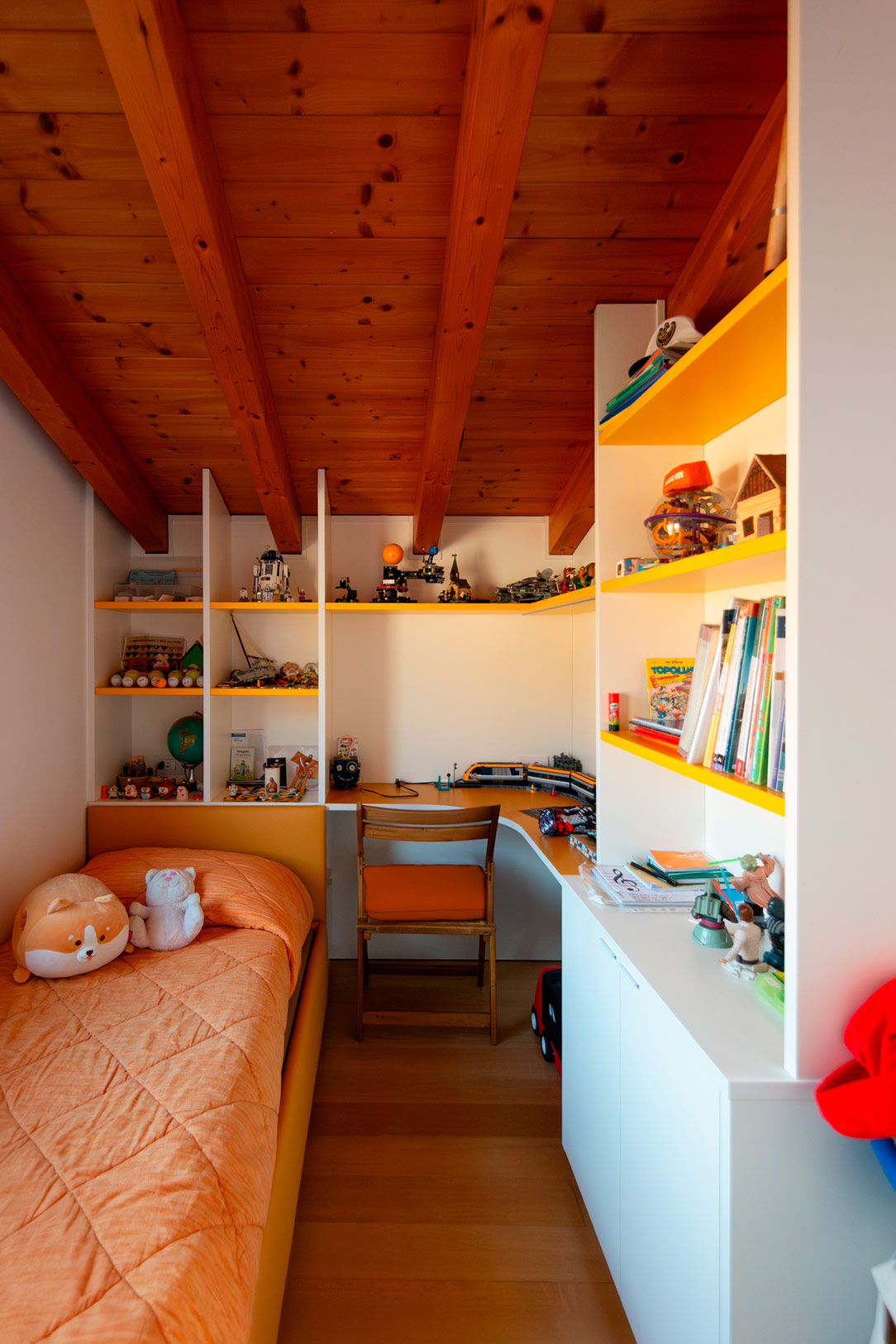
portion 1 Space-saving bedroom
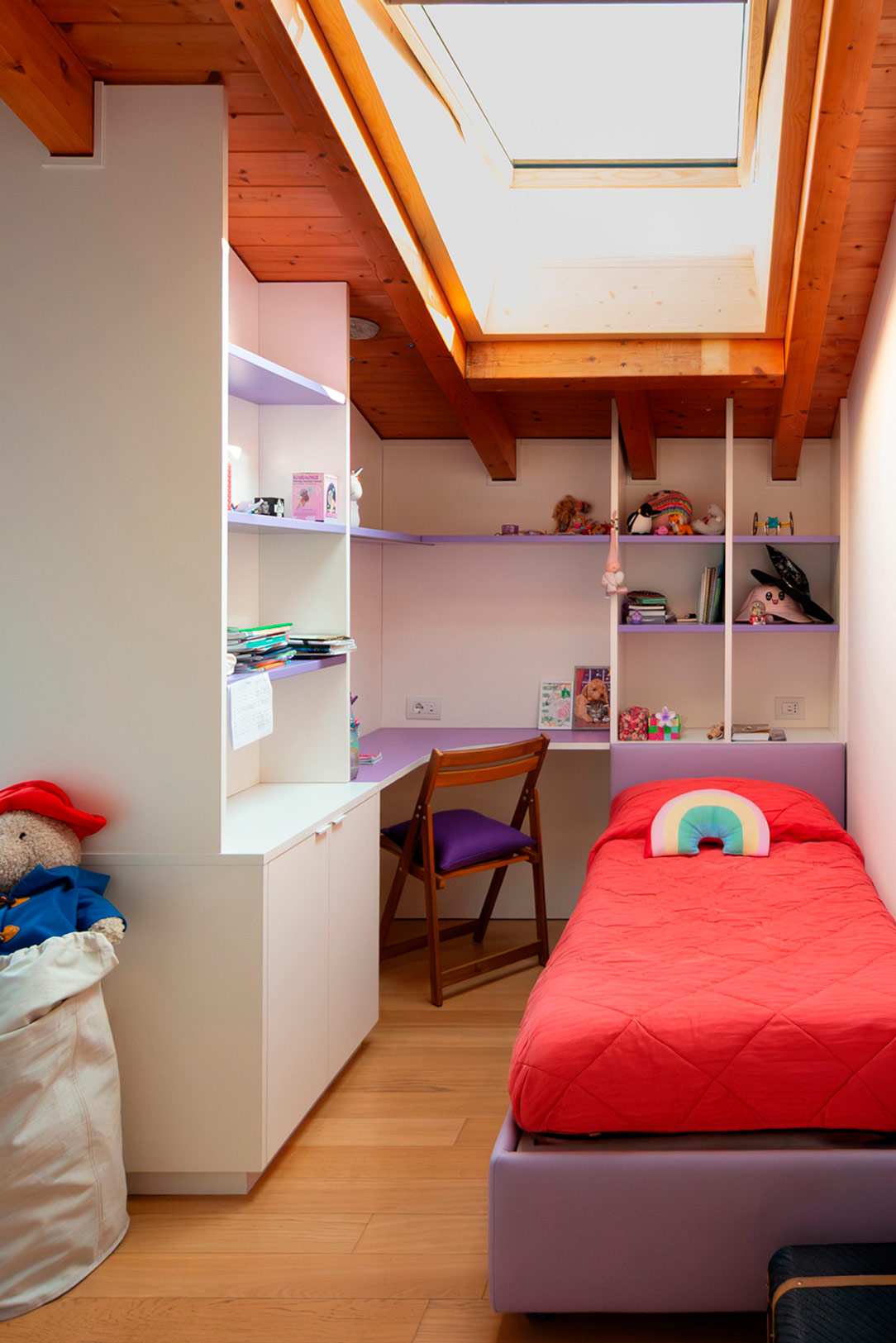
portion 2 Space-saving bedroom

Study area, bookshelf and storage: everything in its place

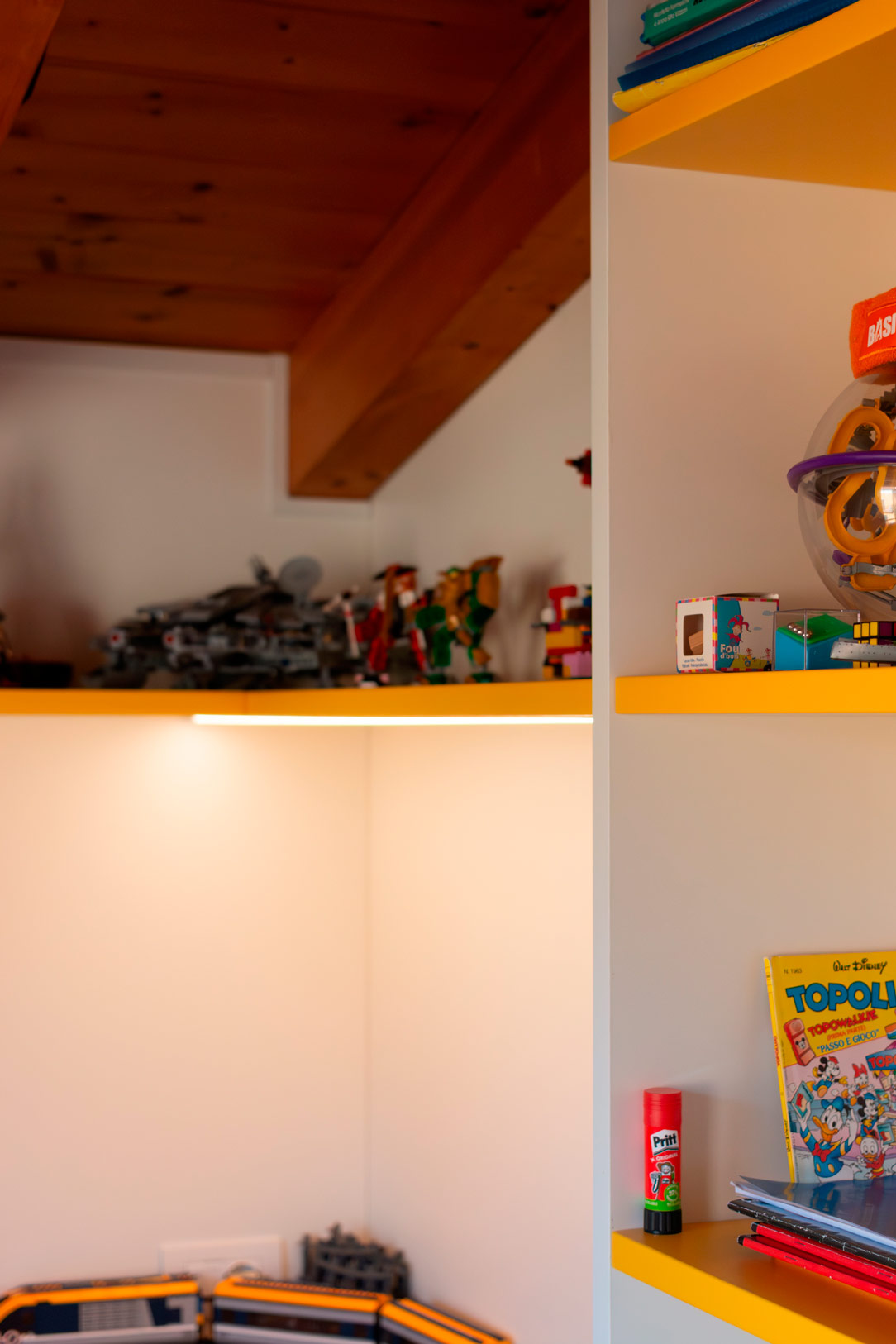
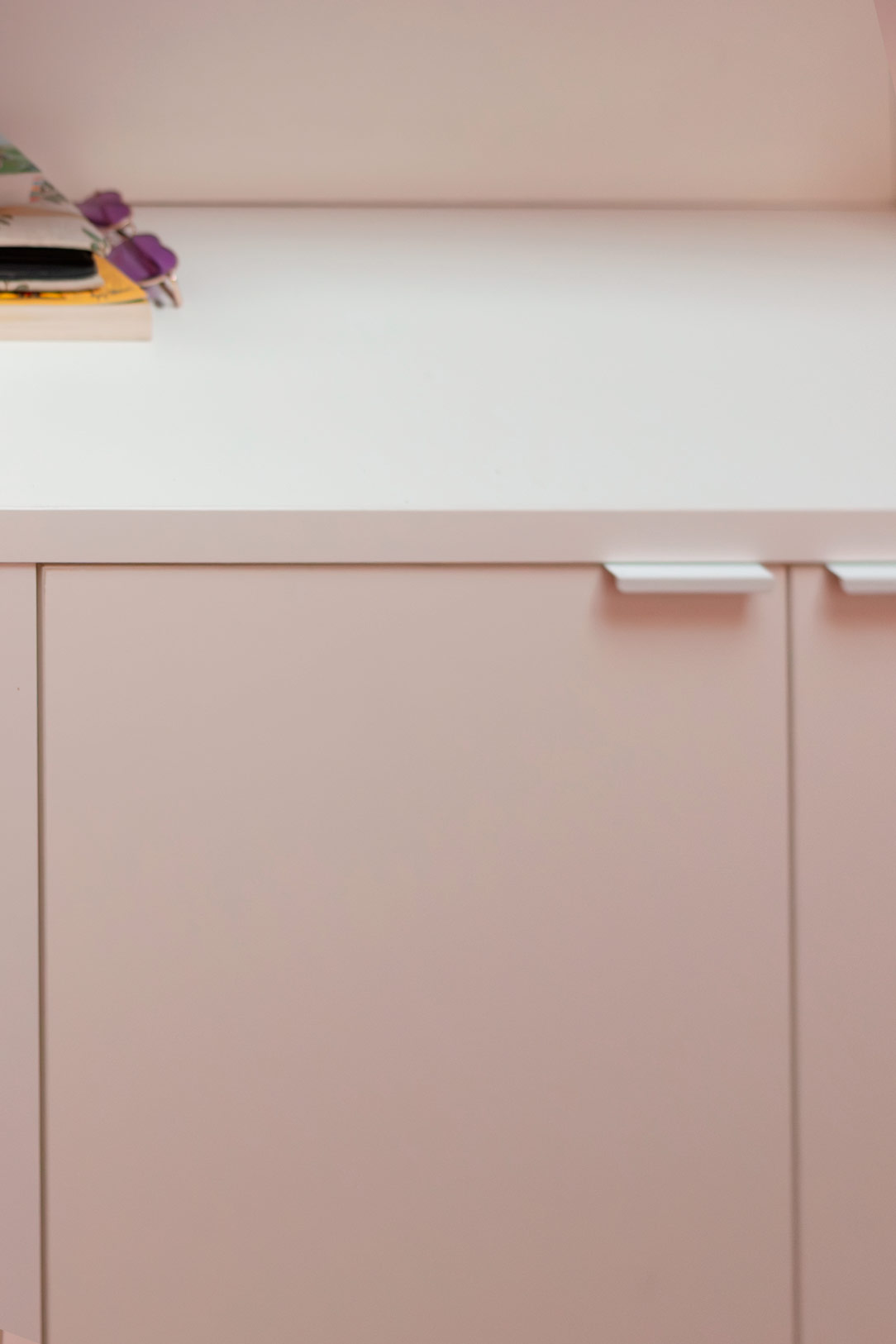
Each side of the bedroom was designed in a mirrored and complete way. Both workstations include a corner study desk, precisely lit by under-cabinet LED lighting, a bed-back bookshelf, integrated and easily accessible, and a second section of furniture shaped to follow the slope of the ceiling.

Shelves, closed compartments and storage units hold books, notebooks and school supplies, turning every available centimeter into usable space. The bespoke design approach allowed us to see the attic’s constraints not as limits, but as an opportunity to create furniture that follows and enhances the architecture.
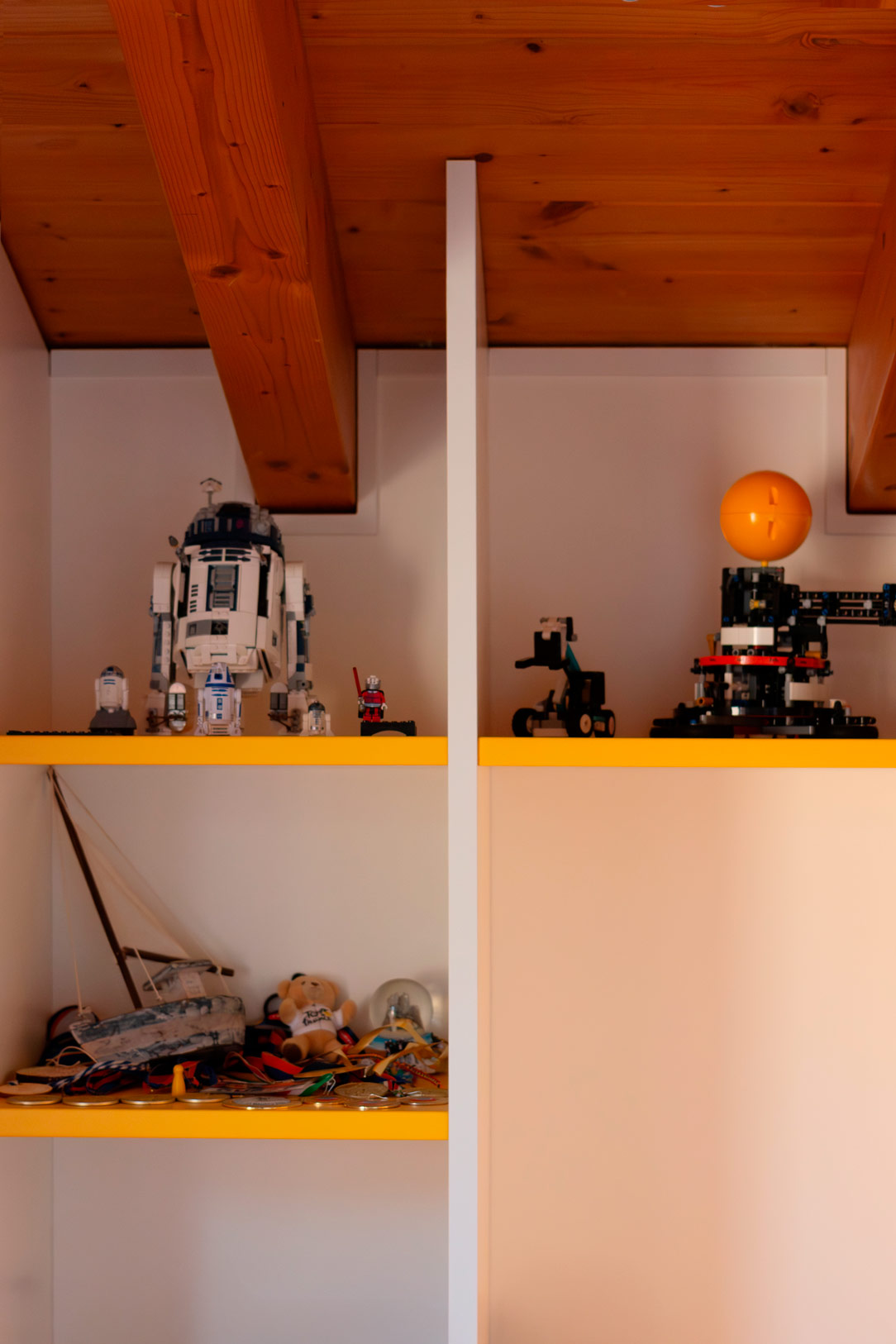
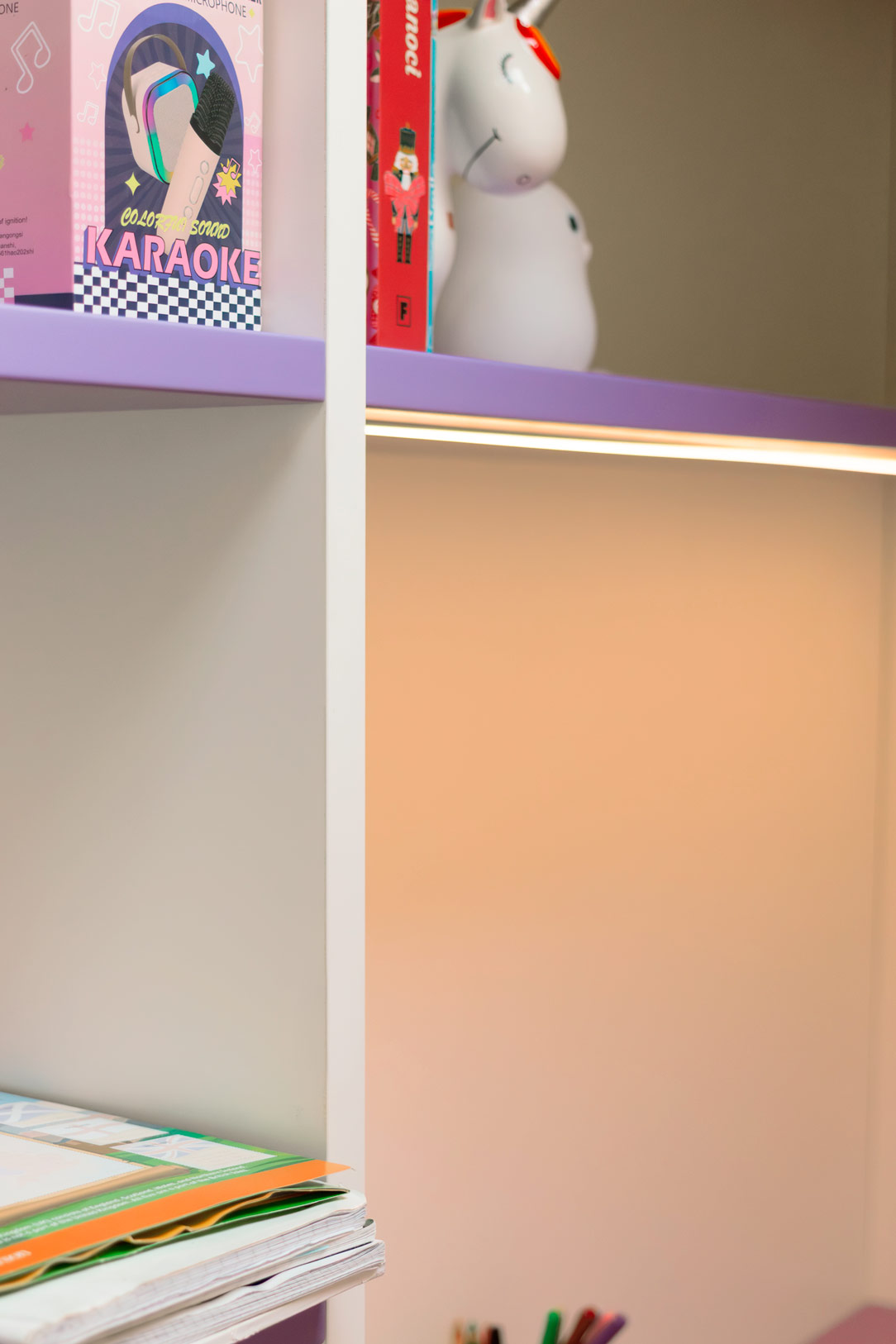
shaped shelves
led on the desk
led on the desk
doors closed
backbed with shelves
drawer

Storage beds: practicality that makes a difference

The two single beds are storage beds, an ideal choice for a space-saving children’s bedroom. The lifting mechanism allows the bed to be raised effortlessly, even when fully made with pillows included. Inside, there is ample space for duvets, suitcases and everything that does not need to remain visible, keeping the room tidy and visually light.

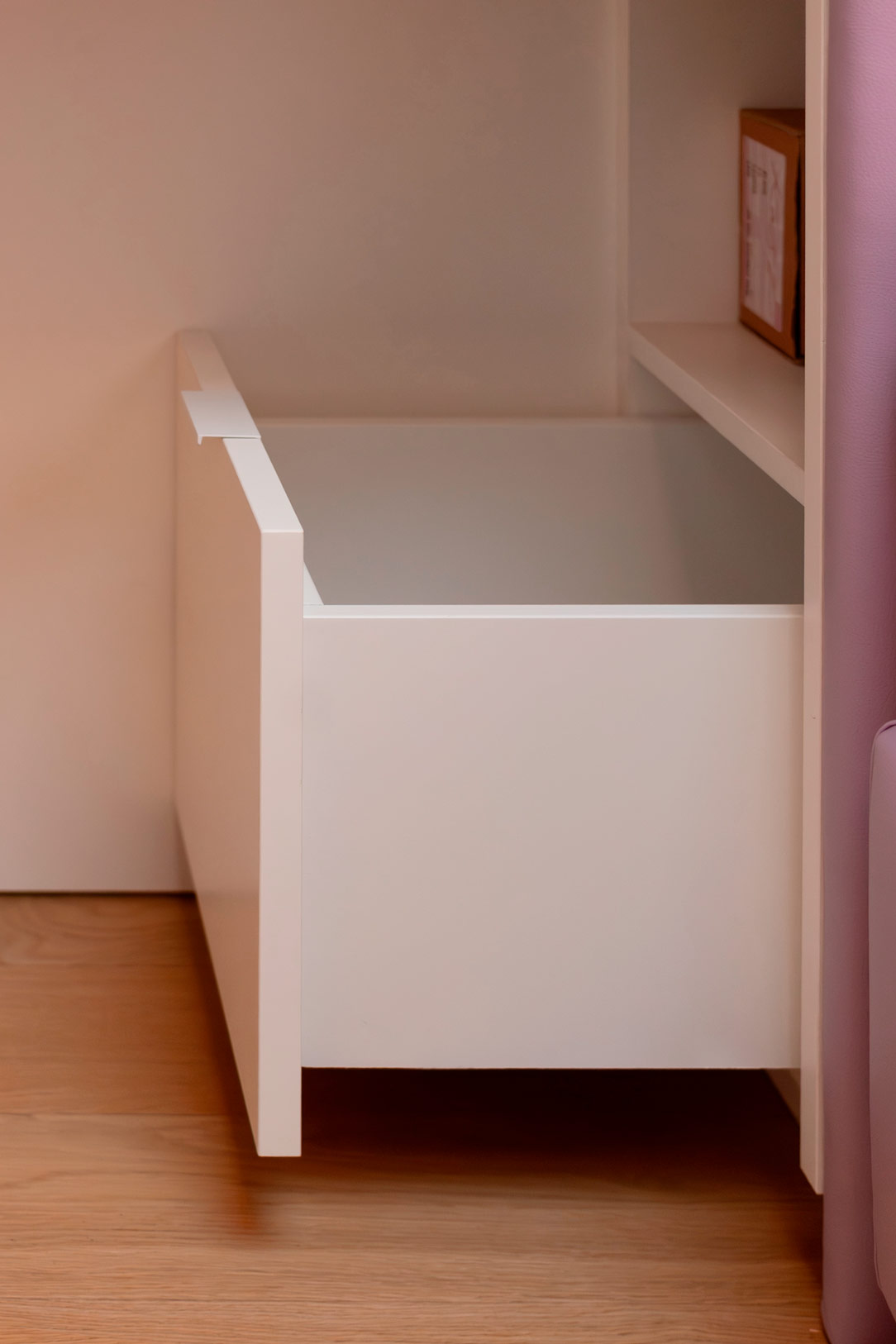
The bed is independent from the headboard and equipped with concealed wheels, making it easy to move for more thorough cleaning. The headboard itself is fixed to the bed-back bookshelf, which also takes advantage of the lower depth with a side shelf and a large pull-out drawer, designed for items that need to be within easy reach.
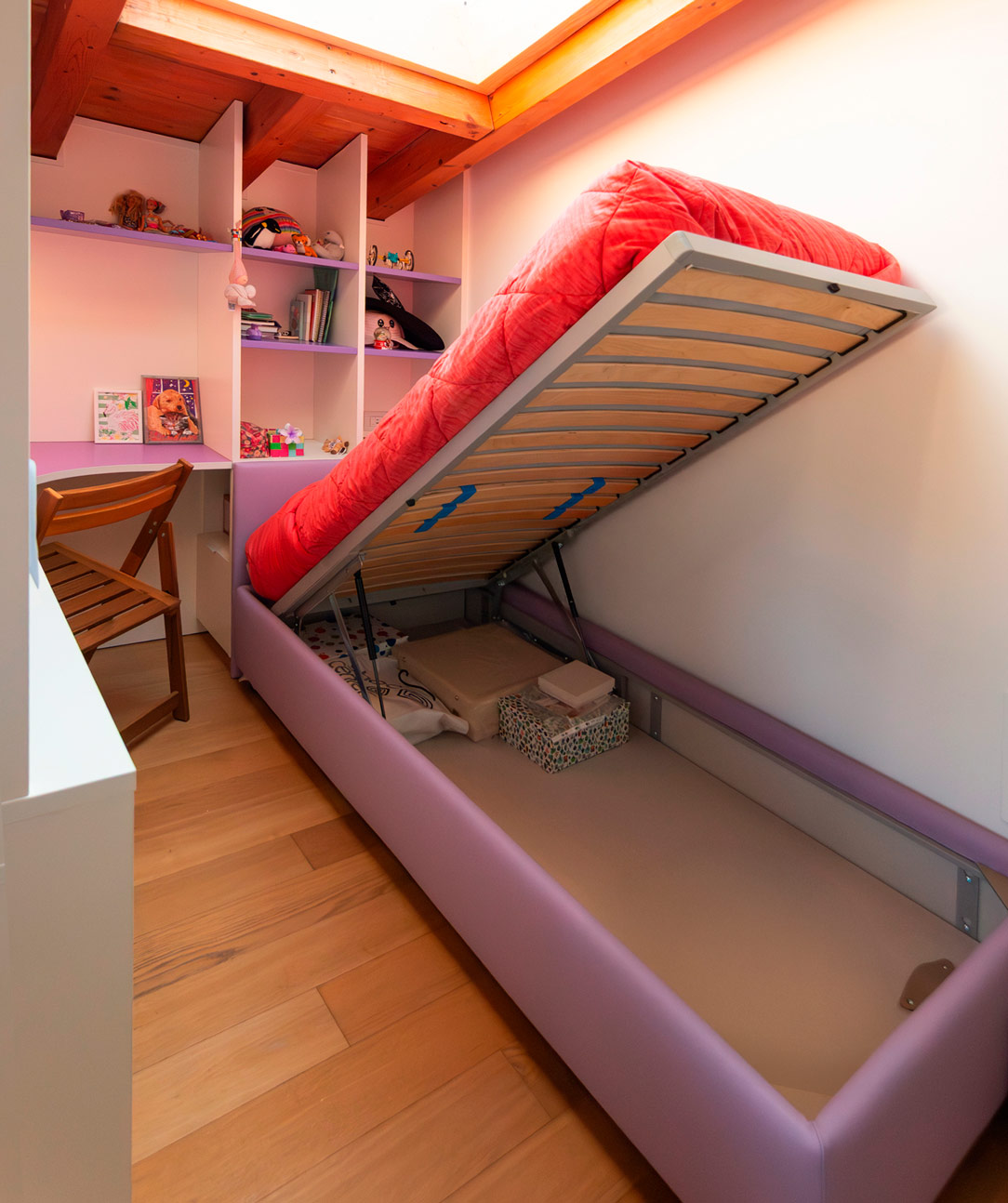
Storage bed

Colours chosen by the children, harmony throughout the room

La palette cromatica nasce direttamente dalle preferenze dei bambini. Il bianco,

The colour palette comes directly from the children’s preferences. White, chosen as the base colour, makes the space bright and airy, leaving room for colour accents that define the two areas.

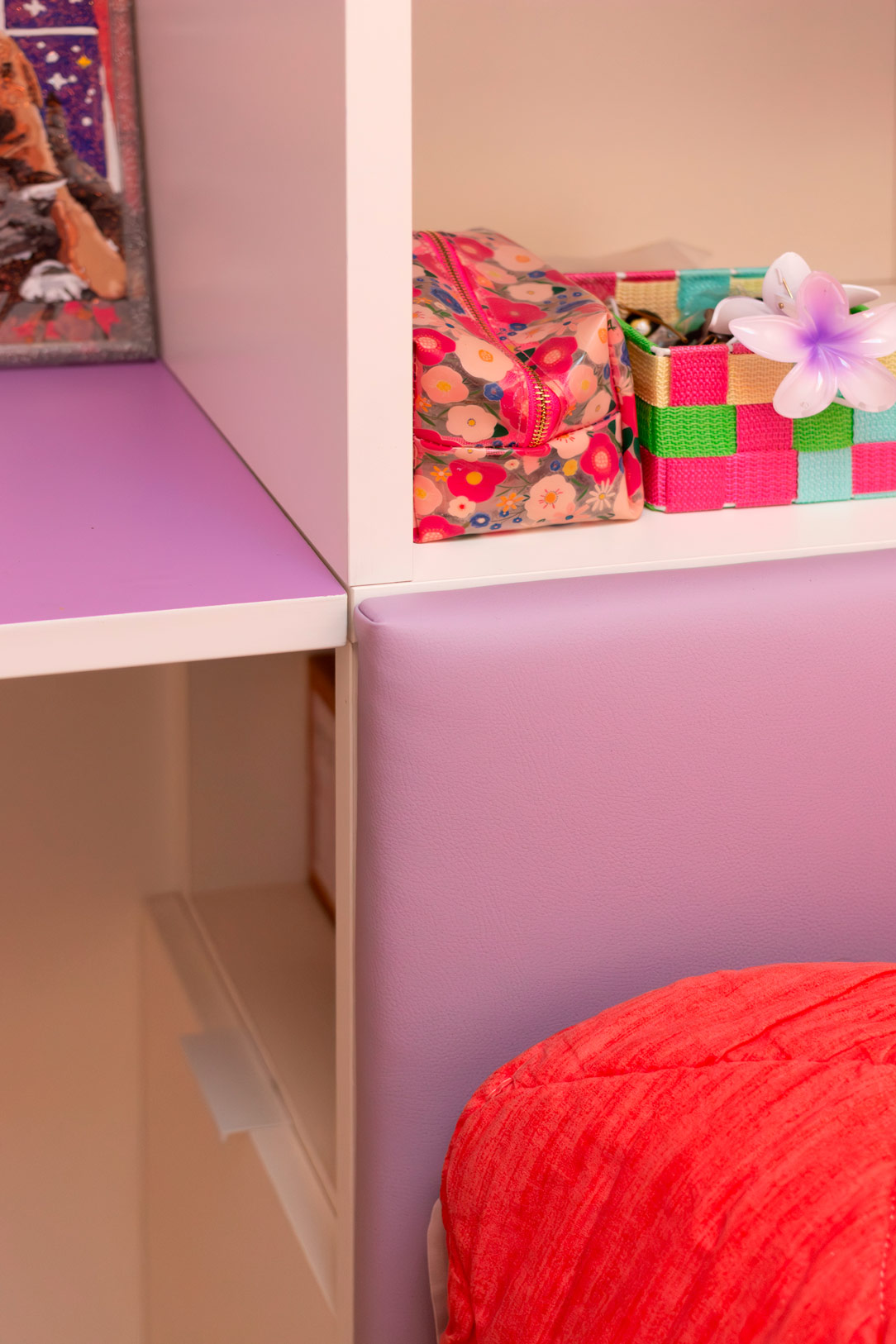
On one side, purple is used for shelves, desk and the eco-leather bed upholstery; on the other, mustard yellow is repeated in the same mirrored elements. Different colours, yet perfectly harmonious, helping each child to recognise and feel ownership of their own space without disrupting the overall balance of the room.

At this link, you can find another example of a space-saving children’s bedroom.
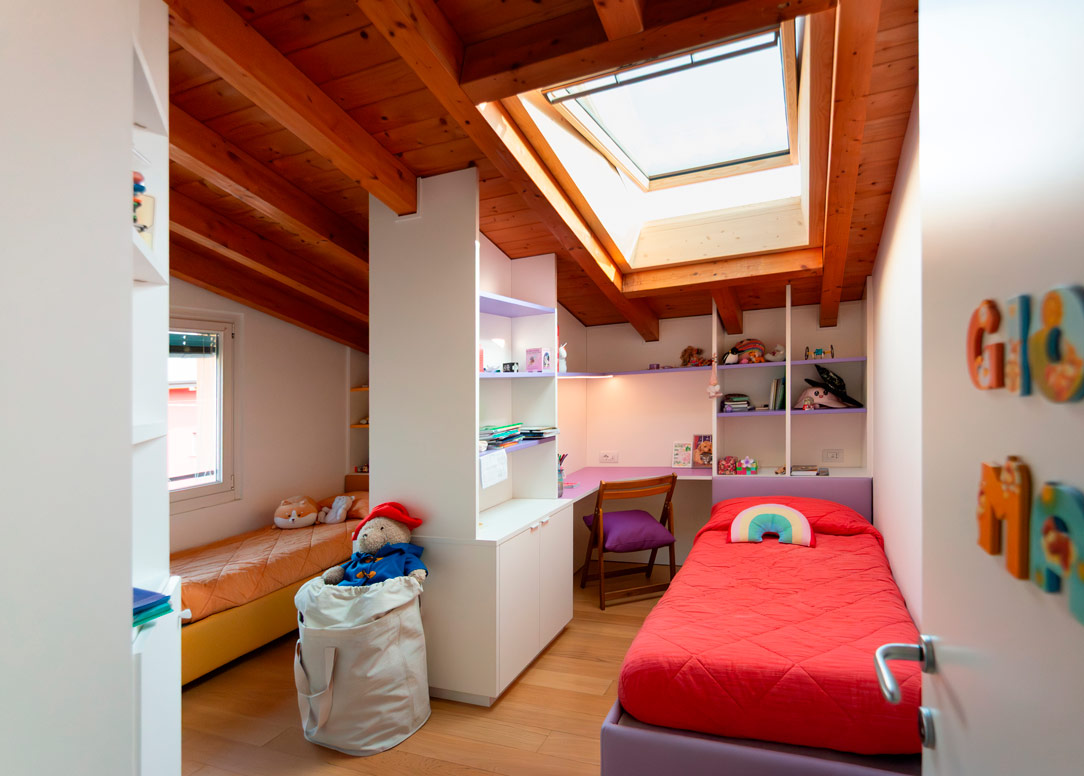
colors violet and mustard yellow

Bunk Beds and Multifunctional Kids’ Room

Bunk Beds and Multifunctional Kids’ Room

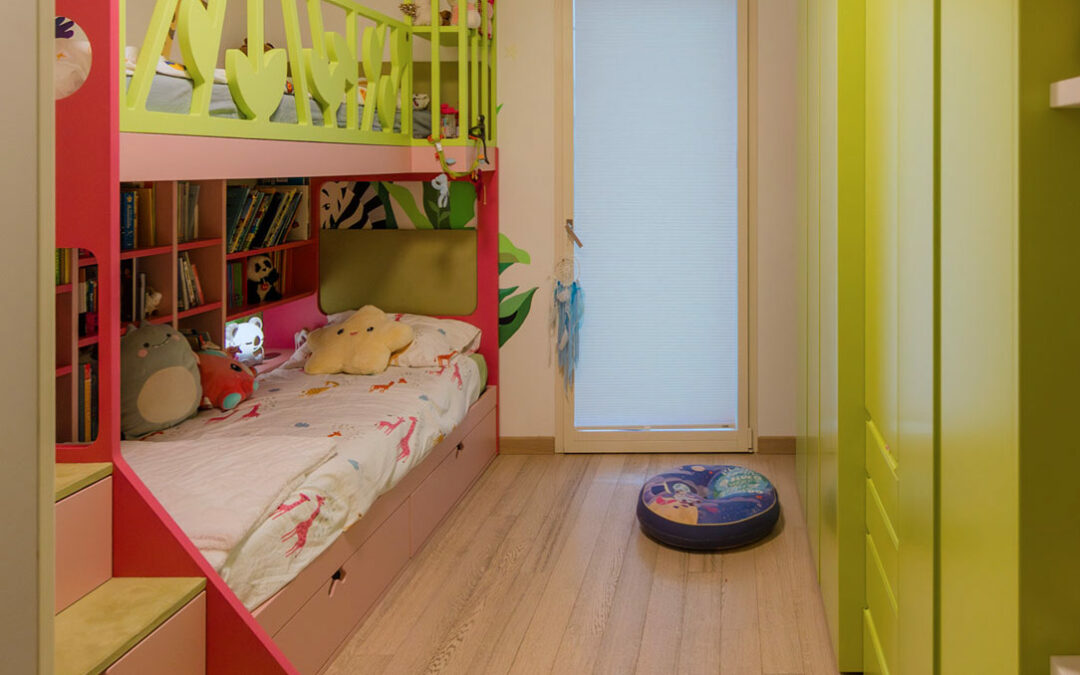
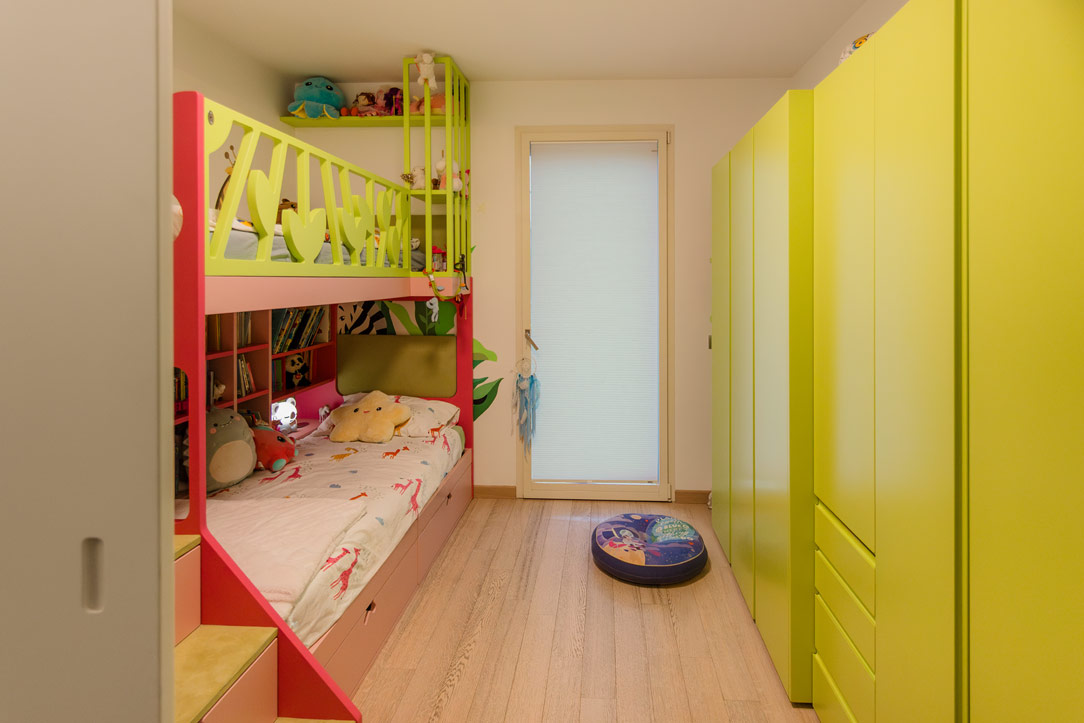
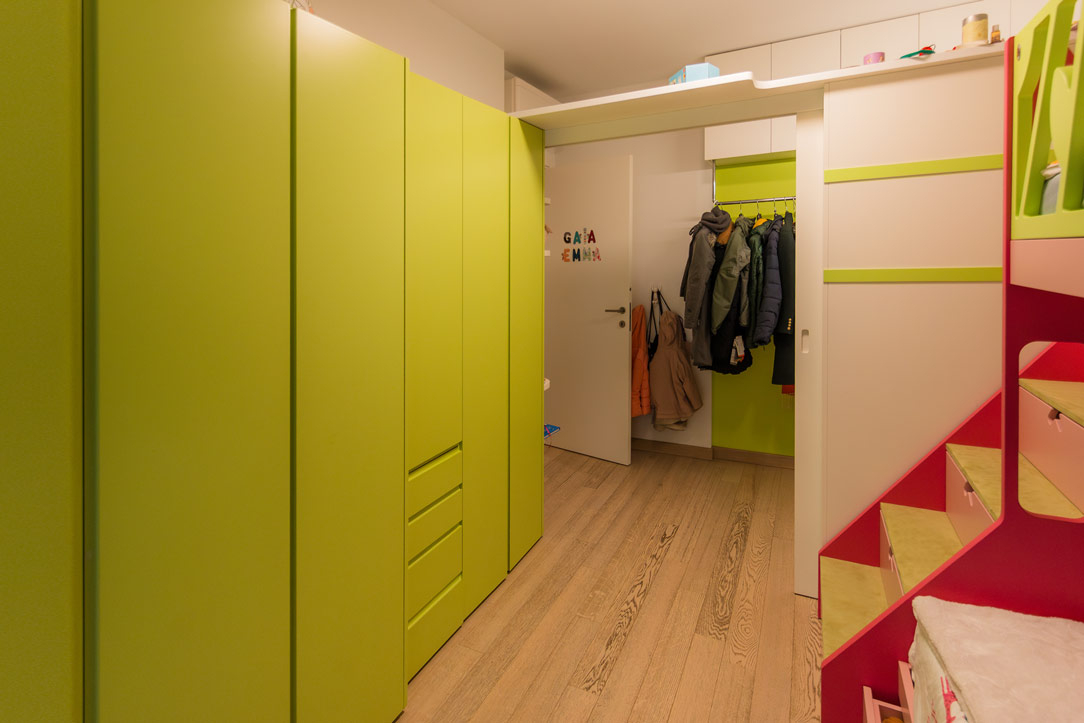
When space at home feels limited and needs are constantly growing, creative design can turn a simple kids’ room into a multifunctional, welcoming environment, perfect for children. This project showcases how two equipped bunk beds can become the centerpiece of an optimized kids’ room, complete with vibrant colors and space-saving solutions.

kids room bunk bed

The Challenge of Space: Harmonizing Kids’ Room and Storage

In a three-room apartment with diverse spatial needs, the second bedroom was initially designed with cabinetry to support the household. However, the arrival of two young daughters required a complete redesign of the space, transforming it into a kids’ room capable of housing their beds, toys, and a study corner, without sacrificing its original functionality. This transformation was not only aesthetic but also practical, turning the new room into a prime example of how to creatively manage space while meeting the growing needs of a family.

From custom Montessori-style small beds, the organization evolved into a thoughtfully structured kids’ room.
door open and door closed

Bunk Beds: Multifunctional and Storage-Friendly Solutions

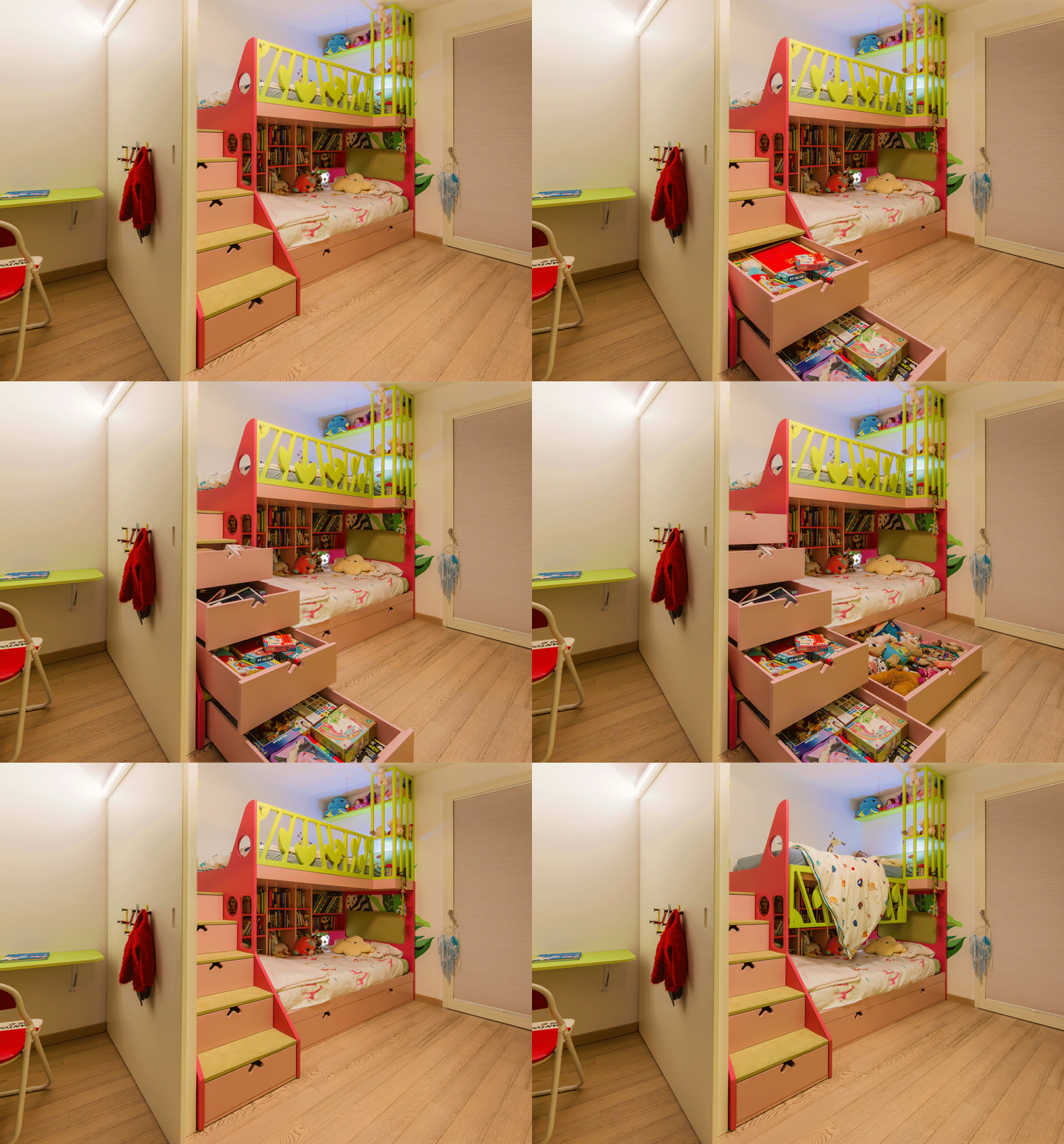
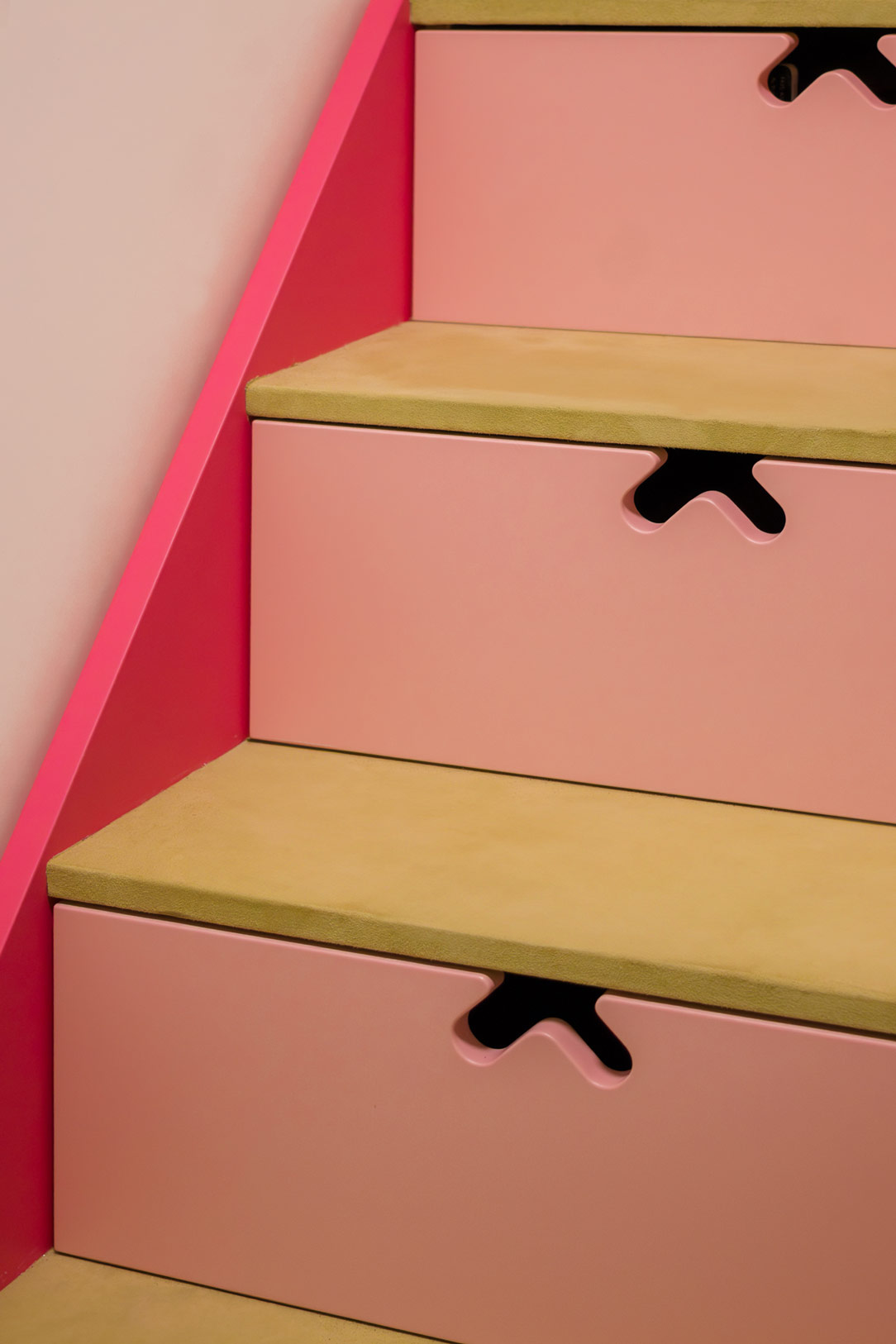
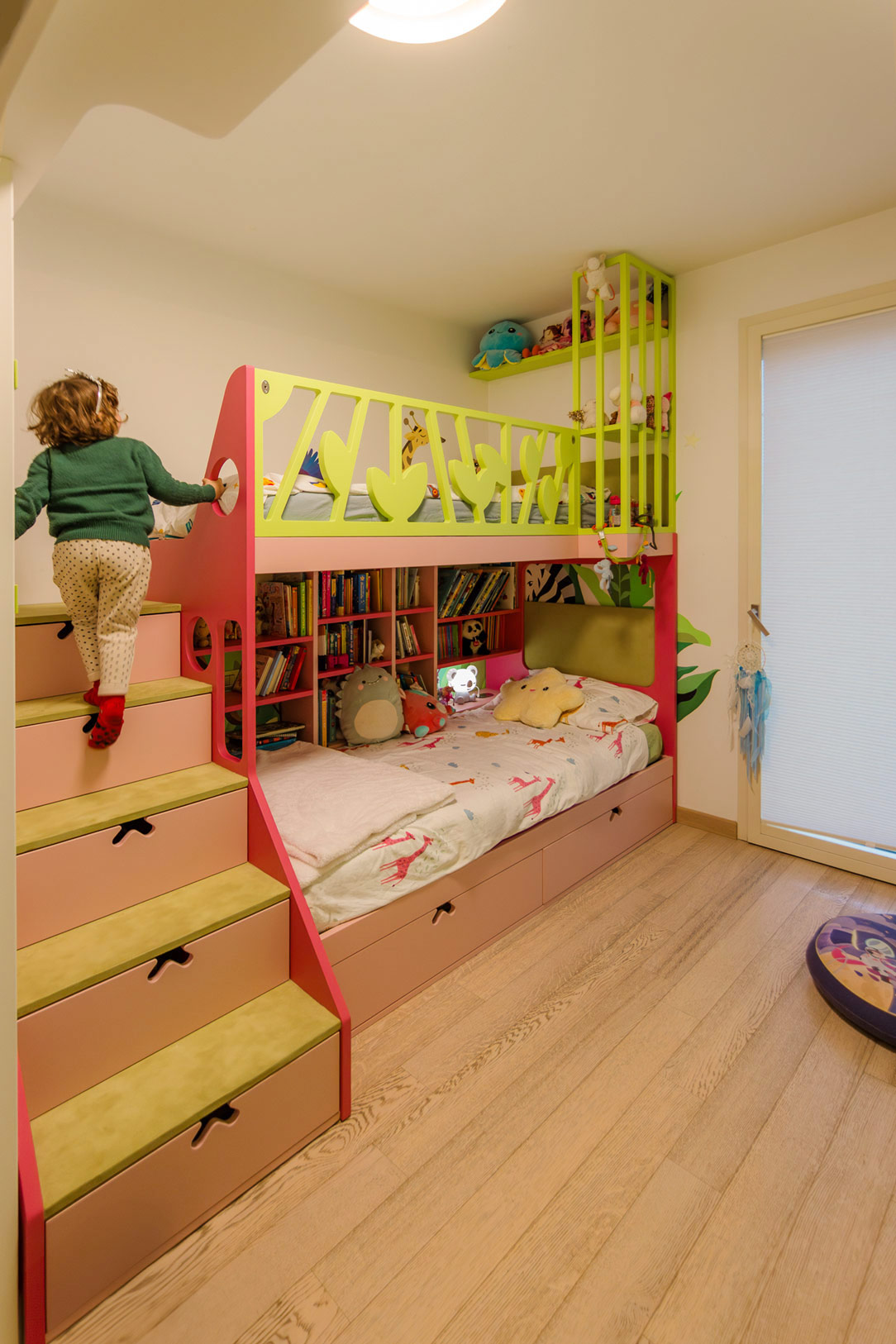
The bunk beds are the focal point of the project, utilizing every available inch. These are not merely offset stacked beds but a multifunctional structure offering ample storage space alongside comfort for the children. The staircase leading to the upper bunk doubles as a series of storage drawers, with the lower steps being deeper to accommodate larger items like bulky toys.

drawers open kids room
details shaped handles
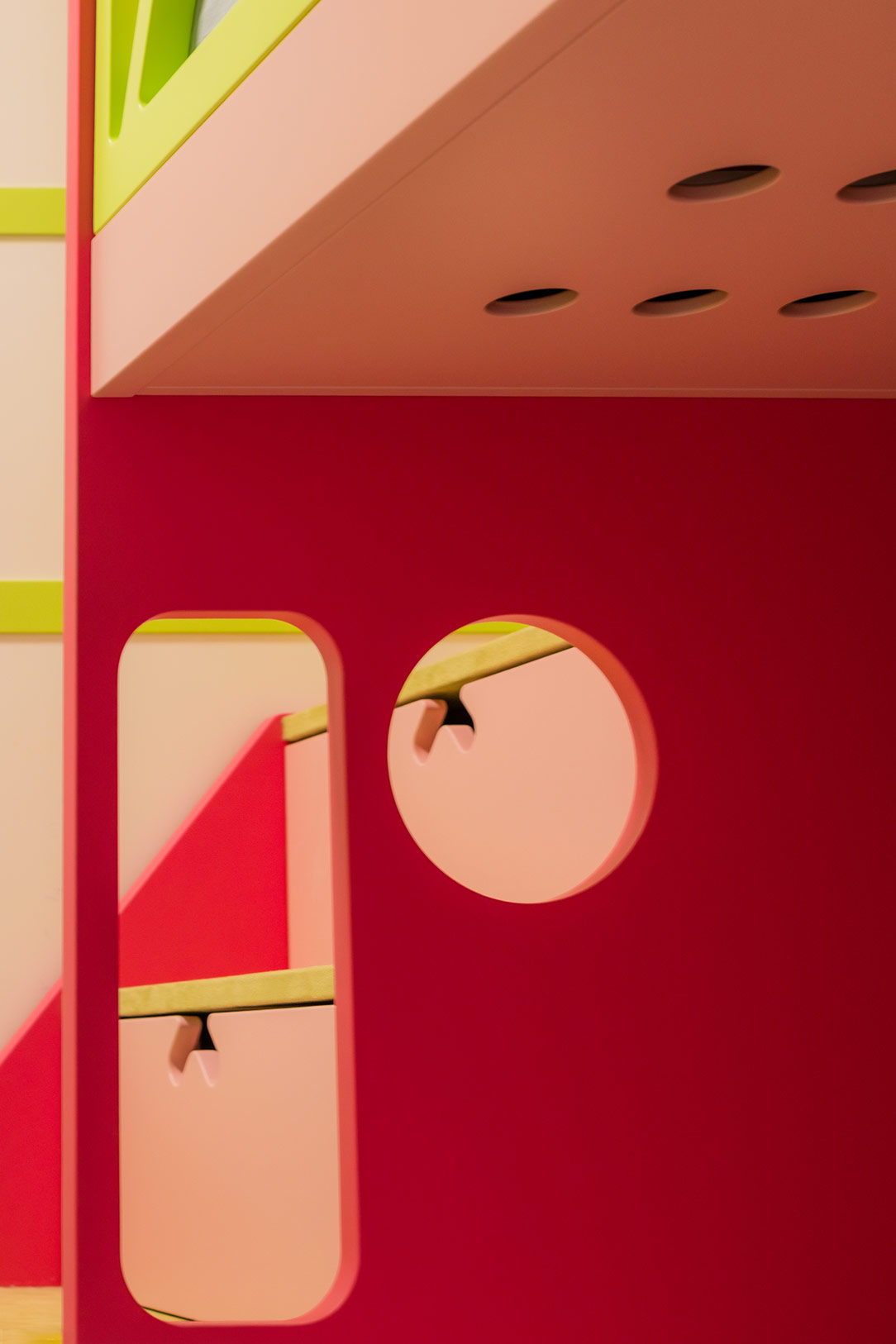
details shaped bed structure

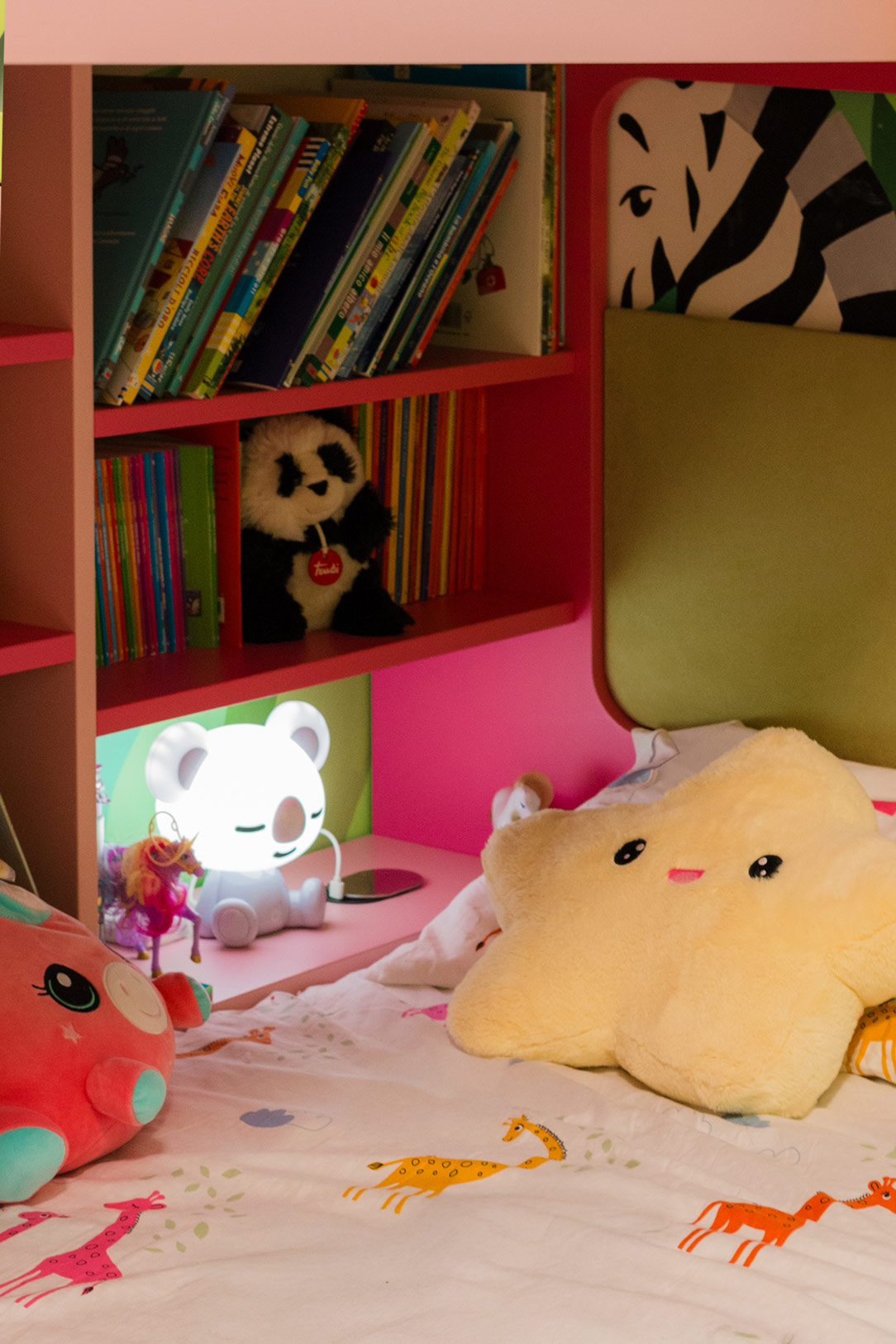
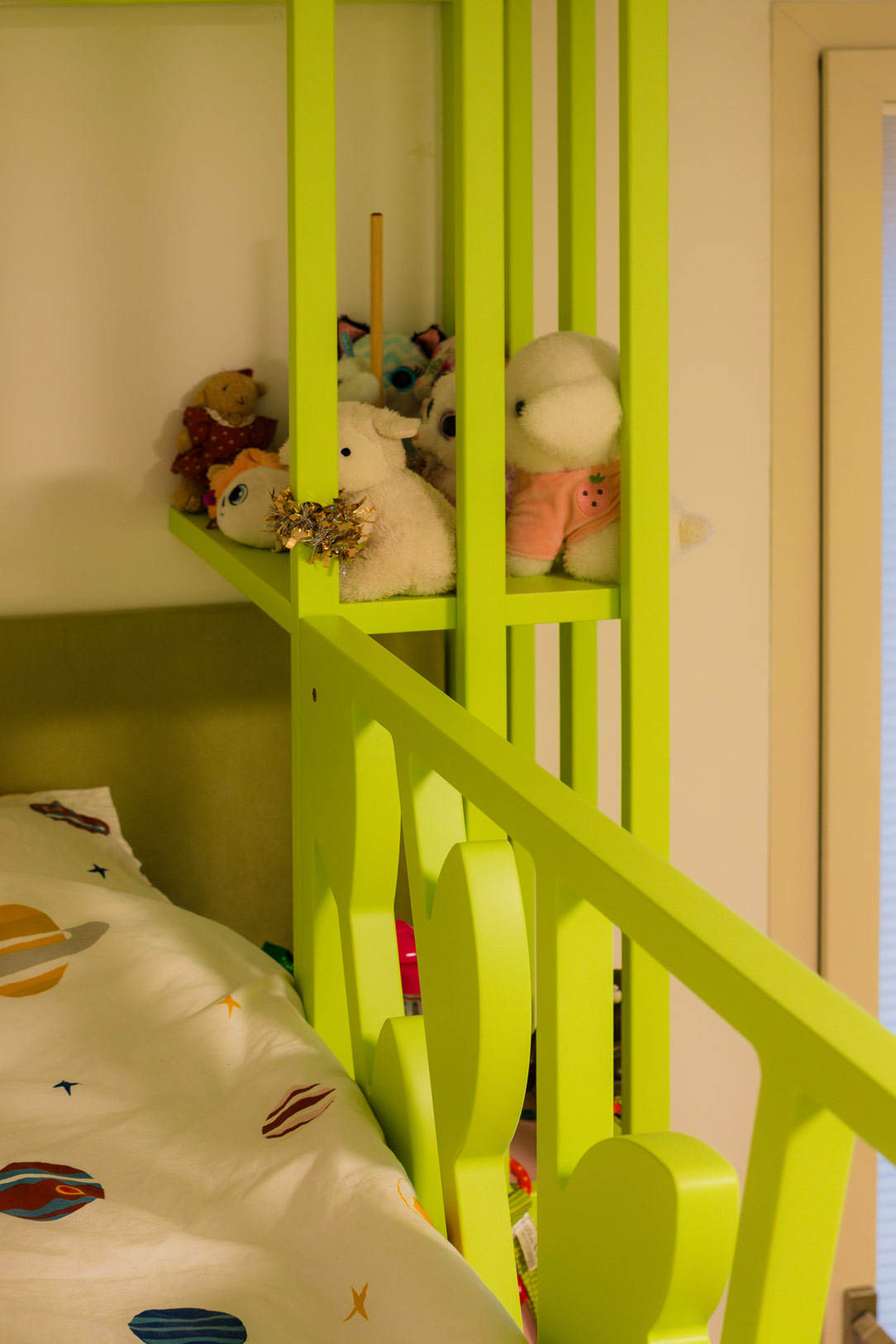
The lower bunk includes two pull-out drawers that take advantage of the full depth of the bed frame, perfect for storing stuffed animals, boxes, and more. Additionally, an asymmetrical bookshelf, about 40 cm deep, is nestled in the offset section, providing organized storage for books of varying sizes. The upper bunk is equipped with open shelves near the headboard, functioning as convenient storage or a nightstand for items the children want within reach during rest times.

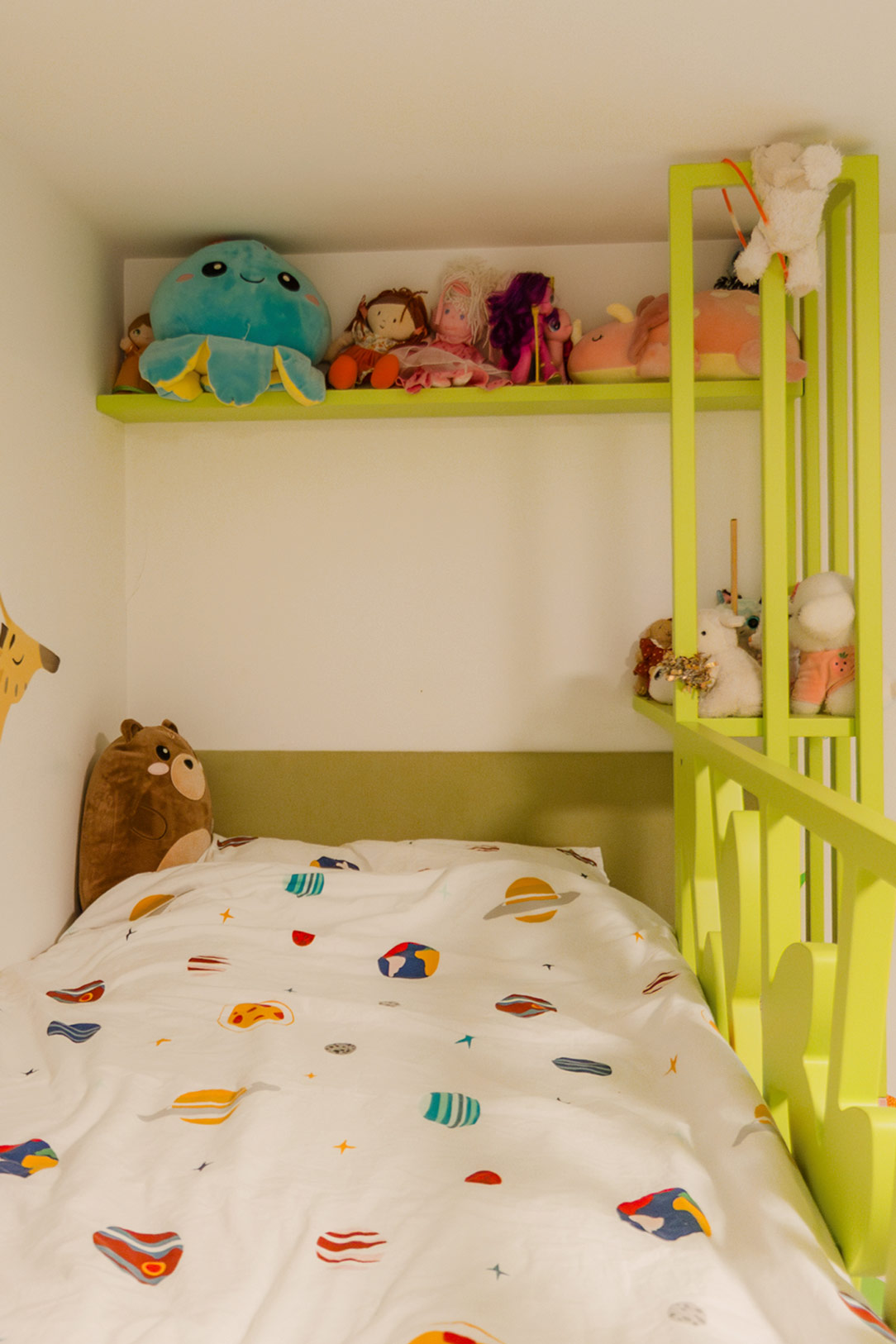
details upper bed
bookshelf
kids room wardrobe

Colors and Atmosphere: A Playful, Personalized Kids’ Room

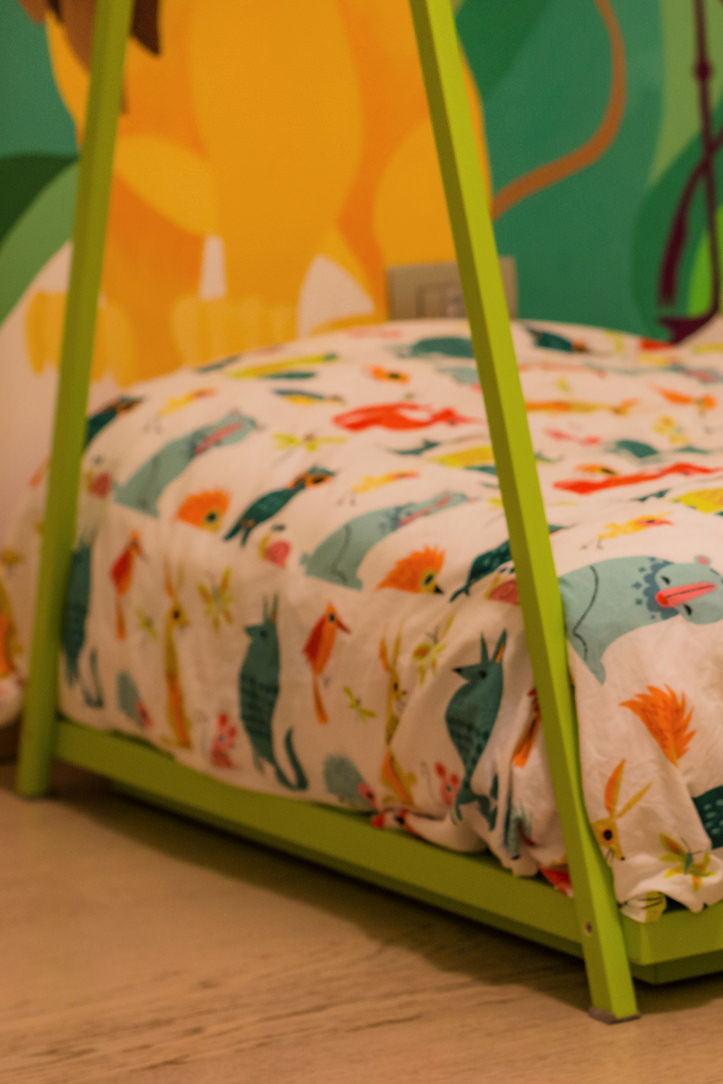
Colors play a crucial role in making the kids’ room inviting and lively. The bright green of the protective barrier echoes the jungle-themed mural on the back wall and matches the existing cabinetry. This shade, combined with two tones of pink—one bold and the other softer—creates a cheerful and imaginative environment perfect for sparking creativity in the little ones.

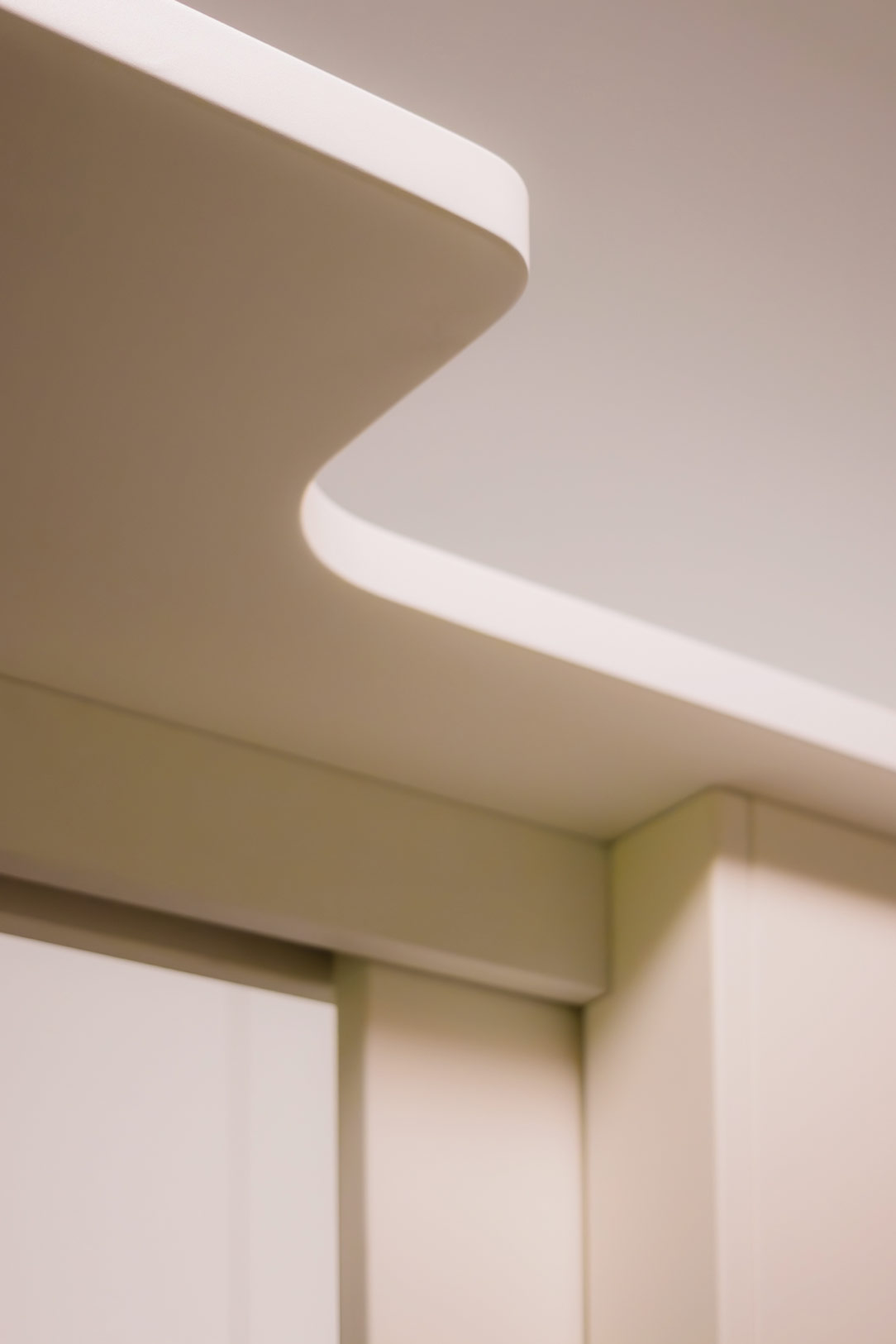
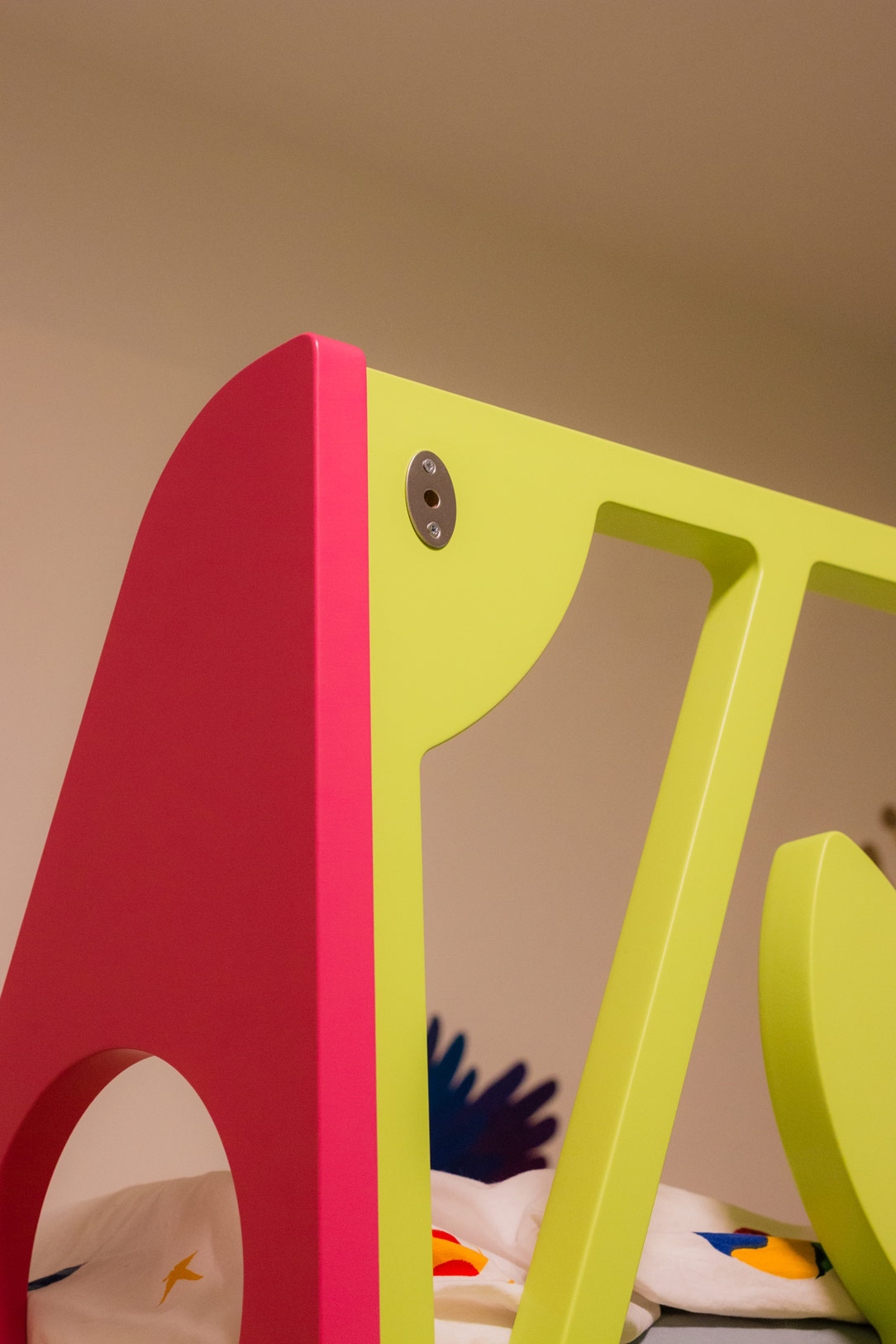
Details like the rounded shapes of the barrier and the shelf ends add to the room’s harmonious and safe design, ensuring a balance between aesthetics and functionality.

kids room bunk bed

Study Zone and Storage: Functionality for the Whole Family

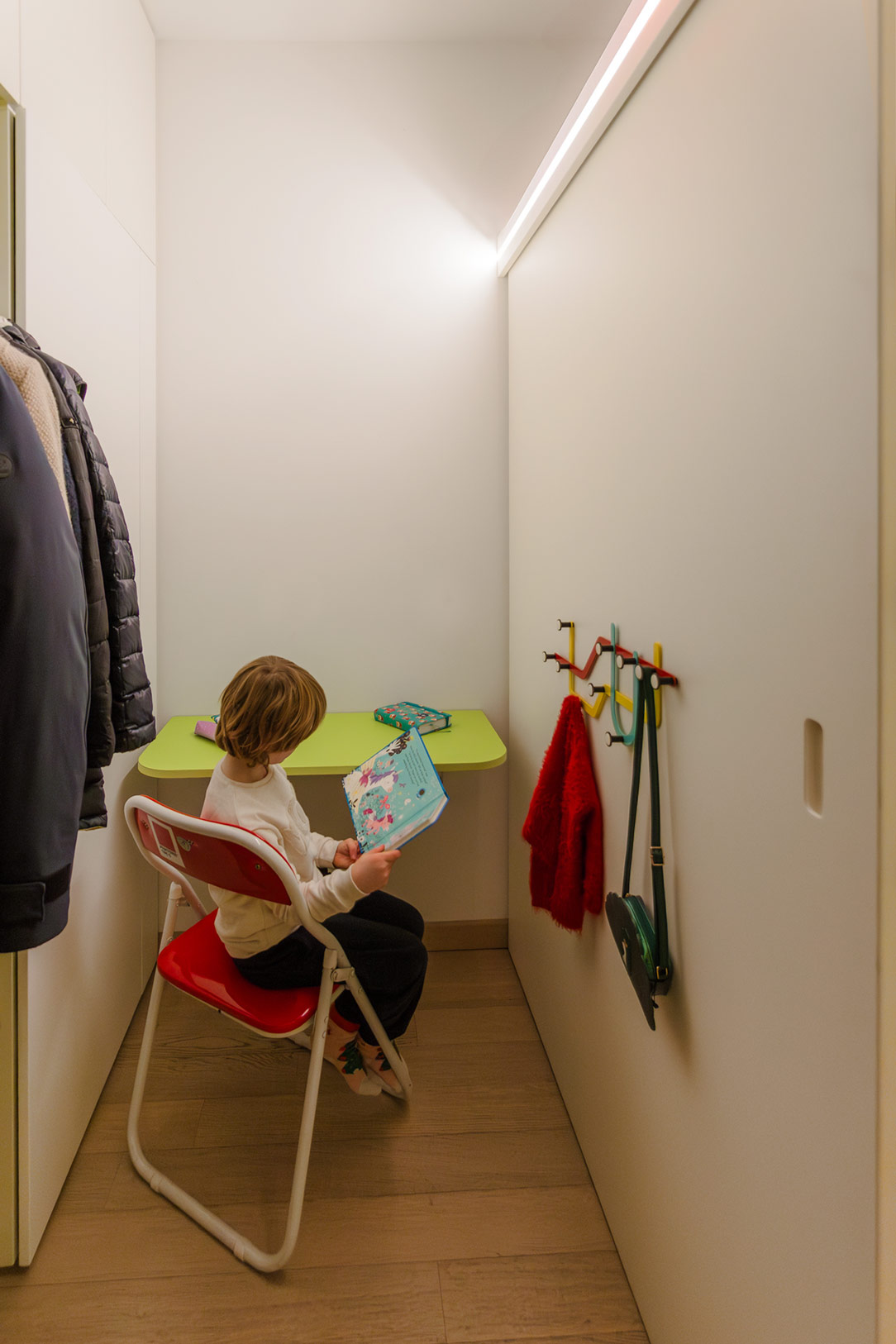
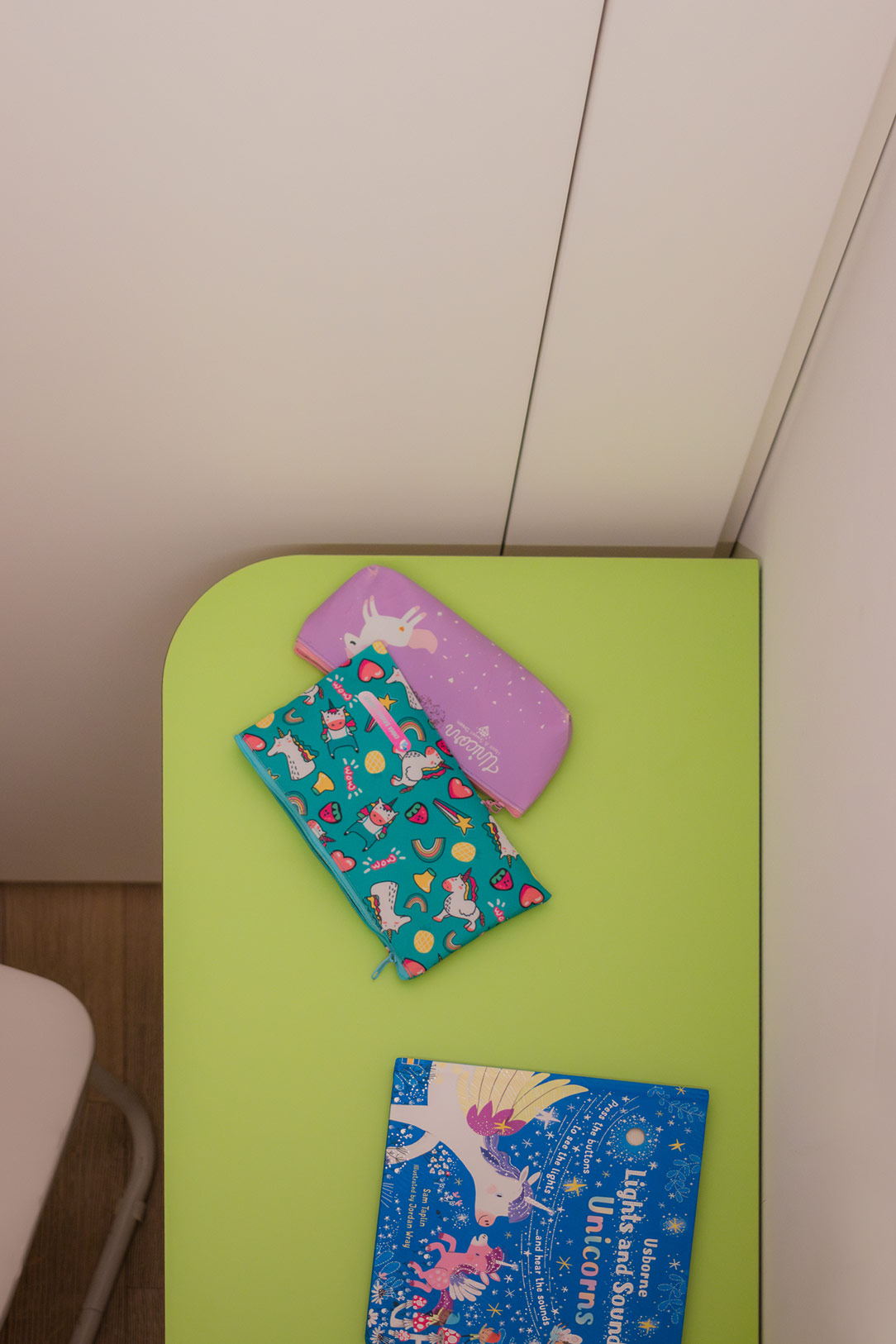
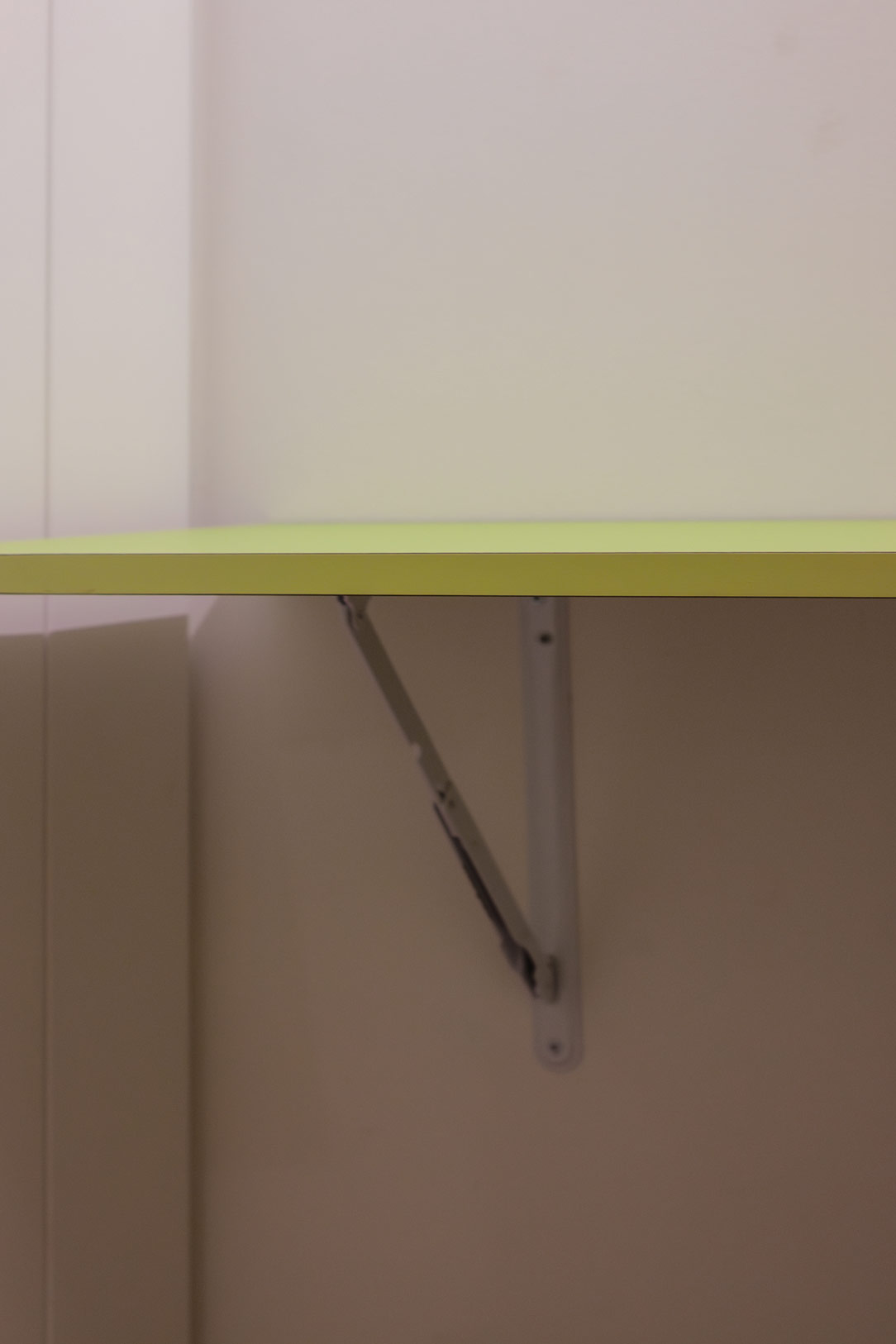
The available space was maximized by creating a small study zone between the sleeping area and the storage closet. A foldable, green, rounded work surface can be set up when needed, transforming into a handy desk for homework or creative activities. When not in use, the table easily folds back, freeing up the area.

study zone
details work surface

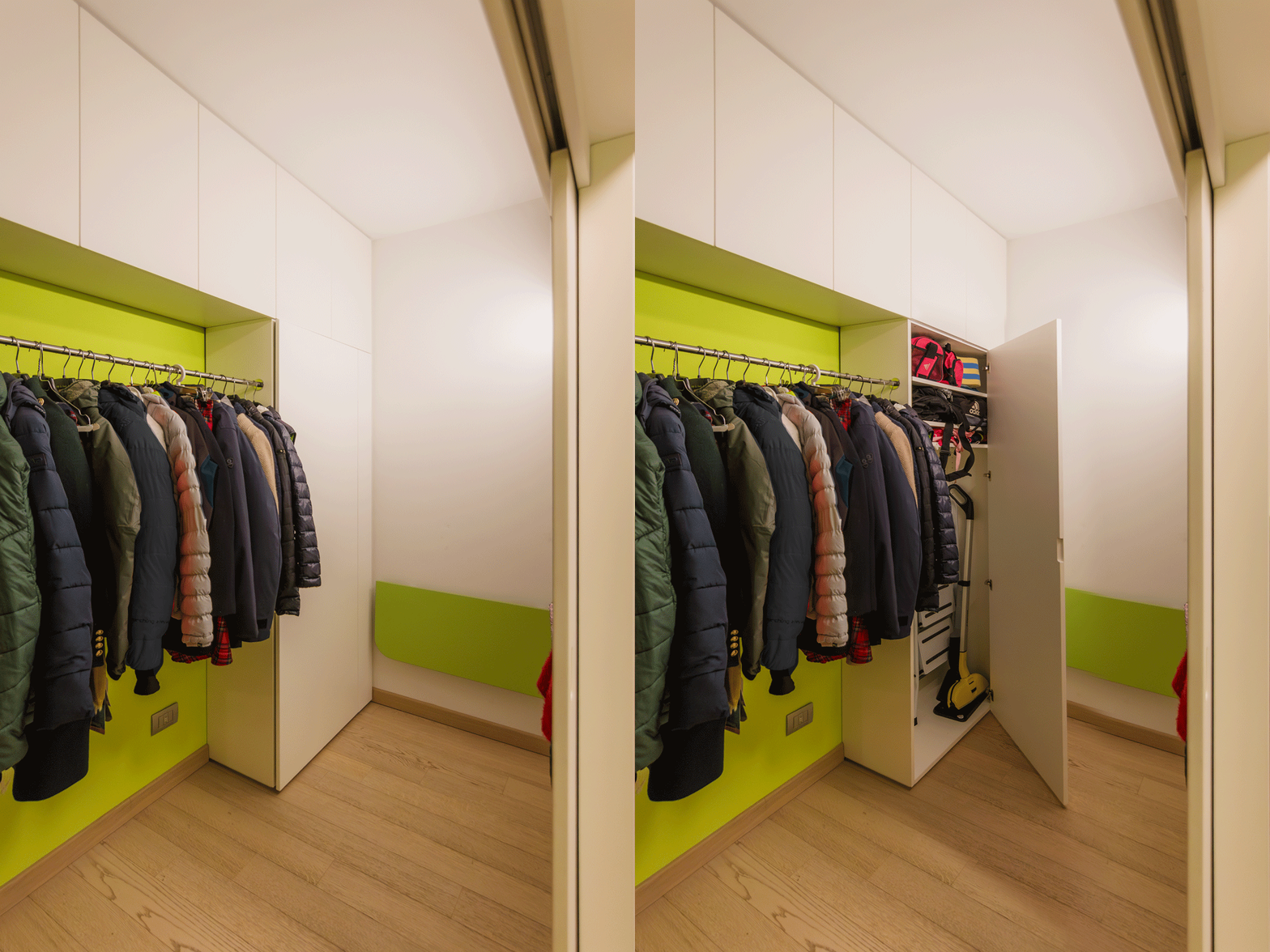
Adjacent to the study zone is a discreet yet accessible storage area. This hidden compartment keeps essential household items, such as the vacuum cleaner and ironing board, neatly tucked away.

open storage area

Stylish and Comfortable Details

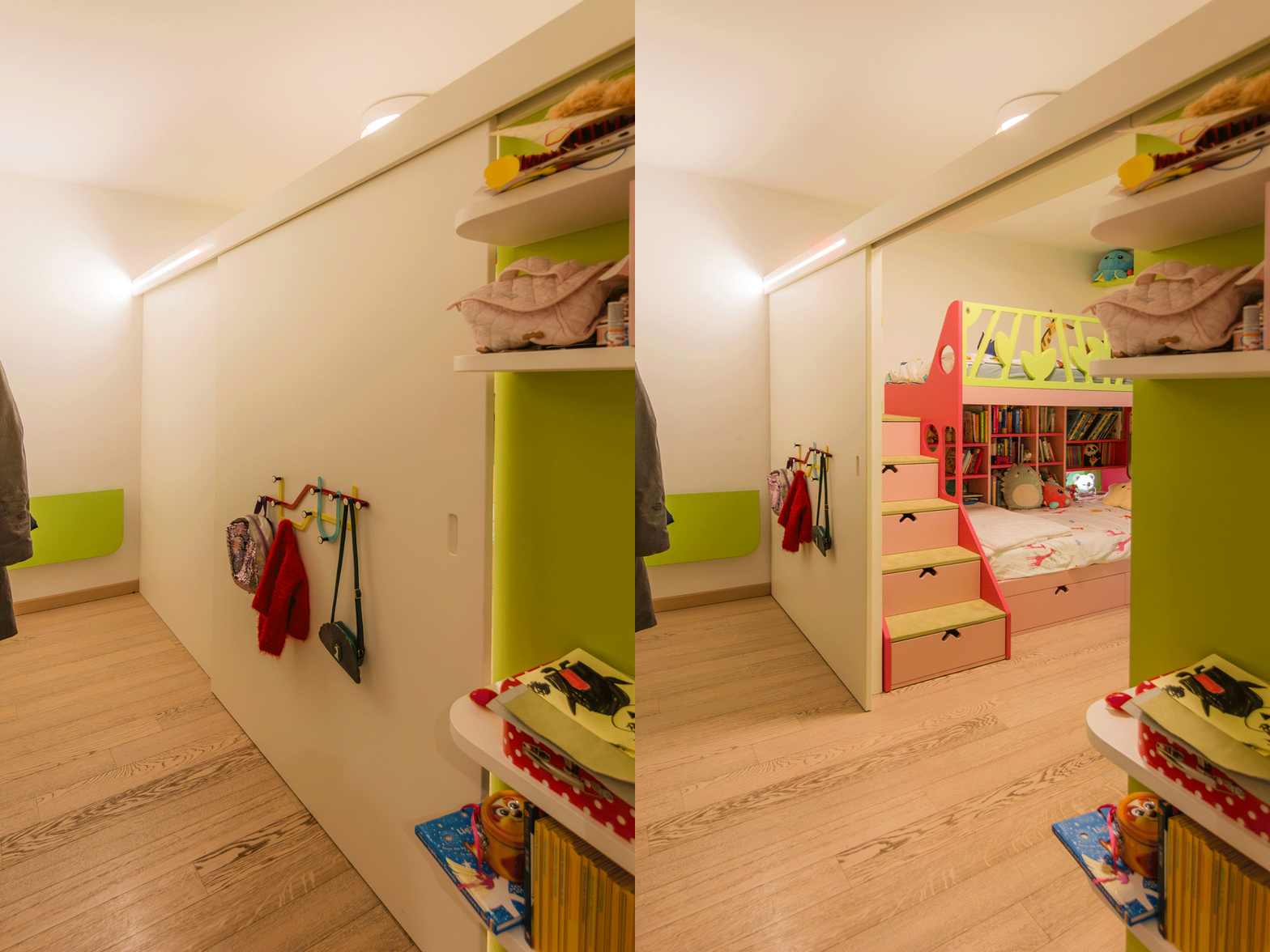
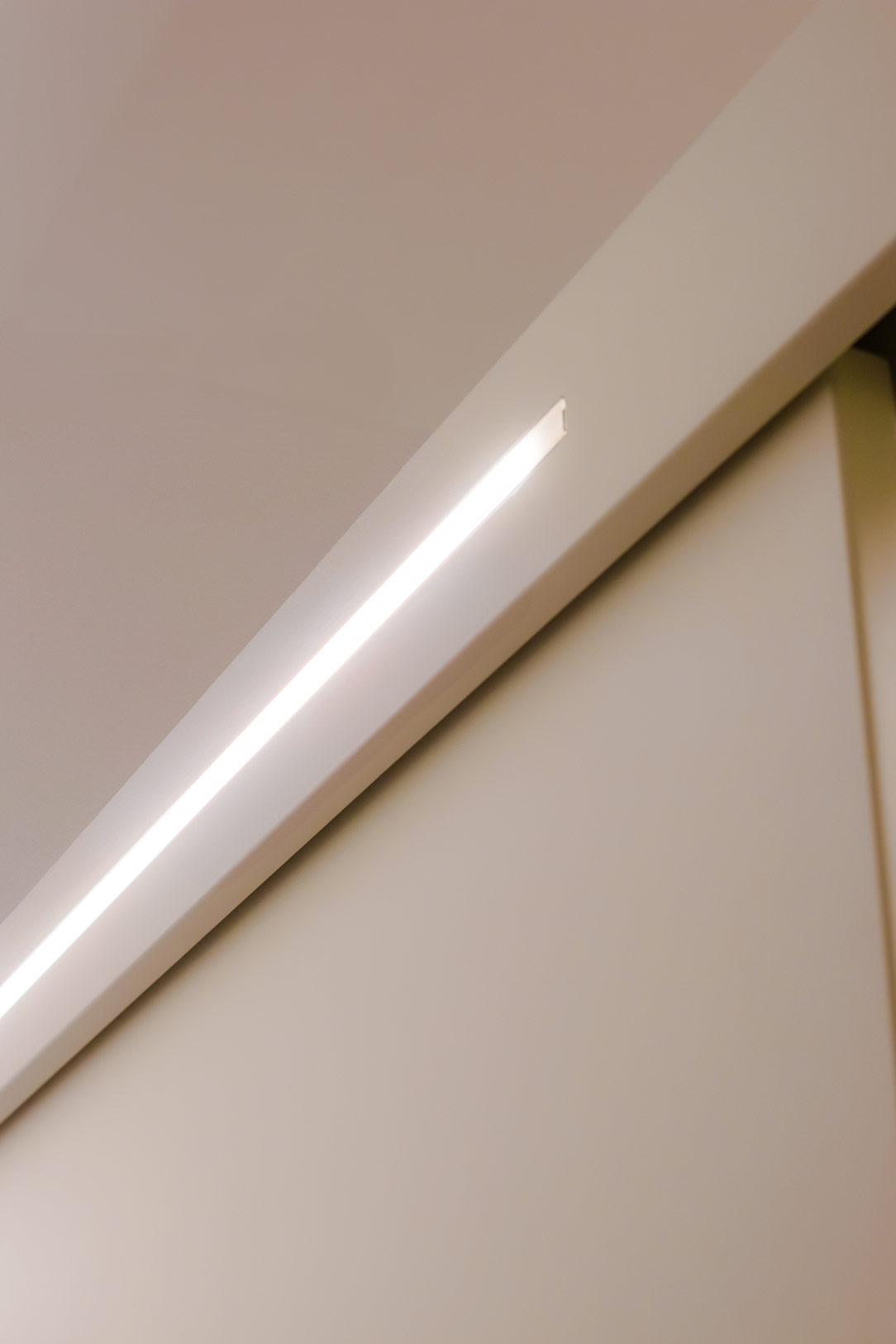
Every detail in the room was carefully crafted to ensure style, comfort, and practicality. The upper bunk’s protective barrier, inspired by the shape of leaves, ties in with the natural theme of the mural. Similarly, the sliding door is more than just a closure—it features a built-in coat hanger for the kids and a LED strip that effectively illuminates the entire room, with a focus on the study area.

shaped door
Led strip

Each bed also includes a strategically placed USB port, perfect for connecting reading lamps or electronic devices, adding a modern and practical touch.

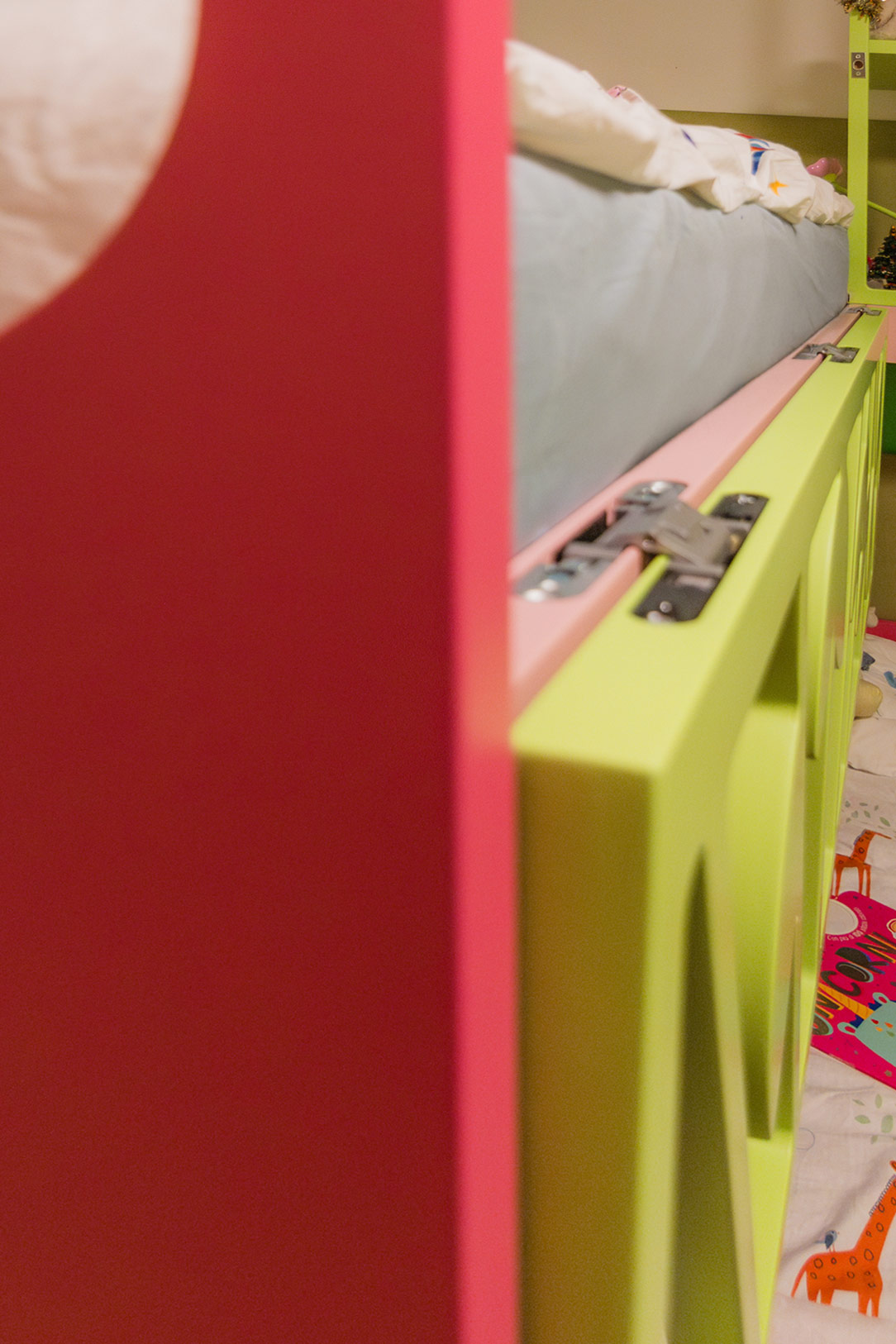
For easier bed linen changes on the upper bunk, the protective barrier features a tilting mechanism. Durable hinges are embedded in the bed base and the barrier, enabling it to fold down easily using a pin-opening system, ensuring hassle-free access to the mattress.

Additional child-friendly details include safety gates that provide an extra layer of protection, making the space secure and suitable for young explorers.

barrier
barrier opener
USB port
barrier upper bed

Conclusion

Thanks to a bespoke design, this multifunctional kids’ room has become a delightful retreat for the children, blending aesthetics, practicality, and space optimization. The bunk beds and versatile furnishings have transformed a small room into a world tailored to the needs and dreams of its little inhabitants.

Versatility in Study and Hospitality

Versatility in Study and Hospitality

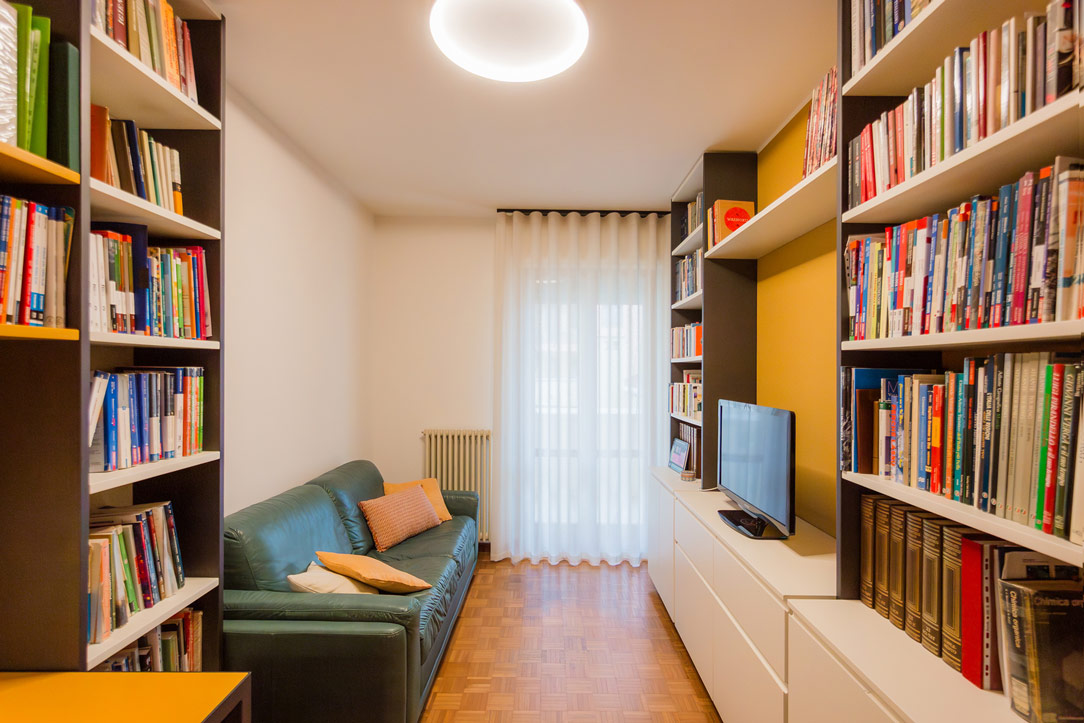
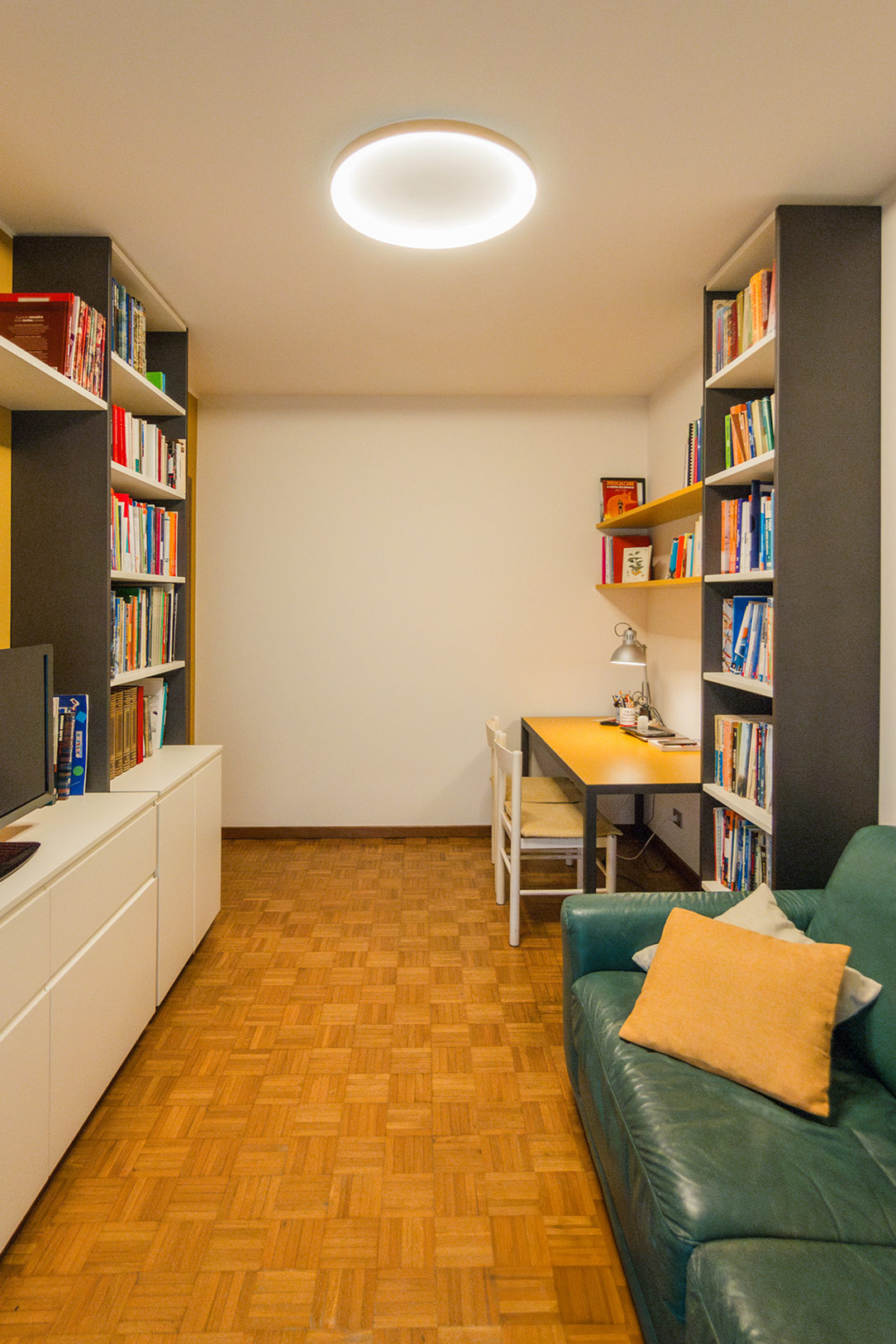
In a world that demands increasingly flexible spaces, we reimagined the study of two friendly professors who often work from home, transforming it into a multifunctional room capable of welcoming both students and guests with ease.

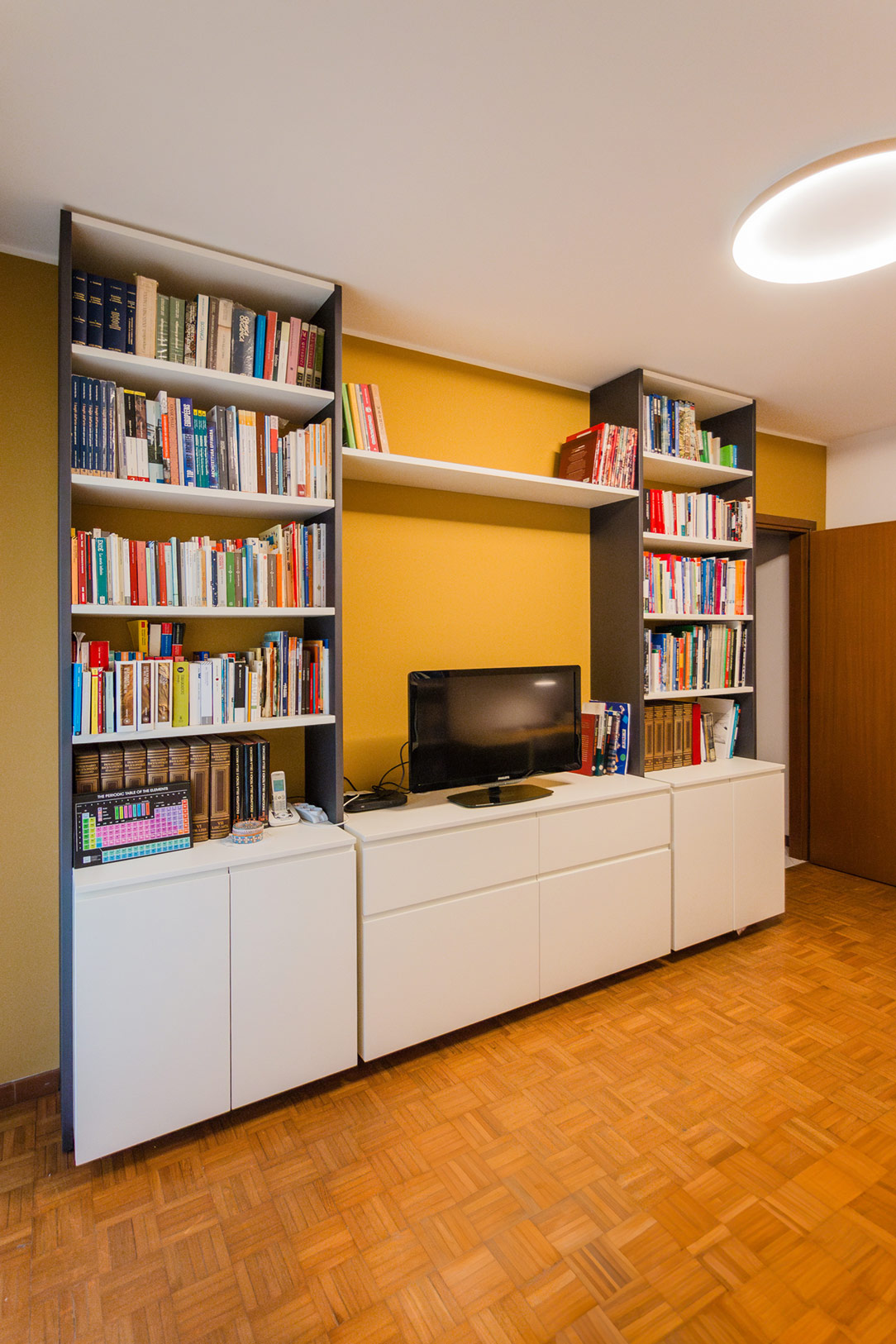
The heart of this transformation lies in the long side bookshelf, an elegant composition that houses textbooks and novels, bringing both order and beauty to the space. At the center, a dedicated compartment for a large television becomes a didactic tool for interactive lessons and, at the same time, a source of entertainment for those staying in the room.
multifunctional studio

Study Mode

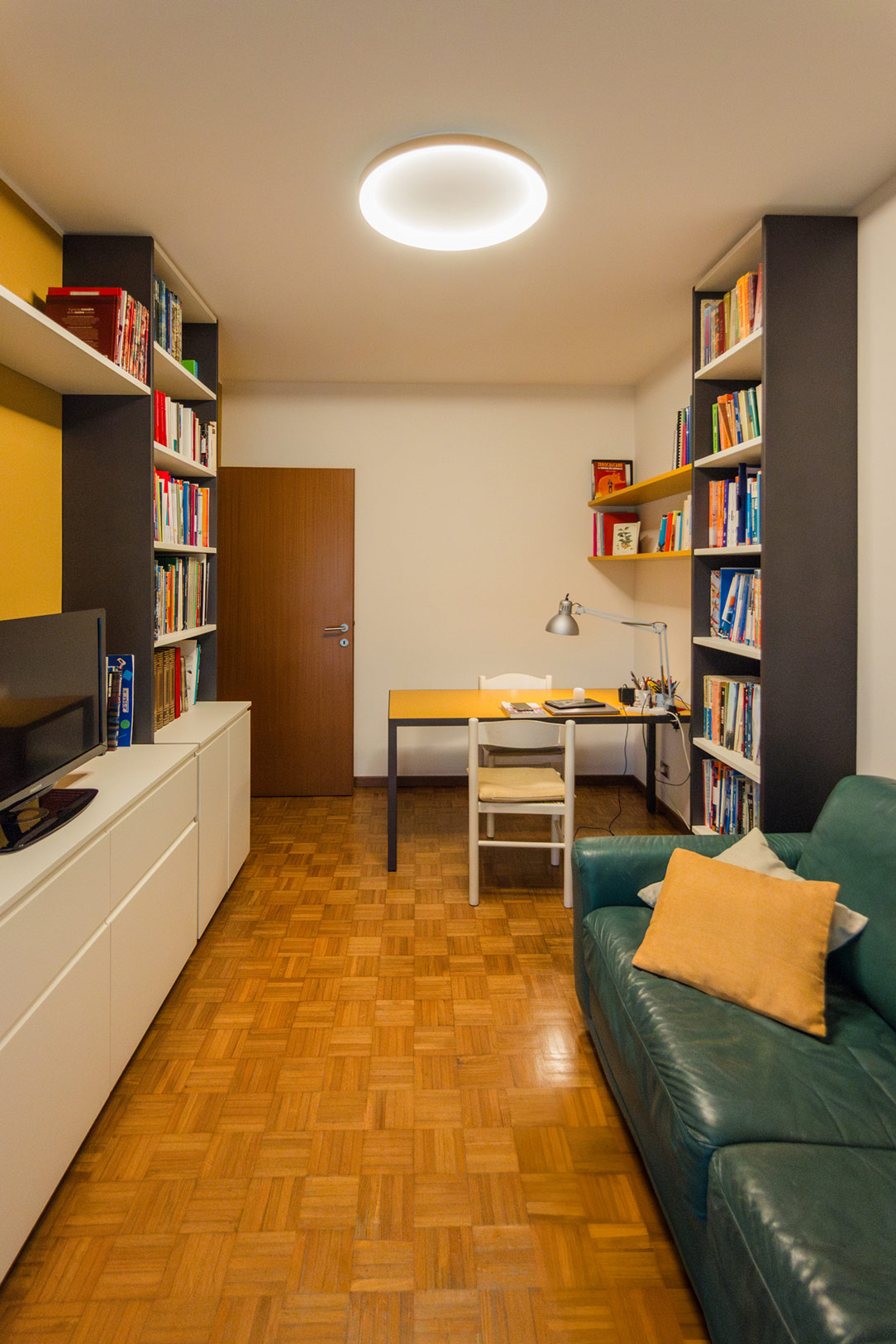
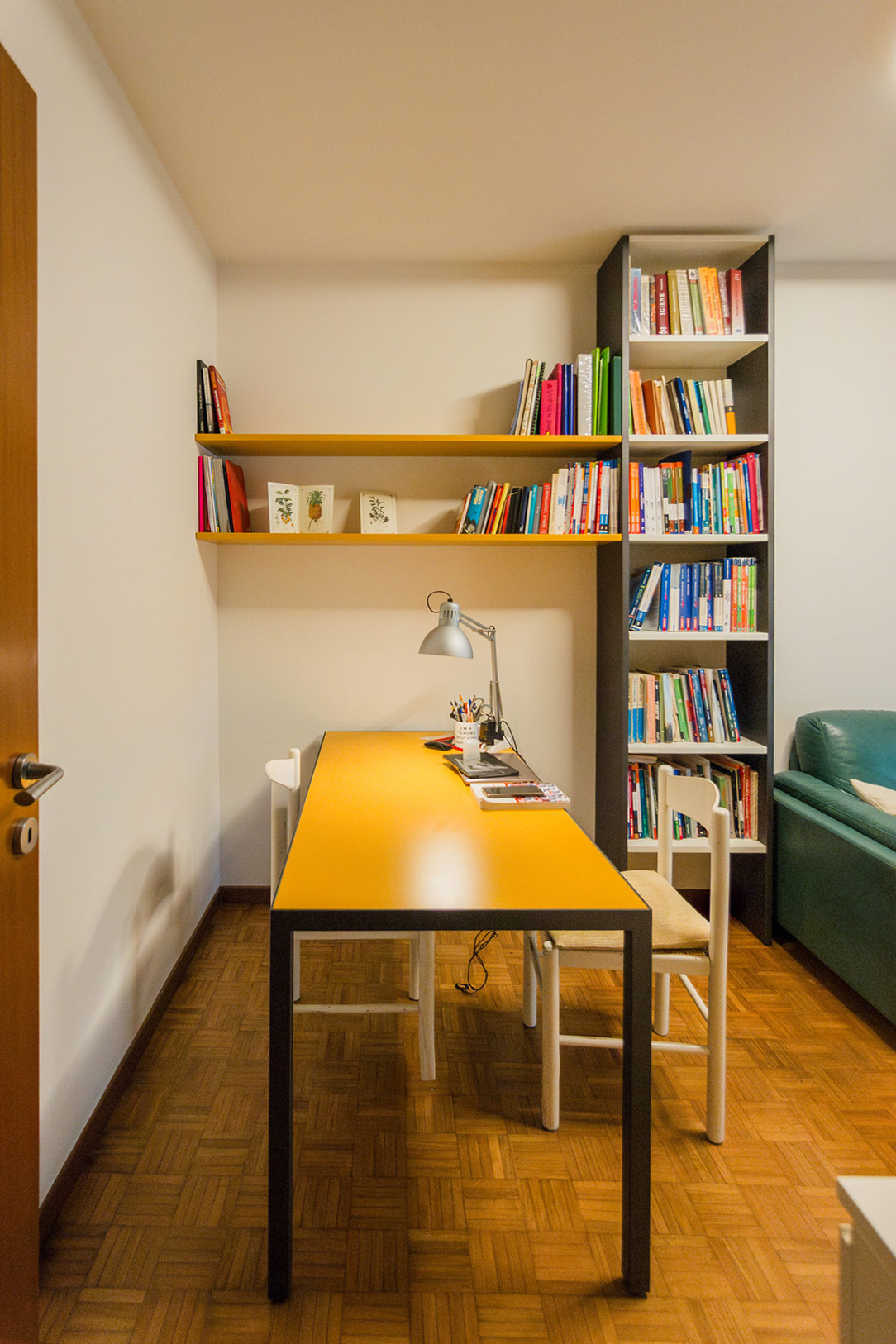
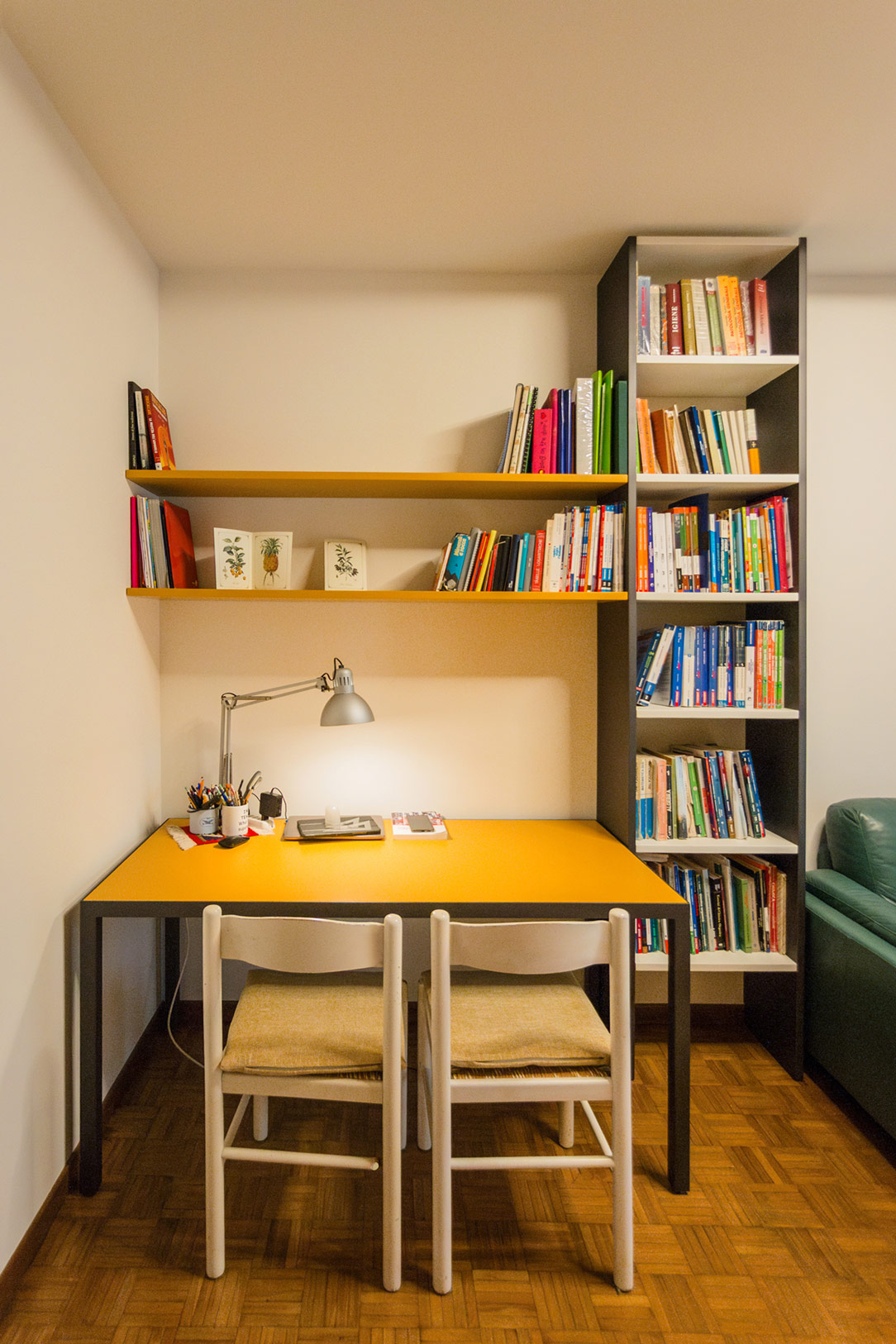
When the study comes to life, the space takes on a well-defined role. The desk, framed by a vertical bookshelf, becomes the focal point of the room. Positioned so that the student can sit directly across from the teacher, with the room unfolding in the background, it facilitates dialogue and learning.
study mode
study mode

Guest Mode

When the room hosts a guest, versatility takes center stage. The sofa transforms into a comfortable bed, while the desk, repositioned against the wall, disappears without disturbing the room’s harmony. Every movement flow is smooth and thoughtfully designed to ensure maximum comfort.

guest mode
guest mode

Balance Between Visible and Hidden

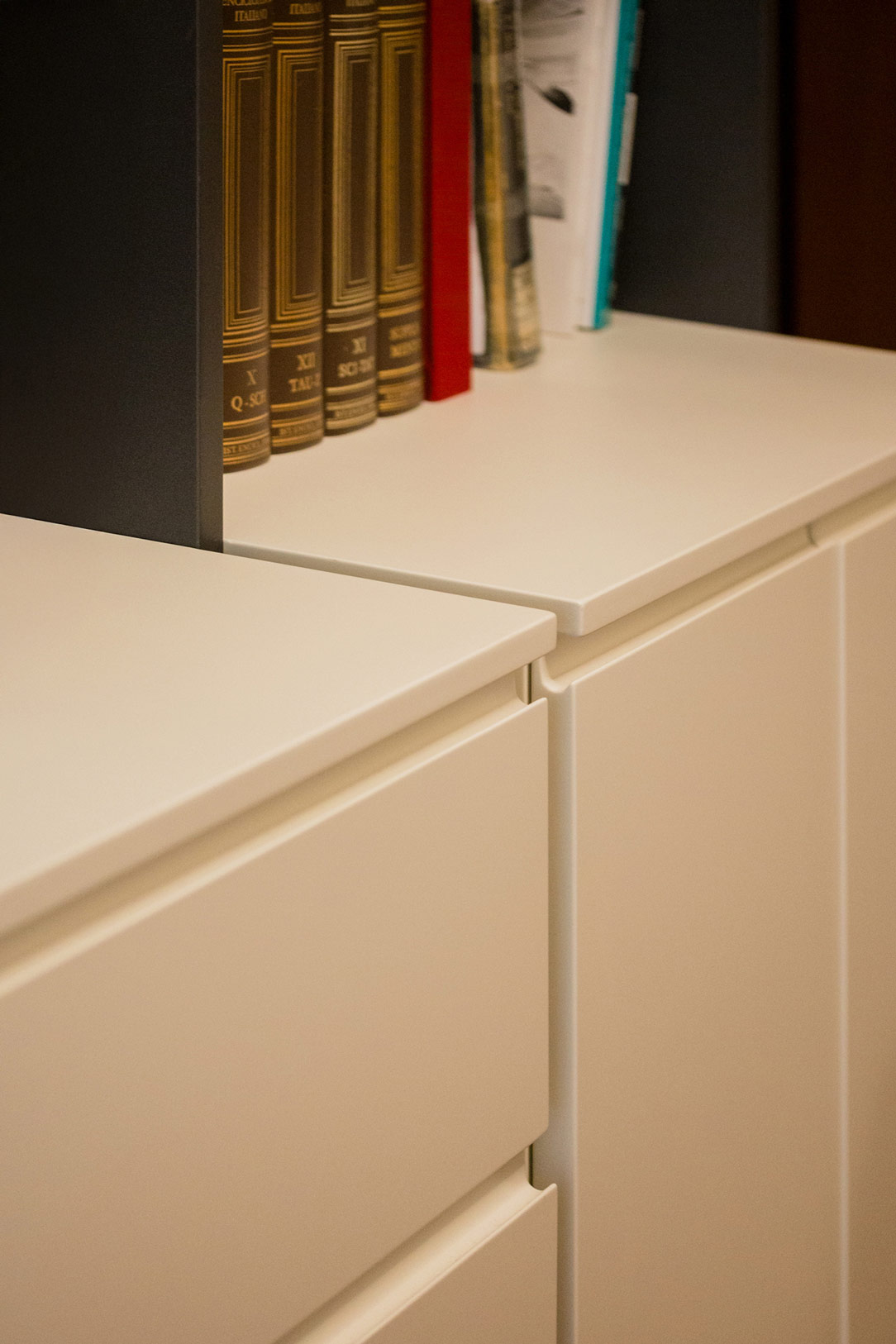
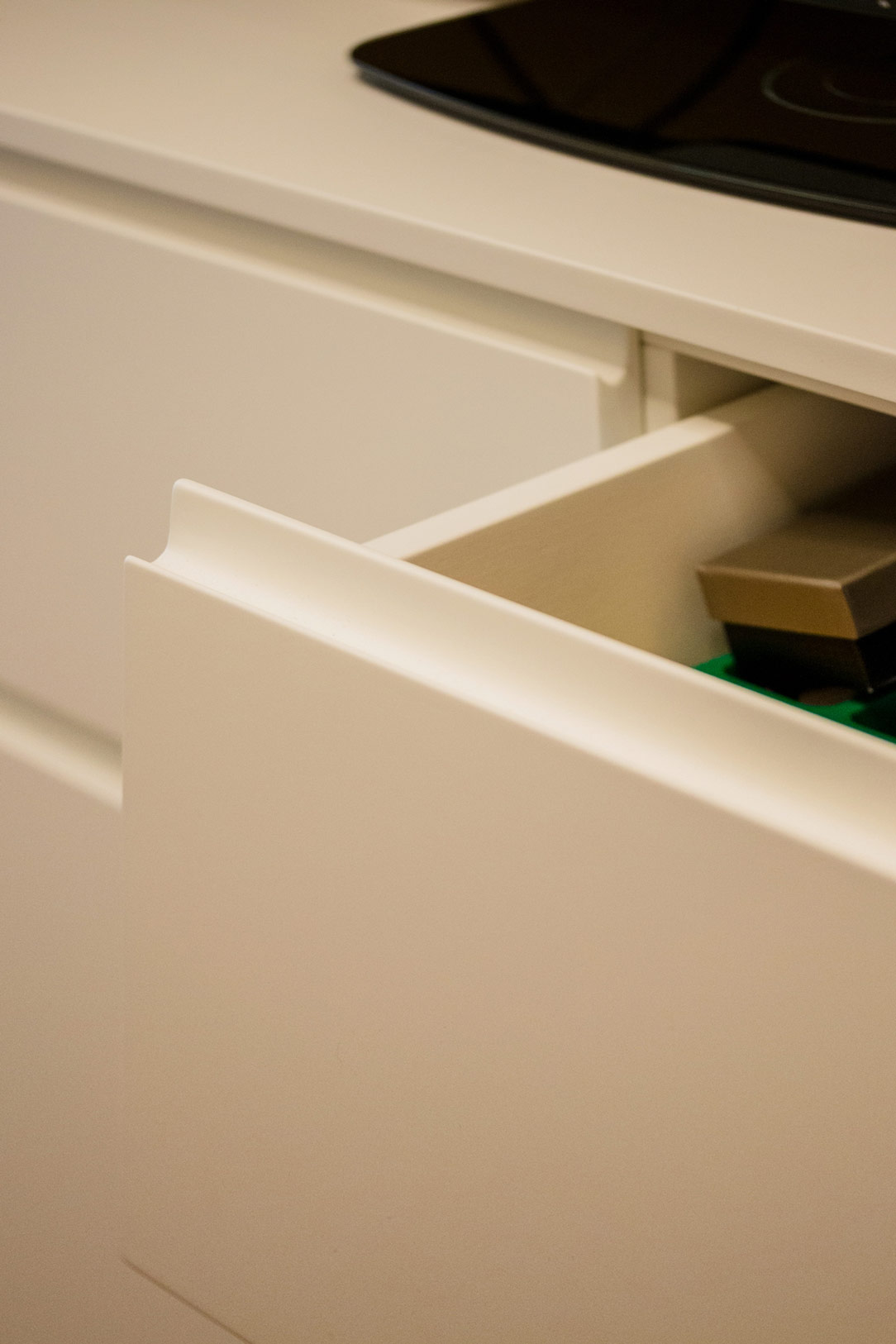
The bookshelf tells a story of balance between what is on display and what is concealed. On the open shelves, books that decorate and enrich the space find their place, while in the lower part, hidden behind doors and drawers, everything that shouldn’t distract such as files, documents, and electronic devices, is neatly stored. A difference in depth between the open and closed sections ensures greater storage capacity without overwhelming the overall aesthetic.

details drawers
details drawers
details anthracite

Colors and Atmosphere

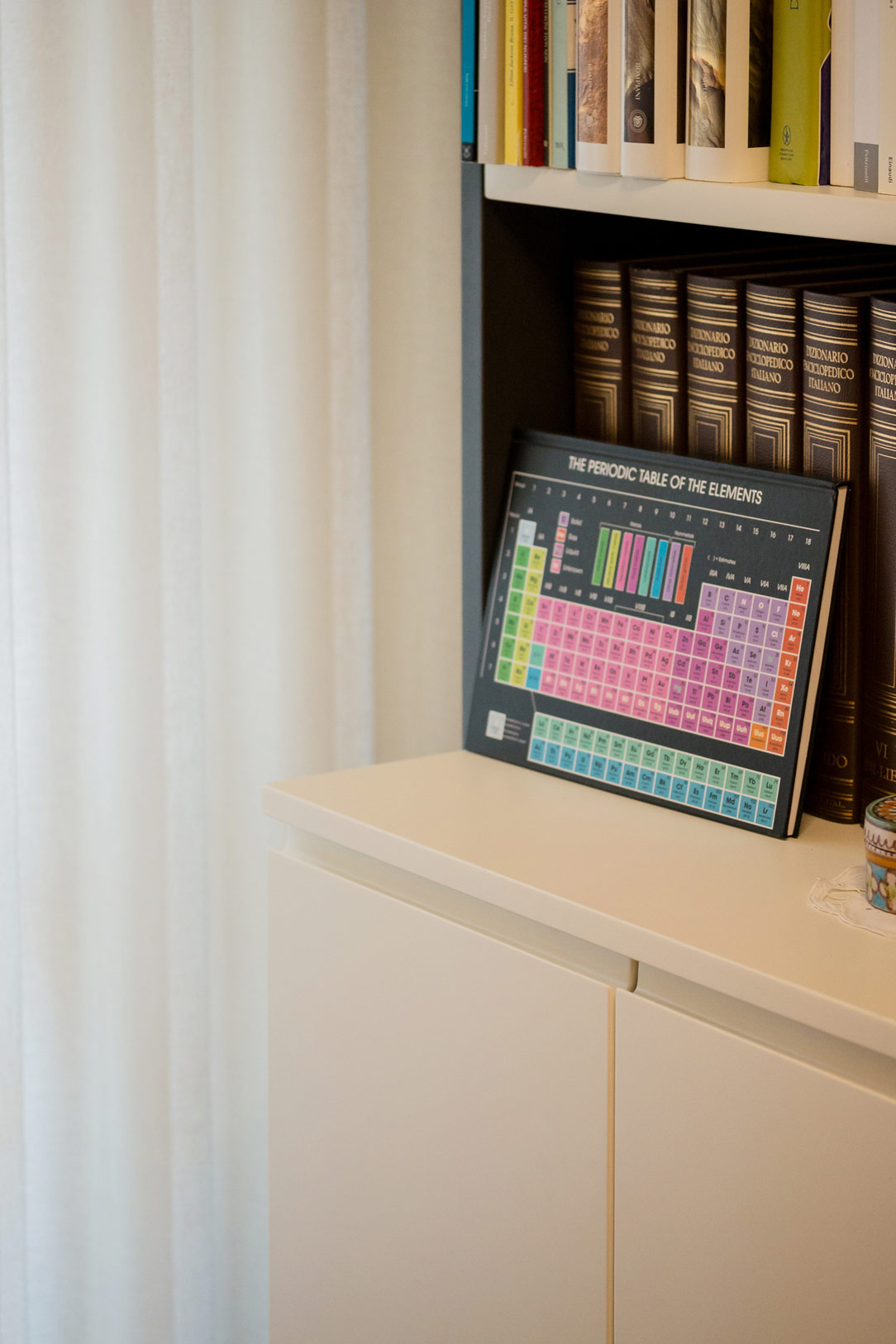
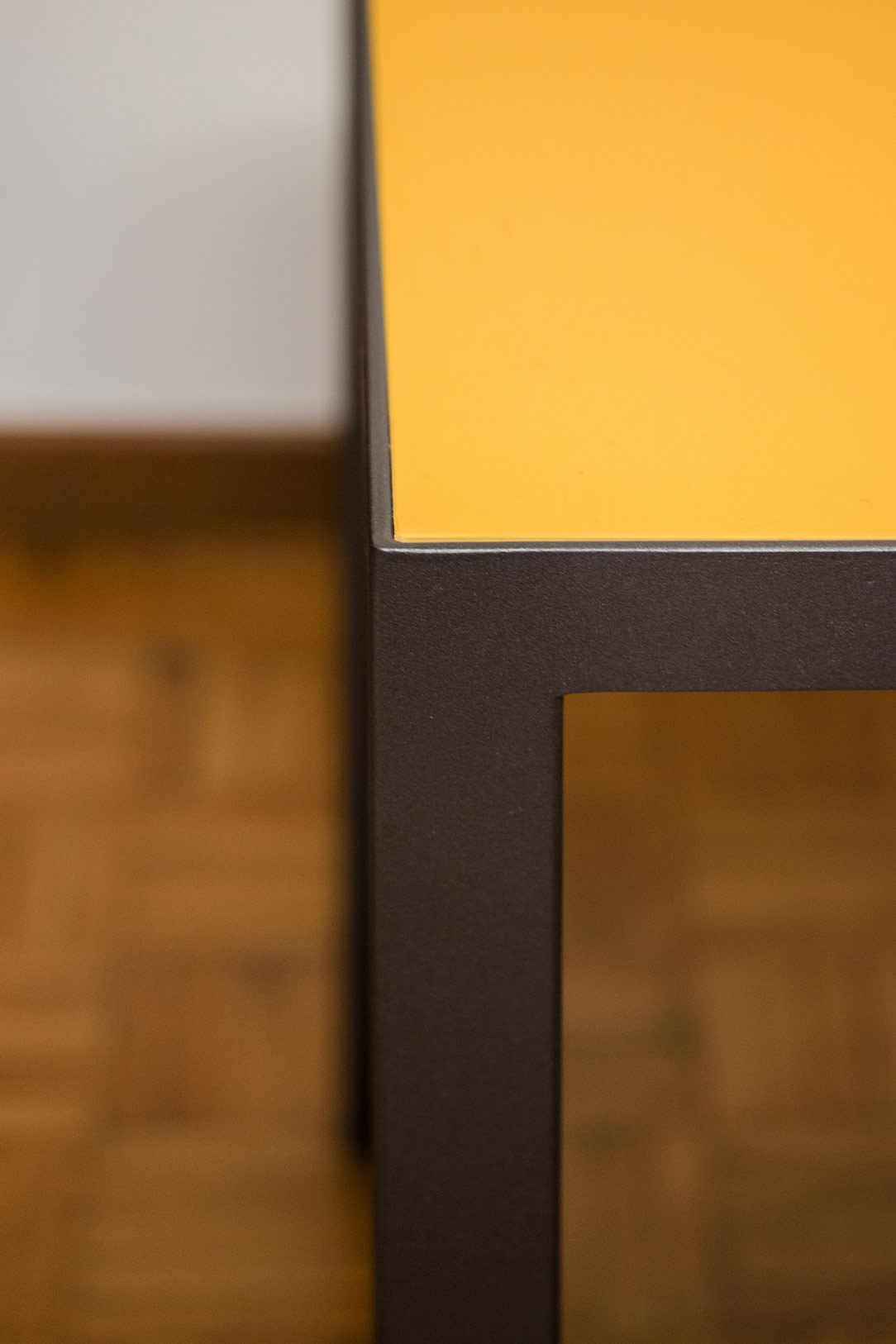
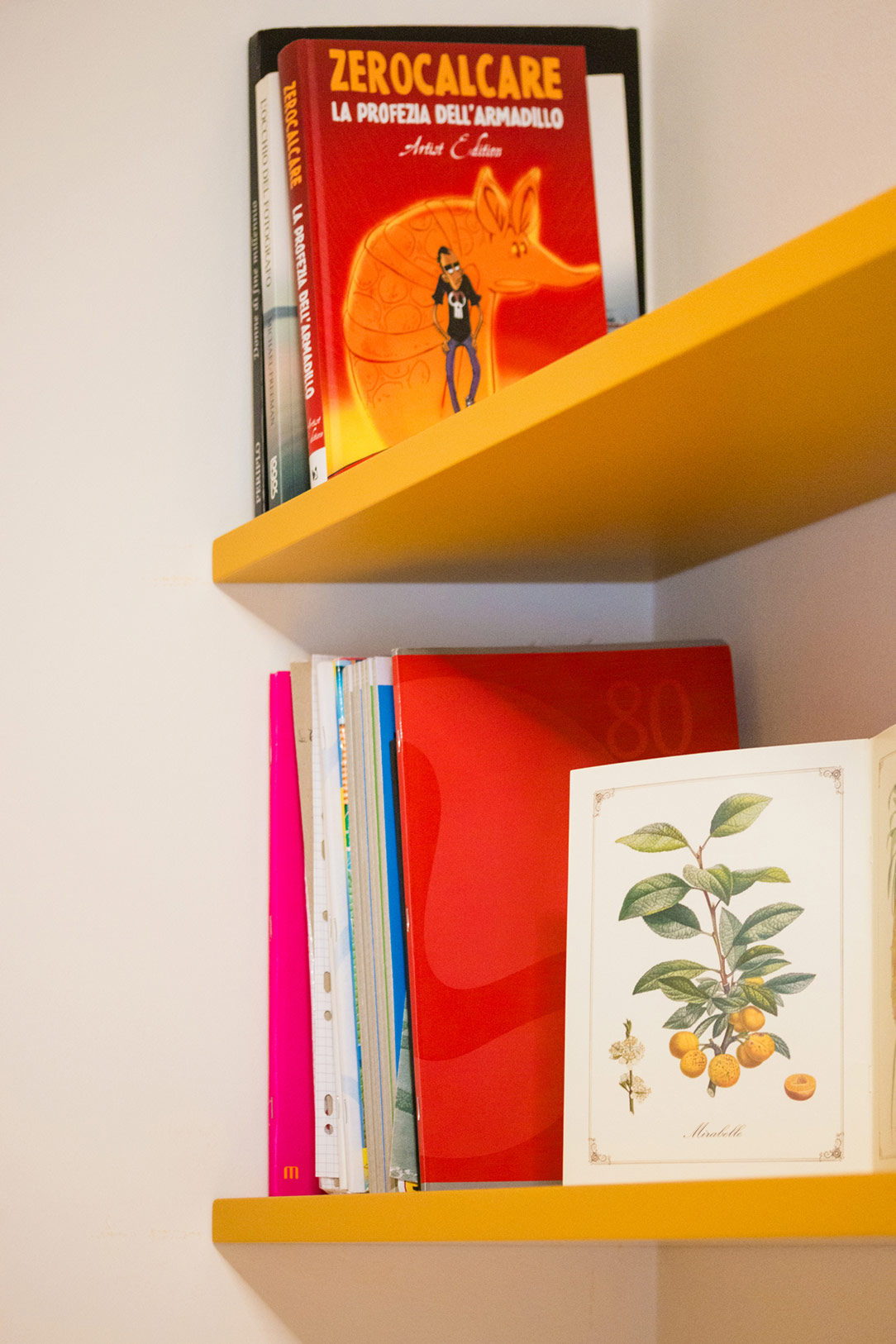
Colors play a fundamental role in defining the space’s identity. The equipped shelves, with anthracite gray metallic uprights and white shelves, offer a neutral and sophisticated base. In contrast, the desk’s mustard-colored desktop adds a touch of vibrancy. This color not only catches the eye but stimulates creativity and concentration, making the space ideal for studying. The same yellow tone can be found on the wall behind the equipped bookshelf, enveloping the room with warmth and energy.

desk detail
details mustard shelf

In this way, the space becomes a haven for knowledge, a place of versatility and hospitality, ready to transform to meet every need.

bookshelf

The Art of Smartworking in an Equipped Wall with Poetic and Functional Design

The Art of Smartworking in an Equipped Wall with Poetic and Functional Design

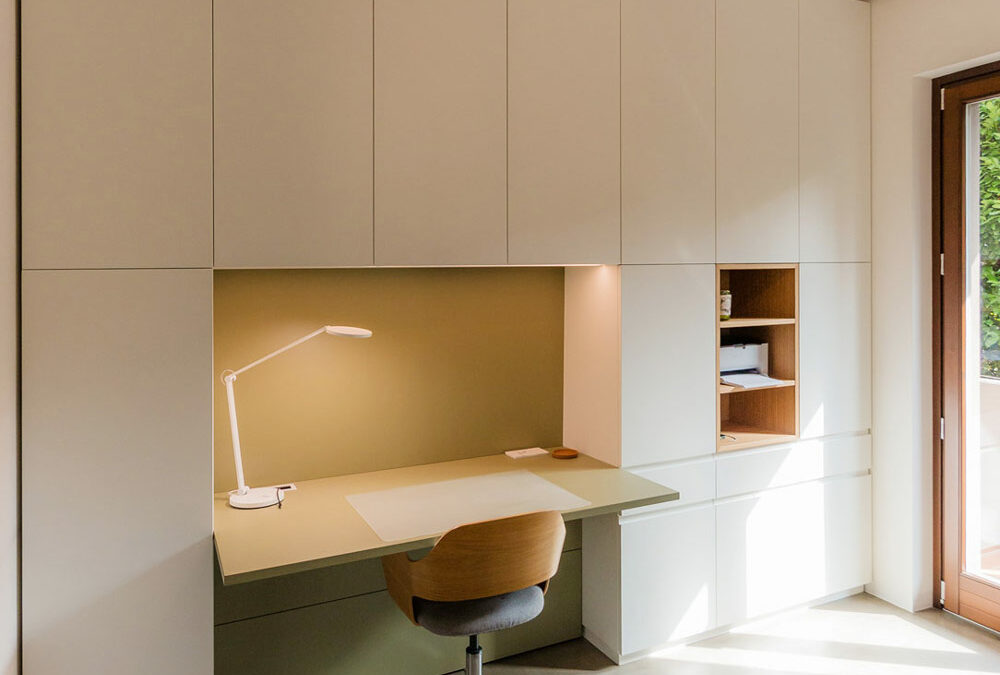
In the heart of the modern home, where every corner is designed to combine aesthetics and functionality, the equipped wall by Officina Idea stands out as a poetic and innovative project that transforms the everyday experience of smartworking into a fluid one.

Equipped Wall

From Design to Realization

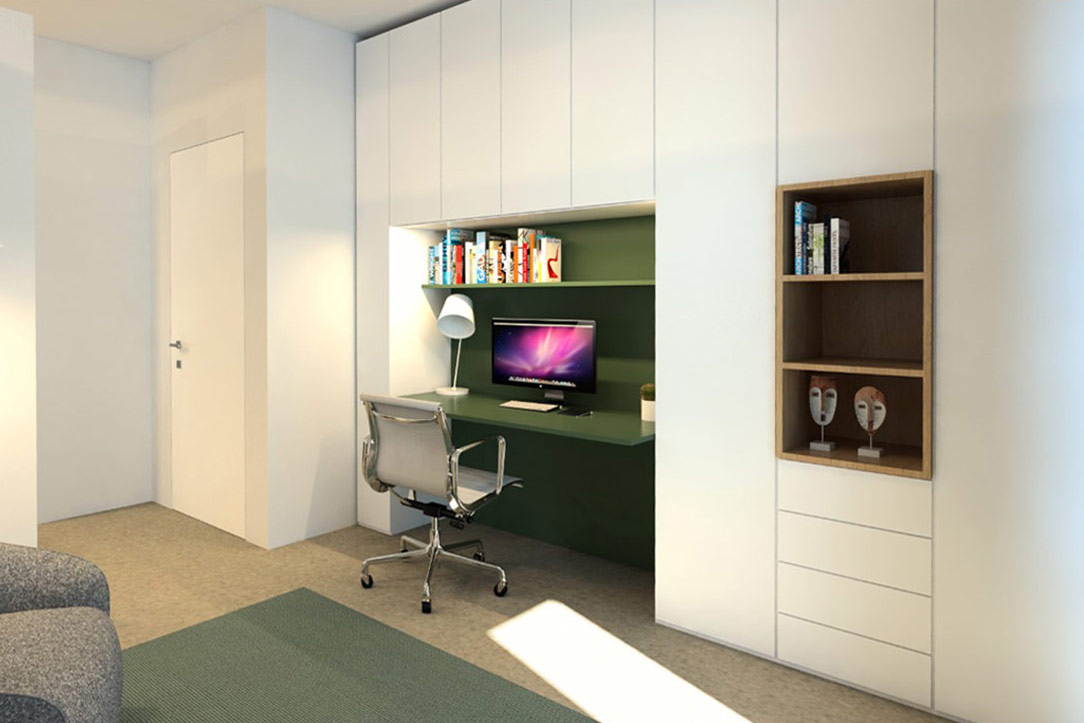
The initial renders created by Paolo of Officina Idea illustrated the project in great detail, including color schemes, providing a clear vision of how the unit should look. Thanks to this precise design foundation, we were able to realize the equipped wall as faithfully as possible.

Render Paolo
like Render Paolo

Organized Spaces for Every Need

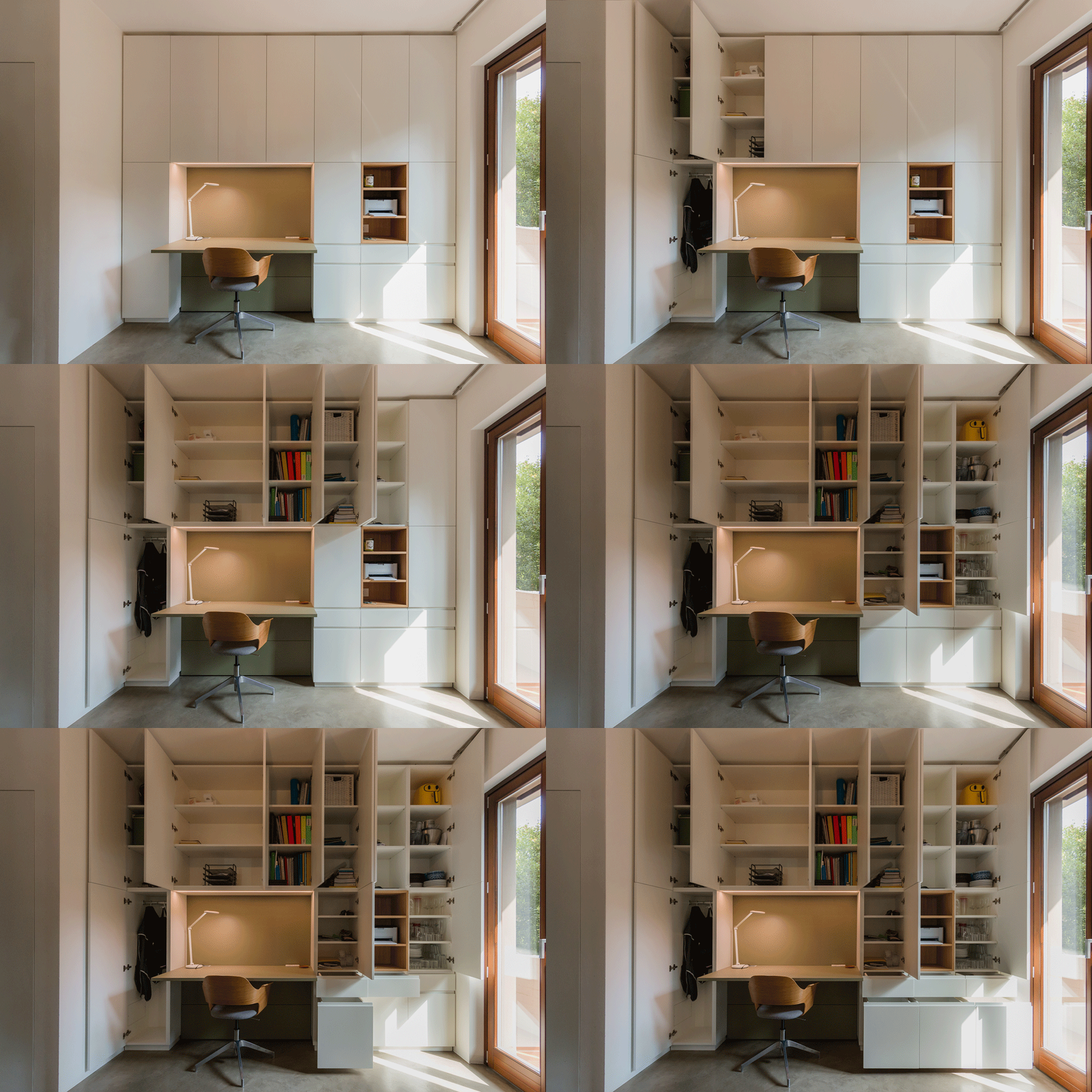
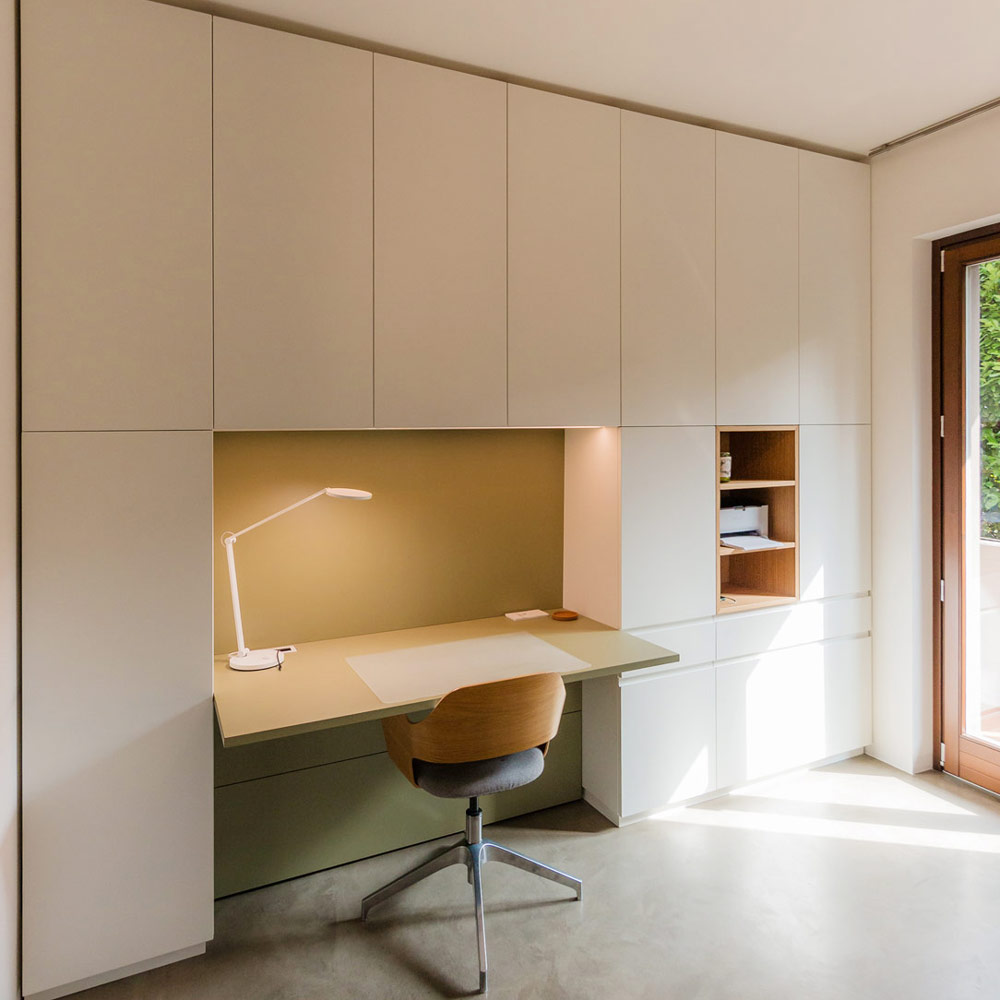
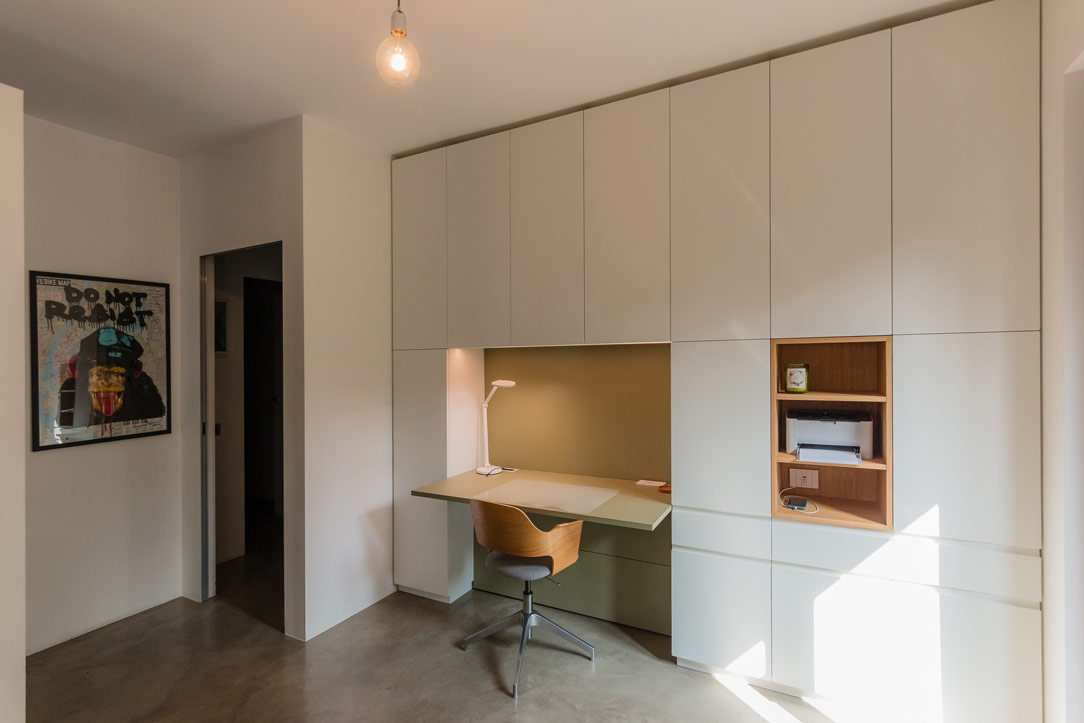
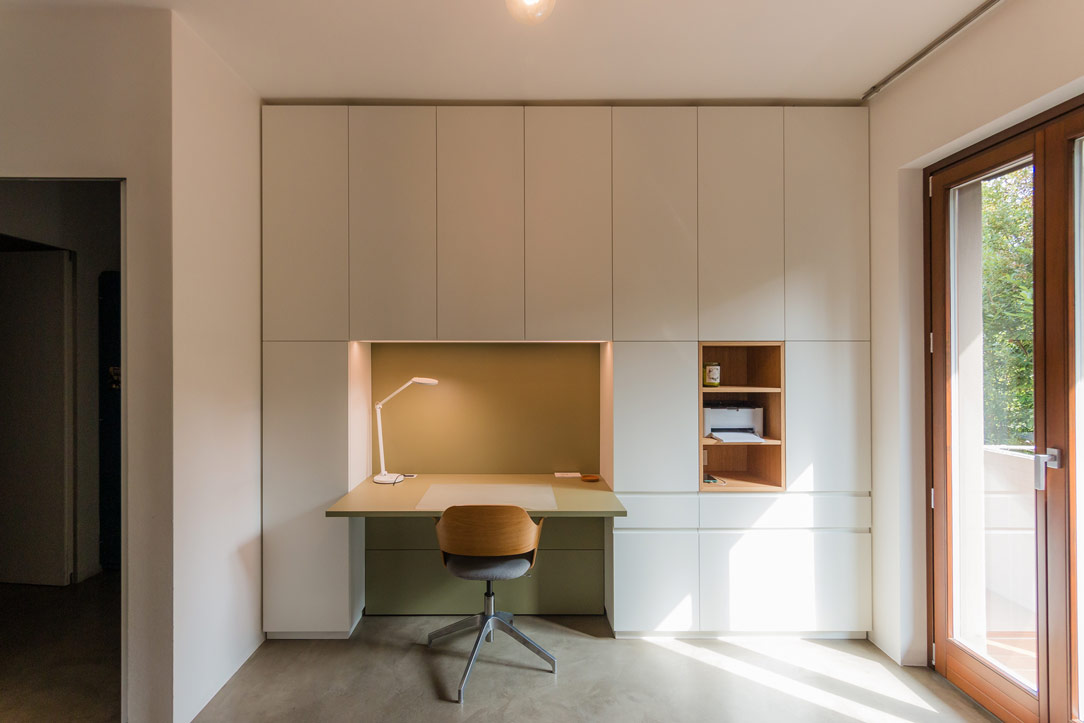
Imagine a wall that, like a blank canvas, blends seamlessly with the surrounding environment, imparting a sense of order. This is not just a piece of furniture, but a true organizational system that embraces the needs of home working. The spaces have been divided so that one section is dedicated to storing useful materials, another is left open for easy access, and a third is designated for the desk.

front view equiped unit
olive green desk
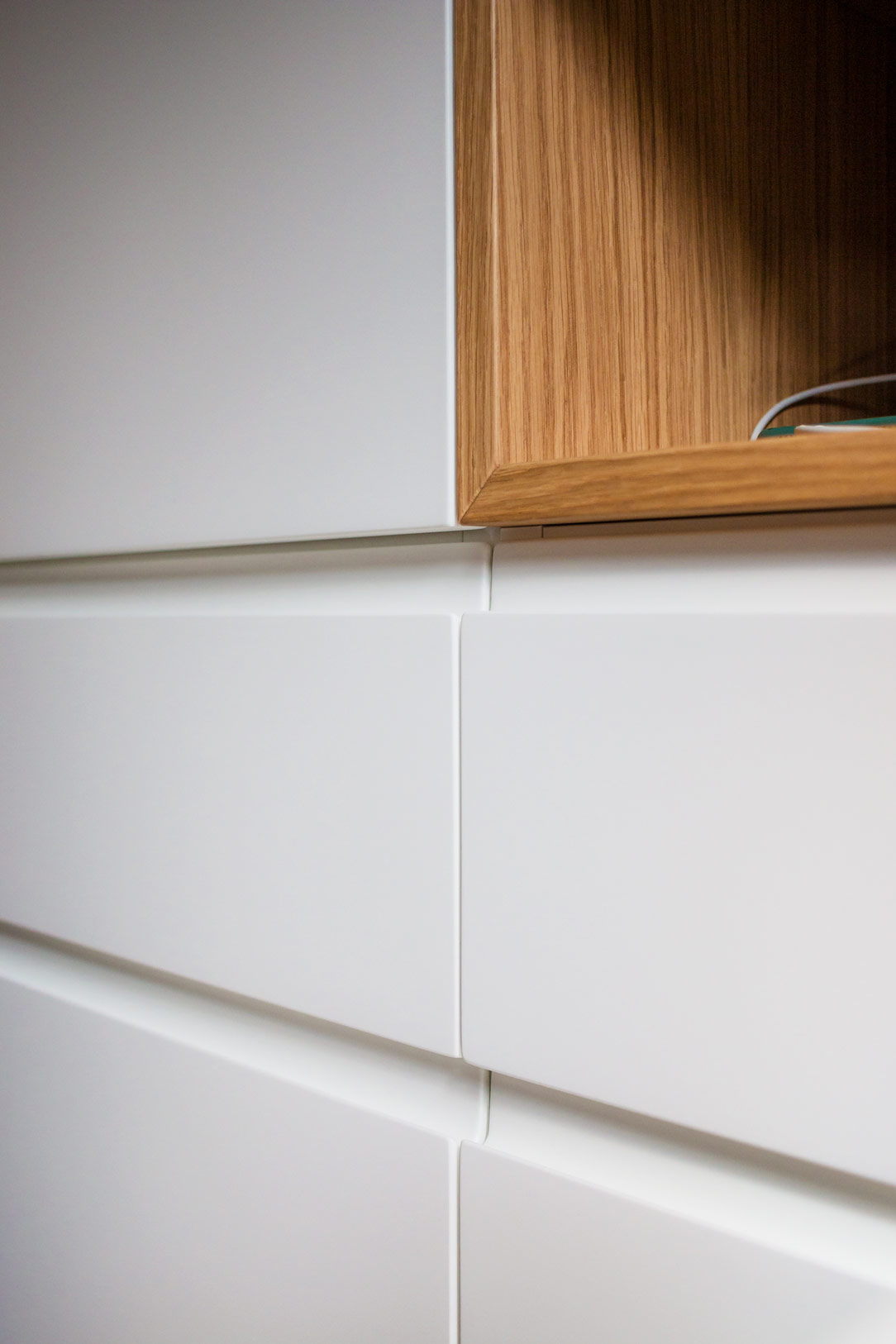
detail hidden handle

Functionality in an Equipped Wall

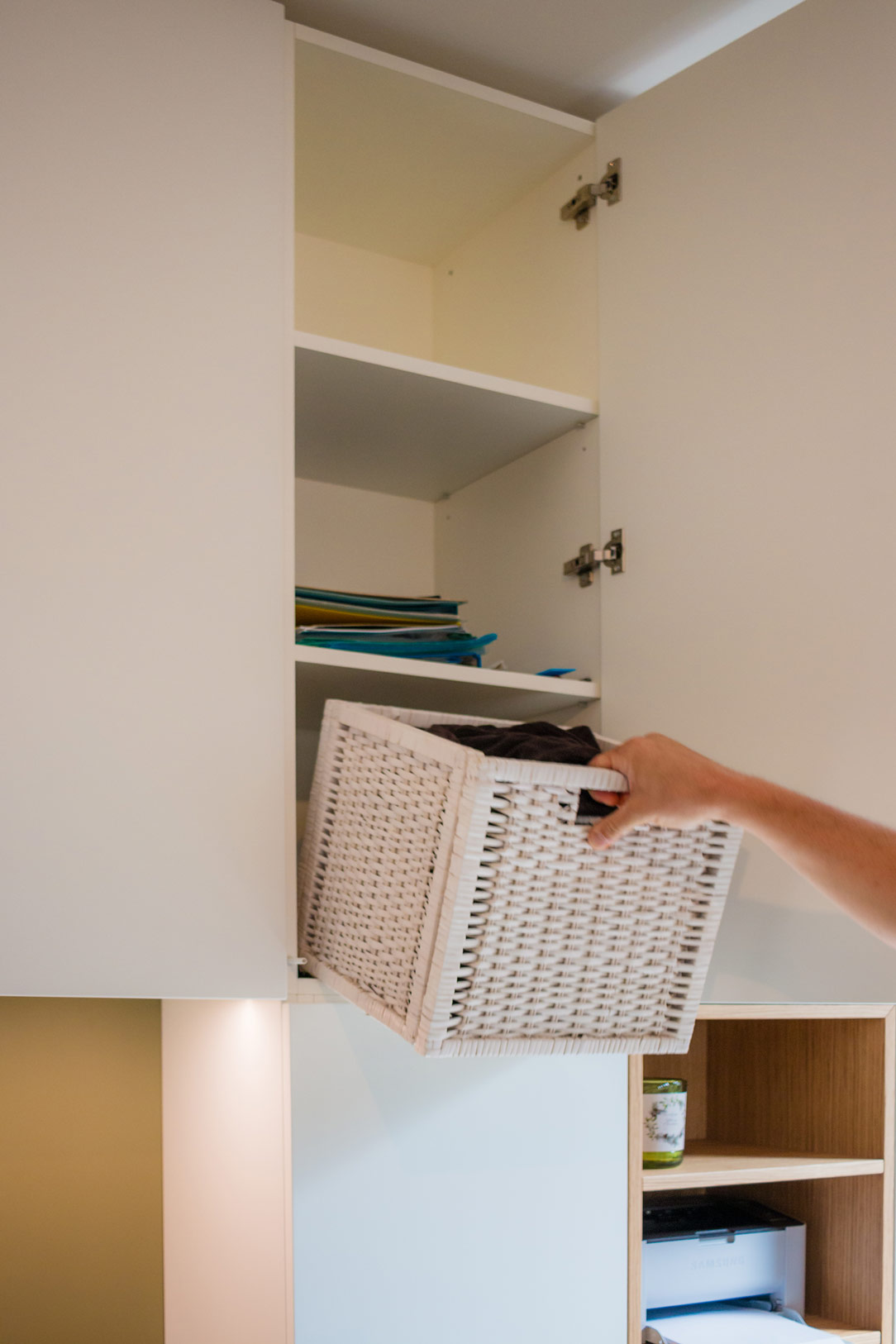
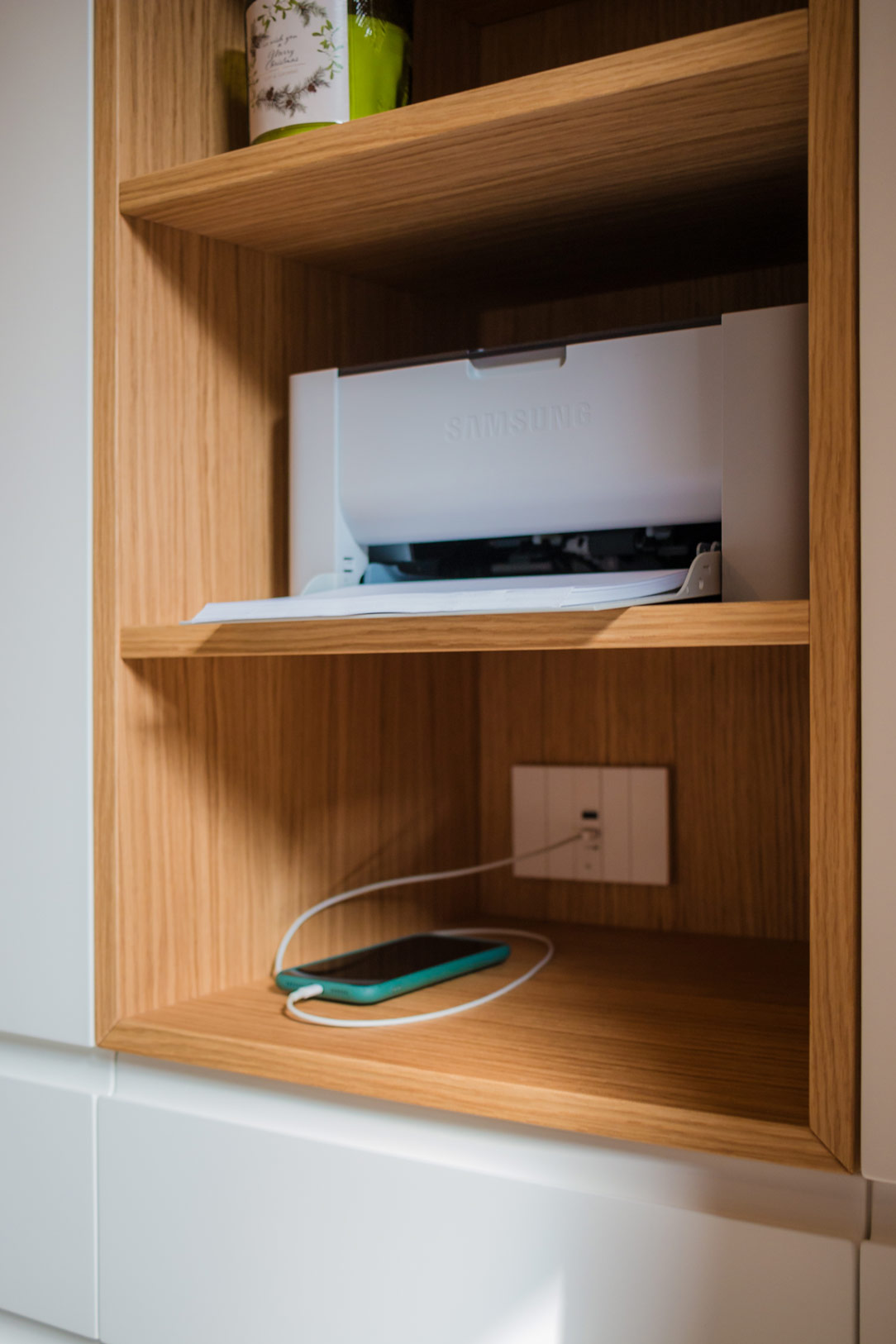
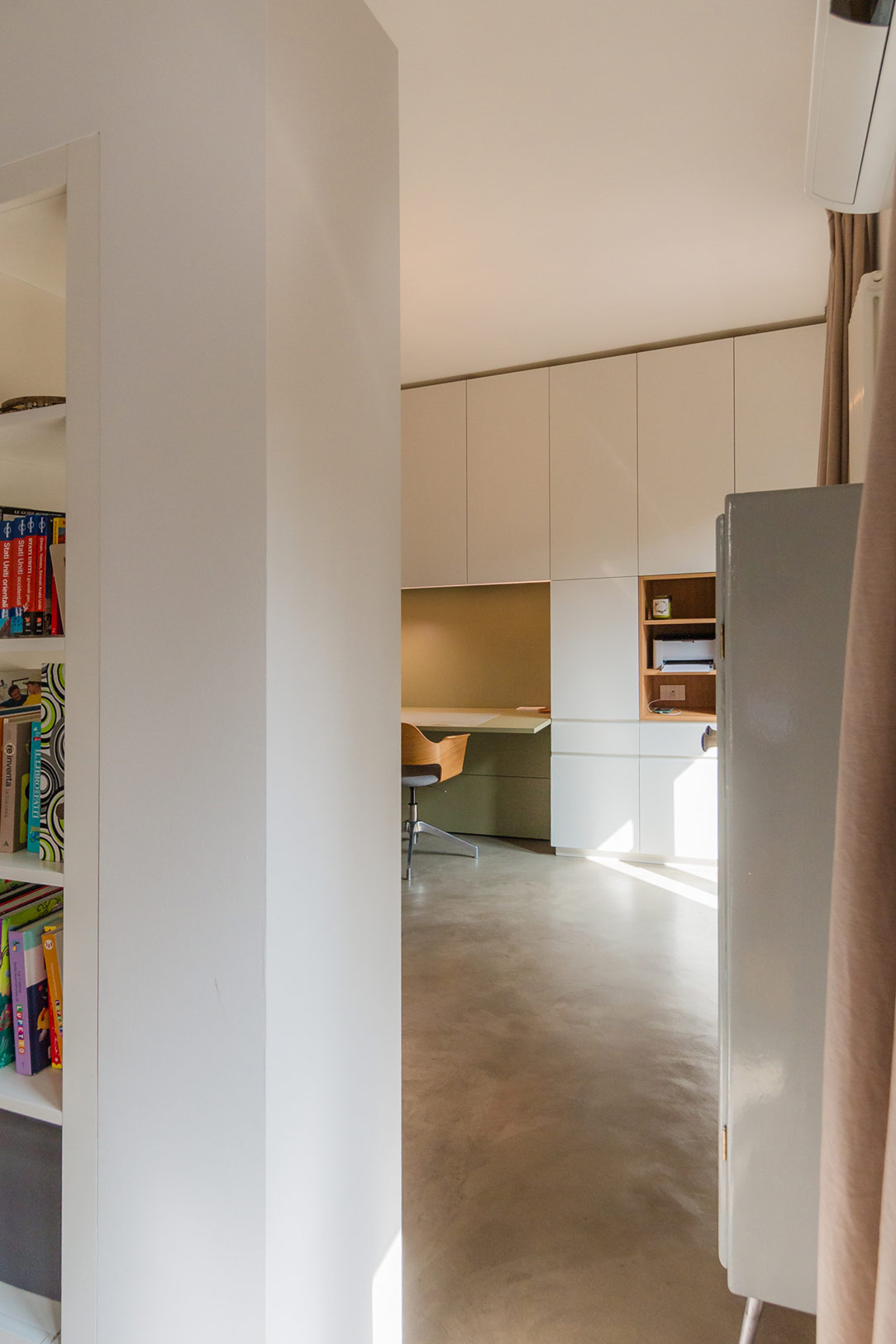
The wall, extending up to the ceiling, is divided into carefully organized spaces. The upper section, featuring doors, is dedicated to storing files and books, neatly arranged on shelves designed to accommodate standard-sized containers. The lower section, with drawers and large drawers, holds stationery and equipment, keeping everything within reach. An open compartment is reserved for technology, with space for a printer and other mobile devices, while the desk serves as the central hub of creativity and productivity.

storing books
device in the open compartment
desk detail

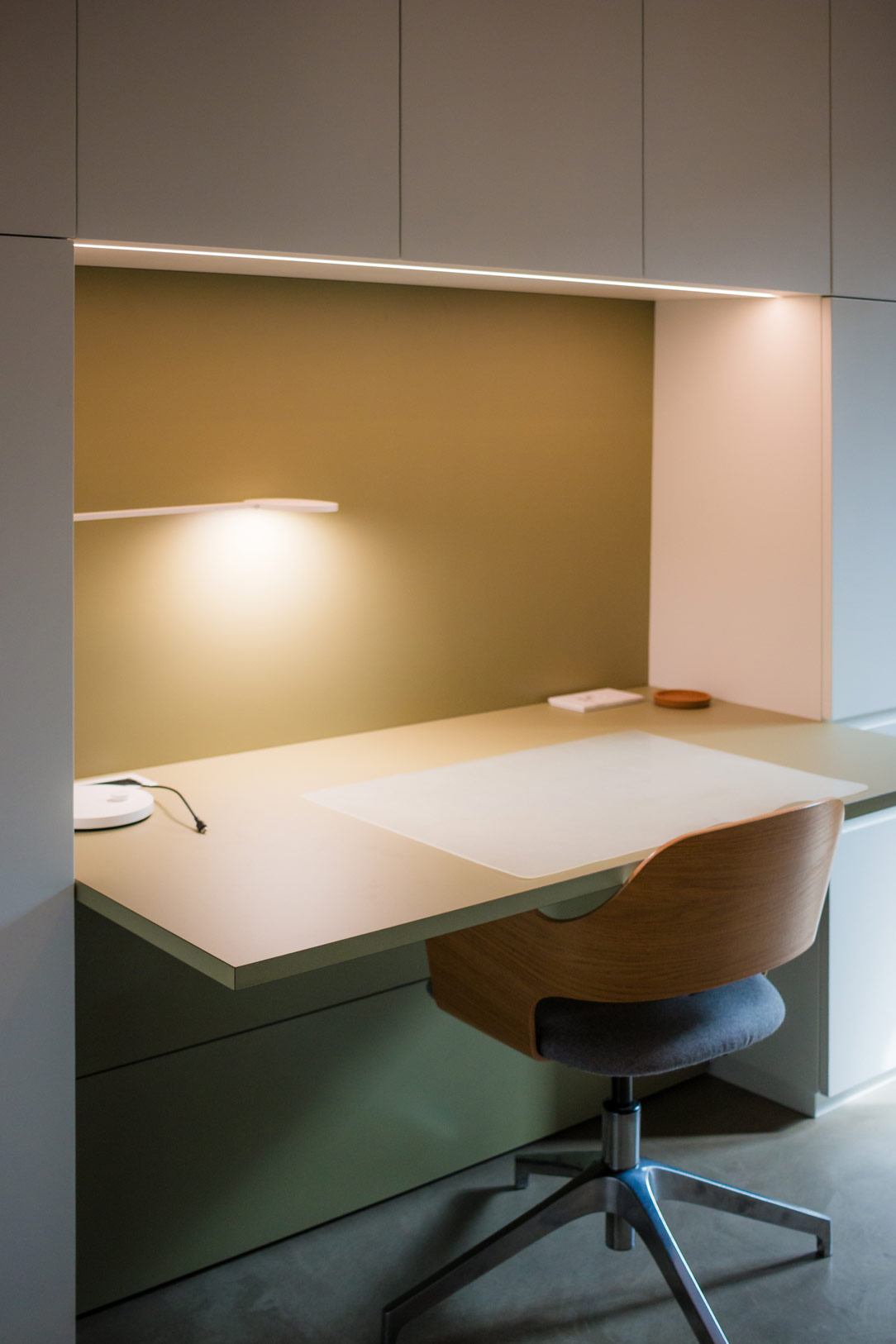
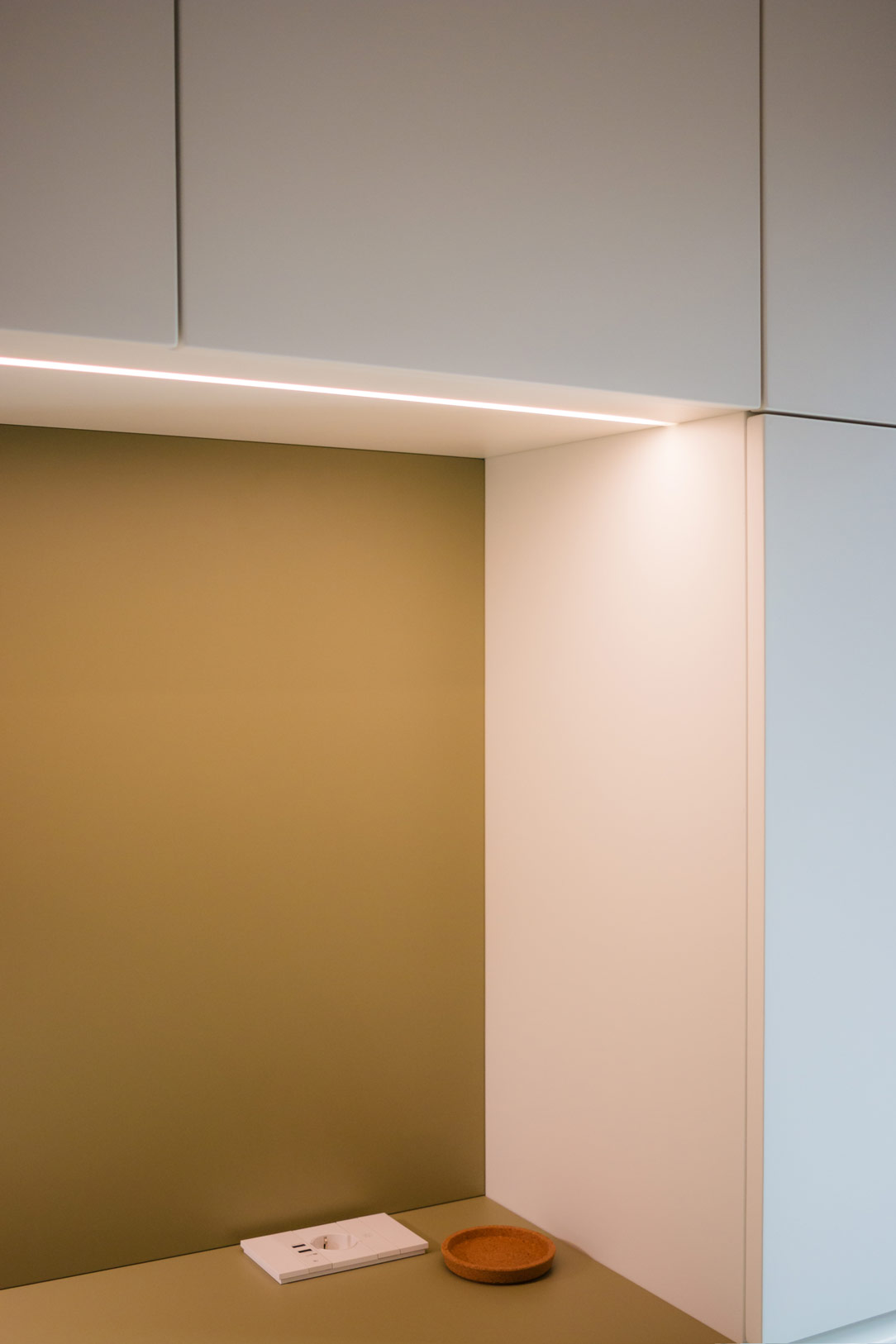
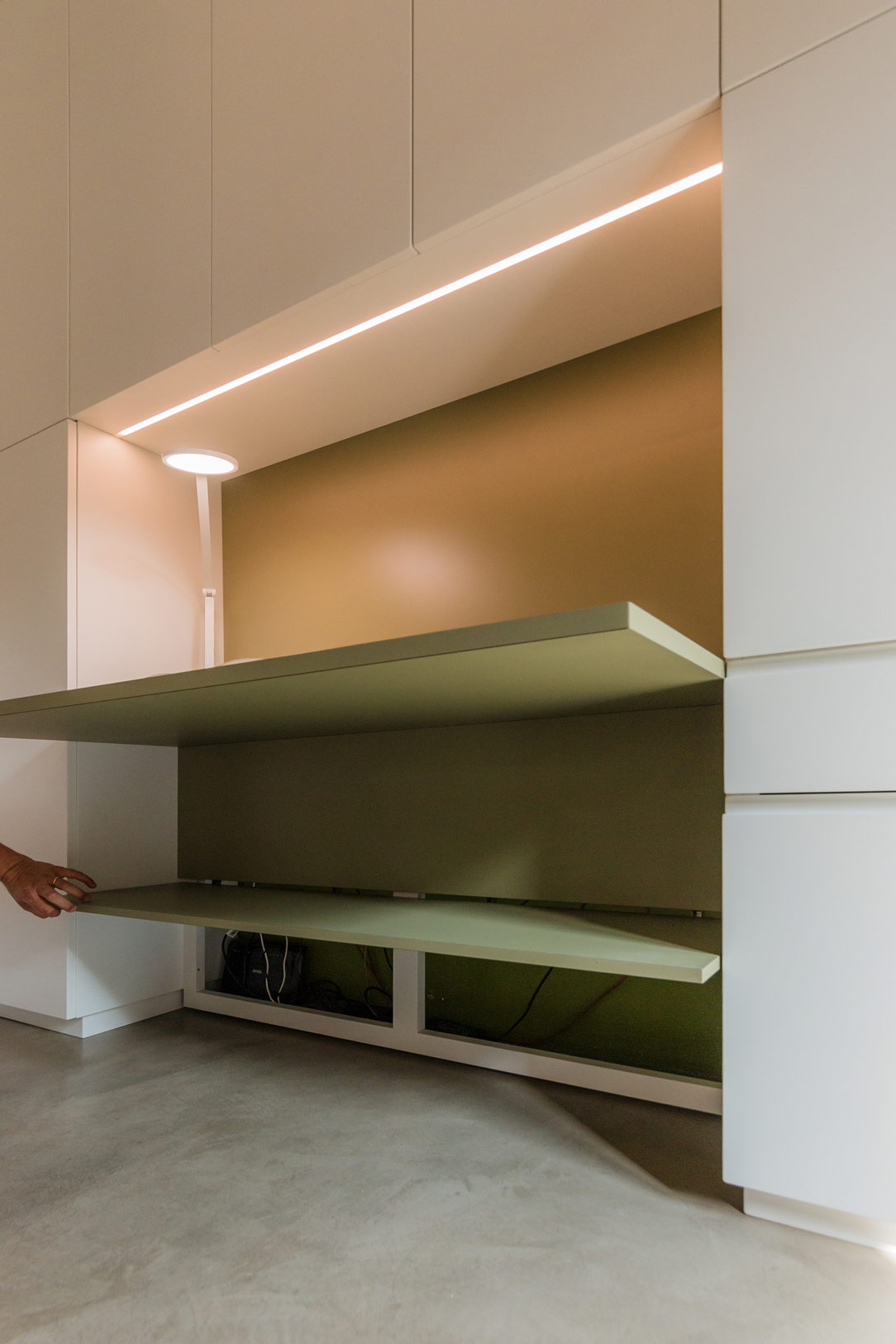
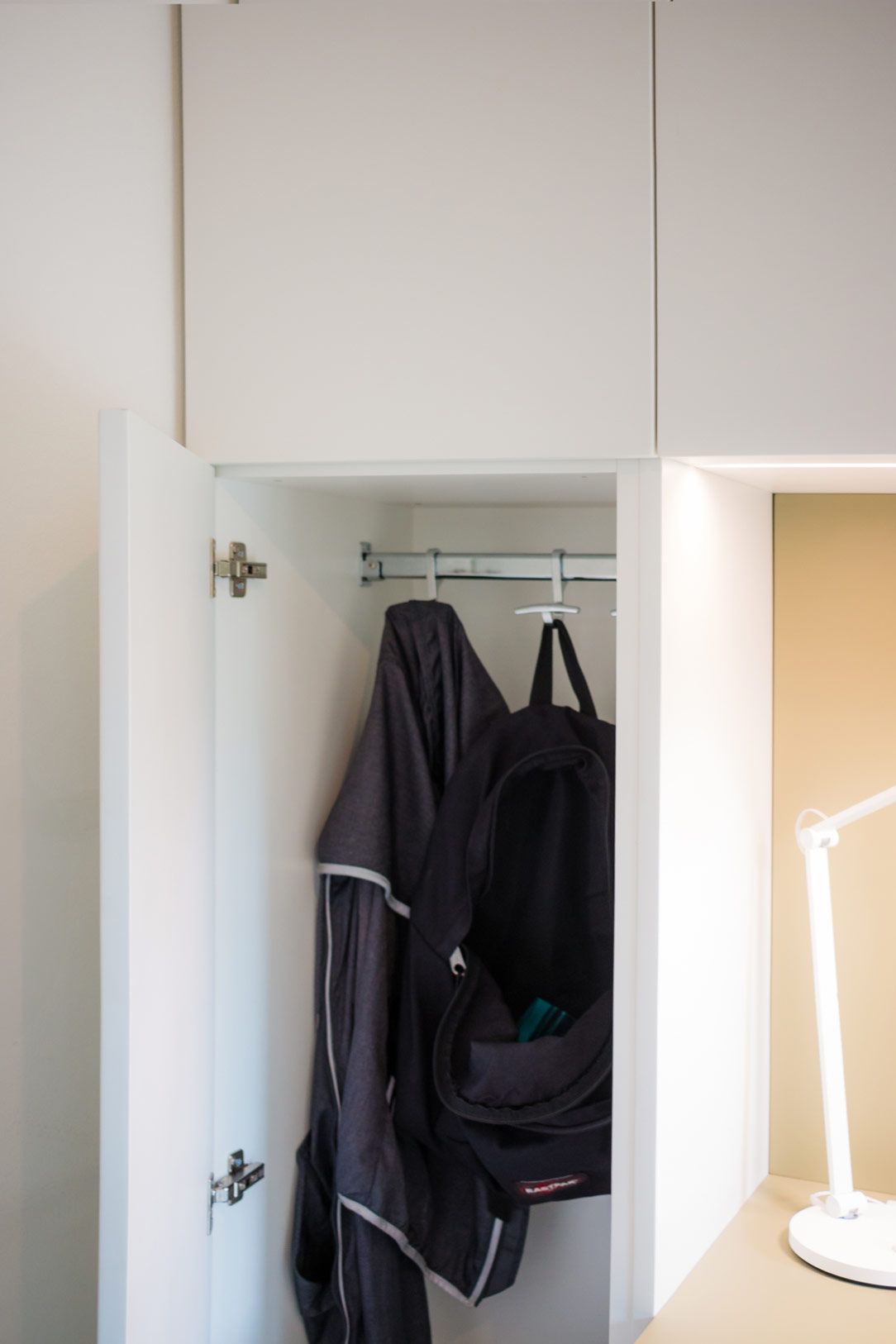
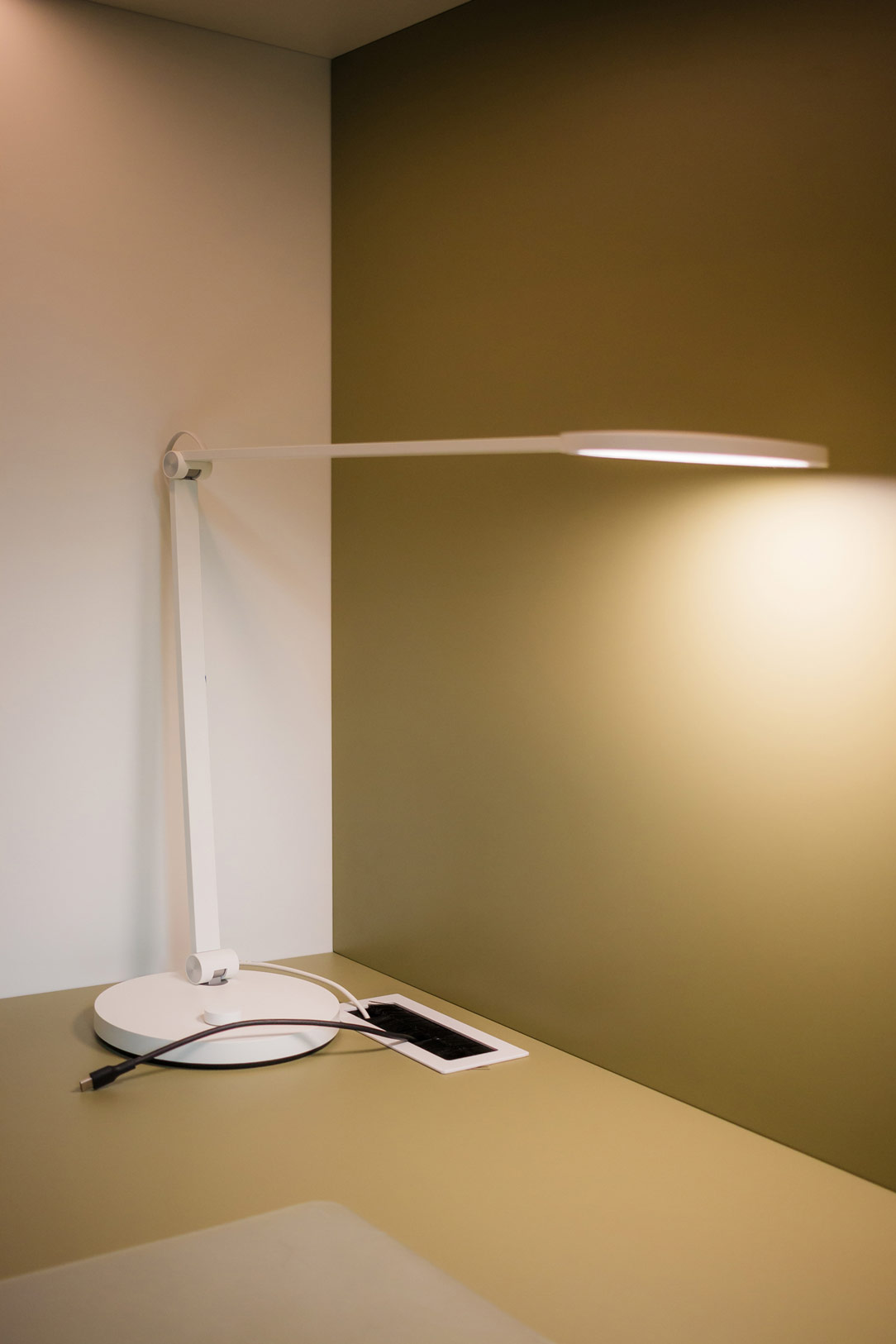
The two lateral sections serve the living area, hosting kitchen supplies and, thanks to a hanging bar, some coats. Beneath the desk, an accessible rear compartment hides all the electrical connections and various devices, with switches and outlets available on both the desk surface and the back of the open element. In the desk niche, overhead LEDs provide targeted lighting for the work surface.

Here, we revisit our entire article dedicated to smartworking.

high LEDs
electrical connections
hanging bar

Chromatic Harmony and Style Details

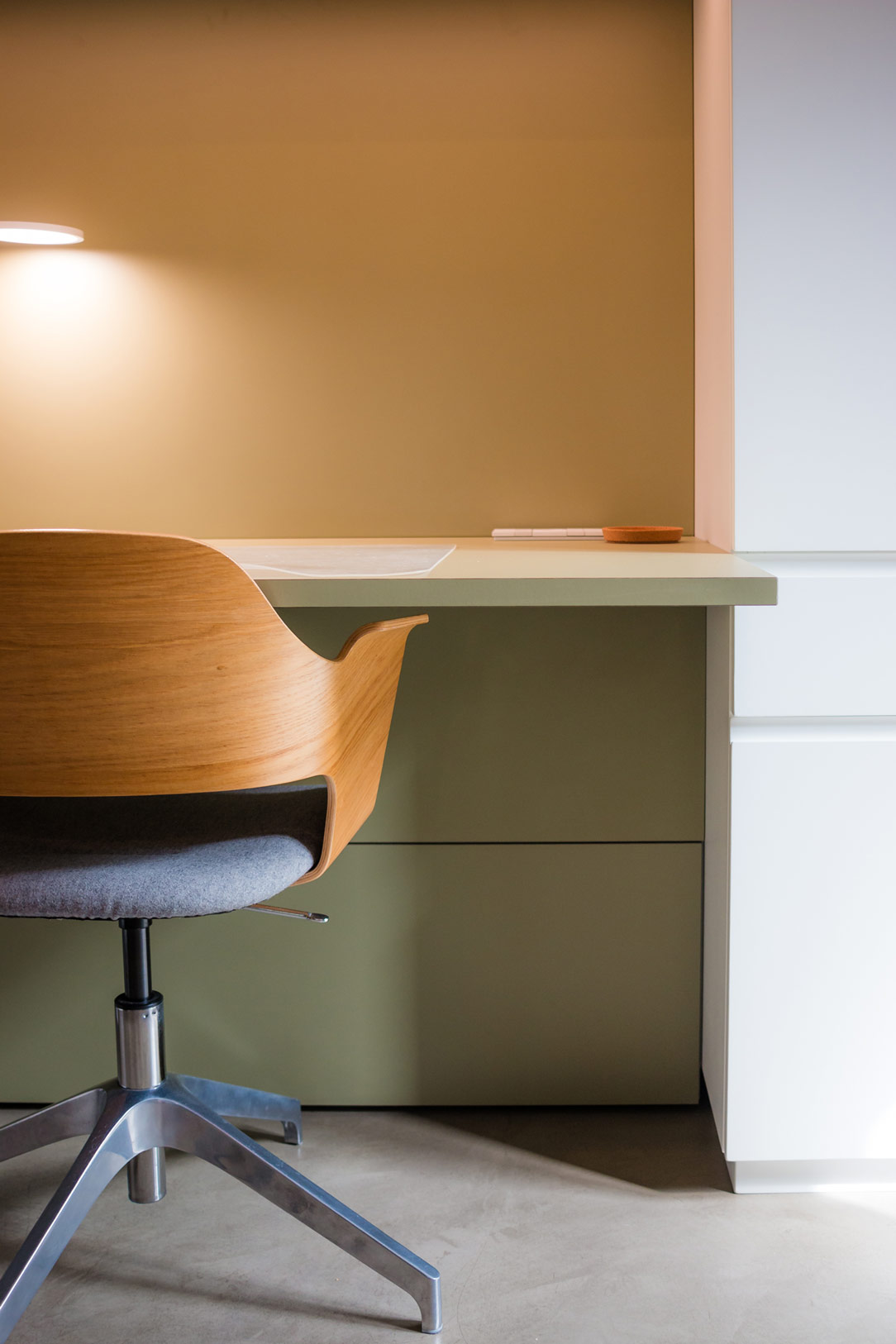
The immaculate white that characterizes the entire structure provides the ideal backdrop for two distinctive elements: the olive green desk and the open compartment in stained oak. These touches of color not only enliven the space but also create a visual balance that lightens the environment while maintaining a refined elegance.

We also find olive green in this kitchen in the Orobic Prealps.

equipped wall open and close
desk detail
detail lamp and connection

Conclusions

In conclusion, the equipped wall by Officina Idea represents the perfect blend of form and function, combining aesthetics, practicality, and innovation in a project that makes smartworking not only more efficient but also more enjoyable. An ideal solution for those looking to transform their workspace into an oasis of tranquility and organization.

equipped wall smartworking

Furniture for children according to the Montessori Method

Furniture for children according to the Montessori Method

Building furniture in Montessori style means creating a child-friendly, comfortable and accessible environment. The lines that characterize these furnishings are simple and the materials are natural, such as wood.

THE MONTESSORI METHOD

The Montessori educational method is based on free activity within an environment tailored to the structural and cognitive characteristics of children and teenagers.
The function of the environment and of the furnishings that complete their spaces is to allow them to spontaneously develop autonomy in all evolutionary areas. The environment must therefore be built in proportion to the child.
It must be beautiful, harmonious and clean, it must facilitate movement and activities, while limiting the tools.
A space free of obstacles and minimal, free to be experienced independently, without the help or interaction of an adult.
Children in these environments are free to choose, create, invent and become aware of themselves and their potential in a process of self-education and self-control.
Montessori pedagogy starts from birth and develops up to adolescence with the aim of making the child not only independent, but also responsible and aware towards individual, but also social growth.

MONTESSORI FURNITURES

A fundamental prerogative of Montessori furnishings is the possibility for the child to reach the object easily and independently for sensory activities.
Then leave it free to be “called” by the object.
Furniture with an impact that is not only physical but also visual, fantastic and emotional.
Elements that become playmates and life companions where adults are guests or spectators in the environment.

BOOKSHELF

To marry the Montessori principles is this bookcase, made at child height in order to encourage the free choice of the favorite book.
All or most of the books are displayed in full view and in an orderly manner, even better if with the cover visible and not on the edge.
The shelves are easily accessible while the closed parts are designed to make opening easy and intuitive.

 Allegra Montessori Library
 Allegra Montessori Library
 Allegra Montessori Library

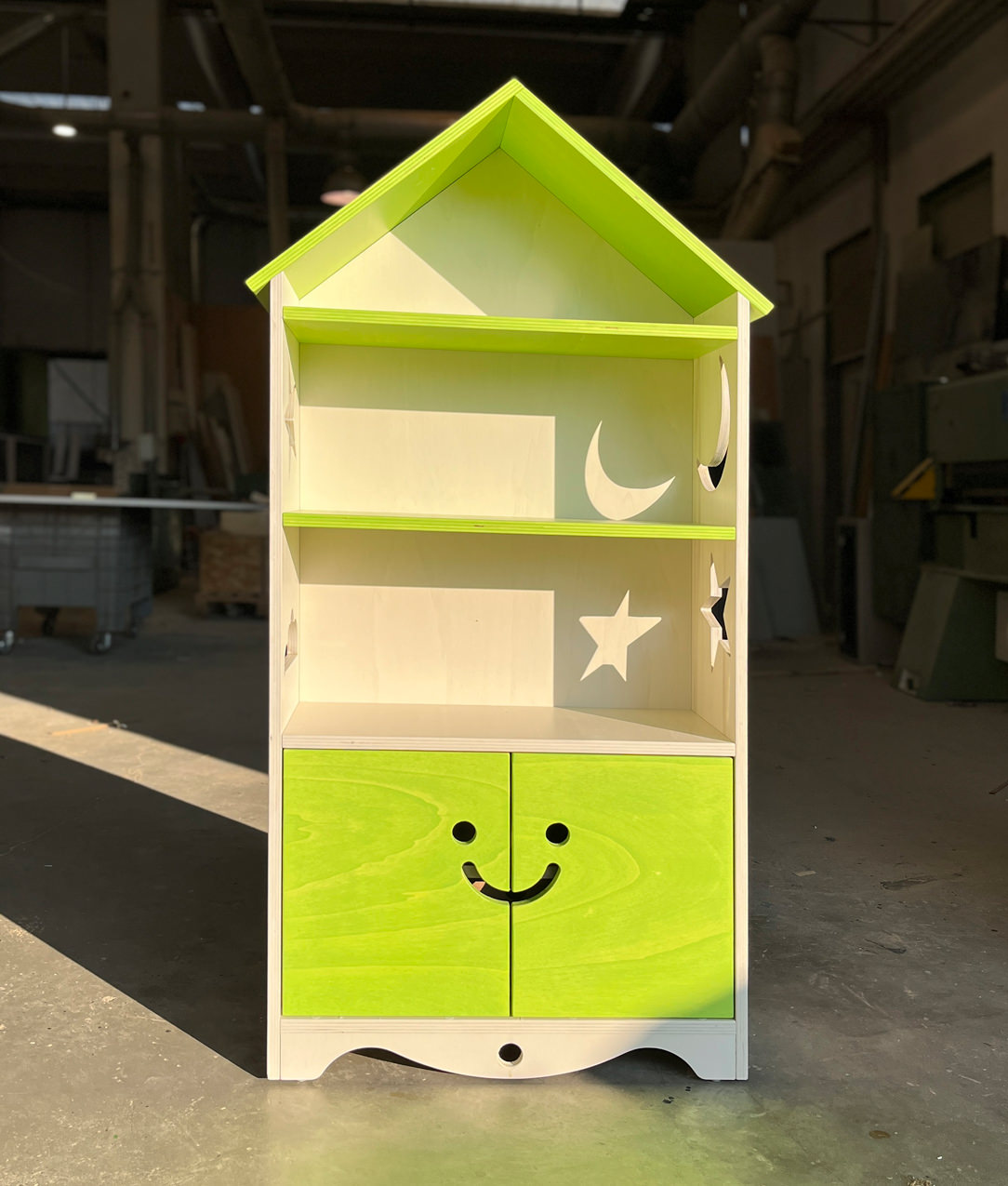
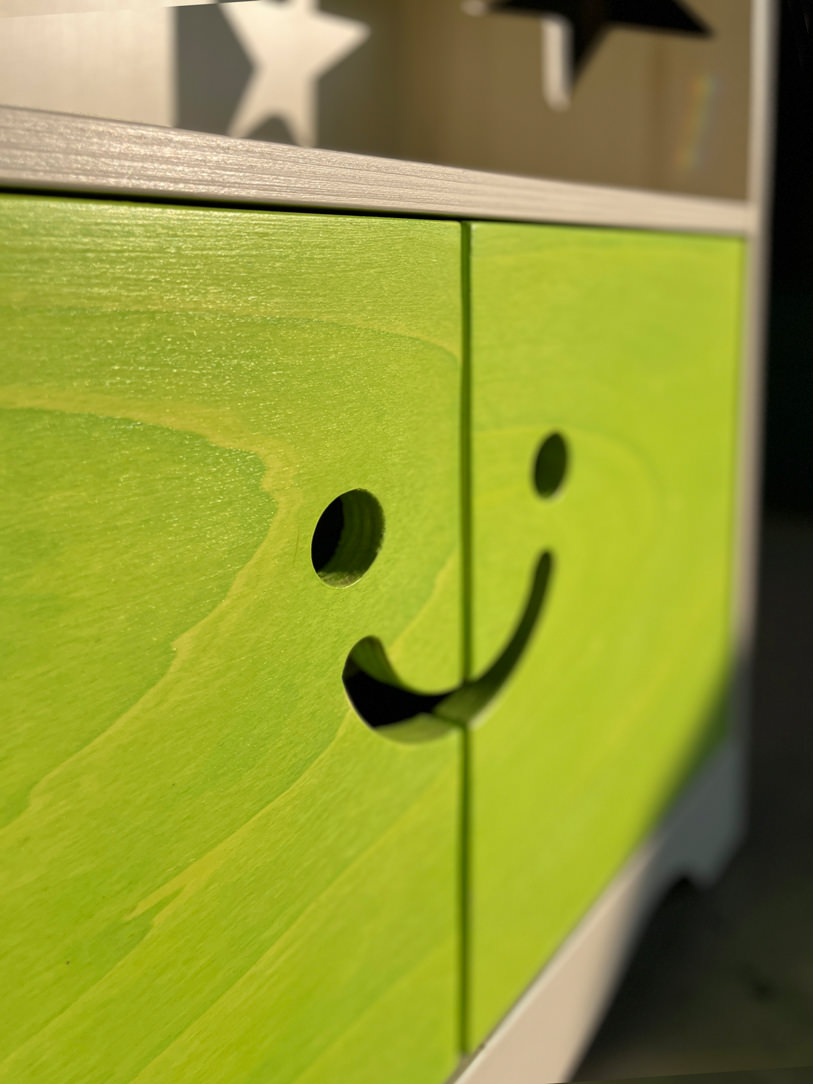
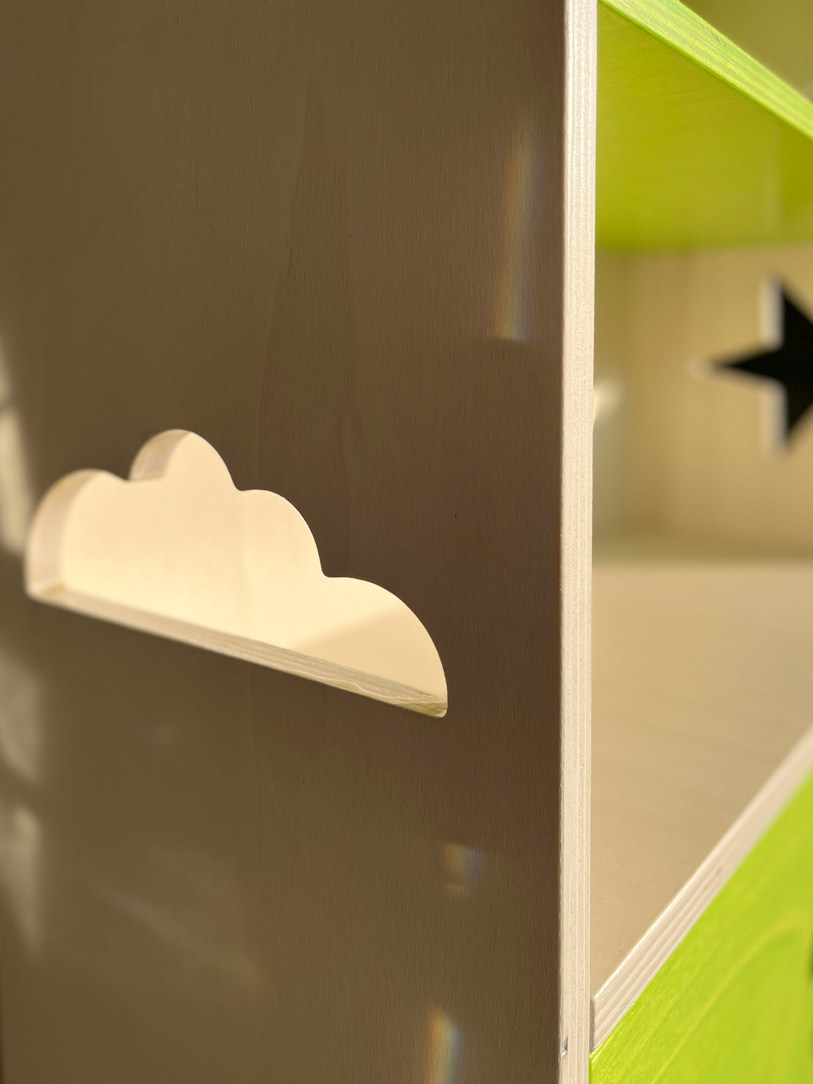
The “Little Cheerful Bookcase” in the shape of a house has shelves visible in the upper part and lower doors with a laser-cutted handle in the shape of a happy face.
The opening takes place precisely by inserting the fingers in the “voids” of the smiley, stimulating the touch for gripping the doors.
Internally, a shelf is available for any small items. Made of poplar wood it was subsequently painted with non-toxic water-based paints that still allow the natural grain of the poplar to be glimpsed.
All this to introduce the theme of colour, respecting the reference to nature present in the choice of material.

MONTESSORI TURRET

The Montessori turret is also called the Learning Tower.
This is essentially a wooden ladder that allows the child to stand up, in total safety thanks to the side bulkheads.
Thanks to this “elevation from the ground” all the adult furnishings, such as the kitchen top, tables or sinks, also become accessible for the child.
The latter thus manages to carry out, in complete autonomy, various actions such as brushing his teeth, hands or carrying out small household chores which allow him to acquire autonomy.
The steps of the Montessori tower also train the child in the actions of going up and down which he will have to deal with when dealing with higher stairs.

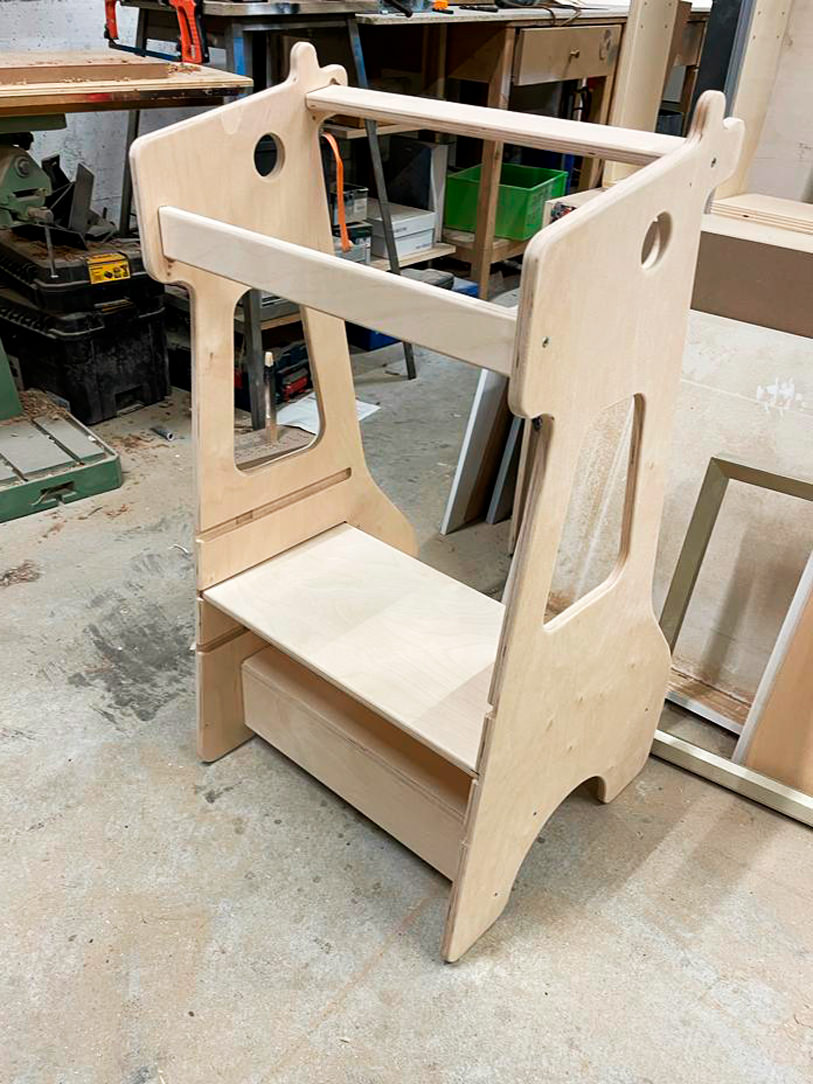
 Montessori giraffe turret

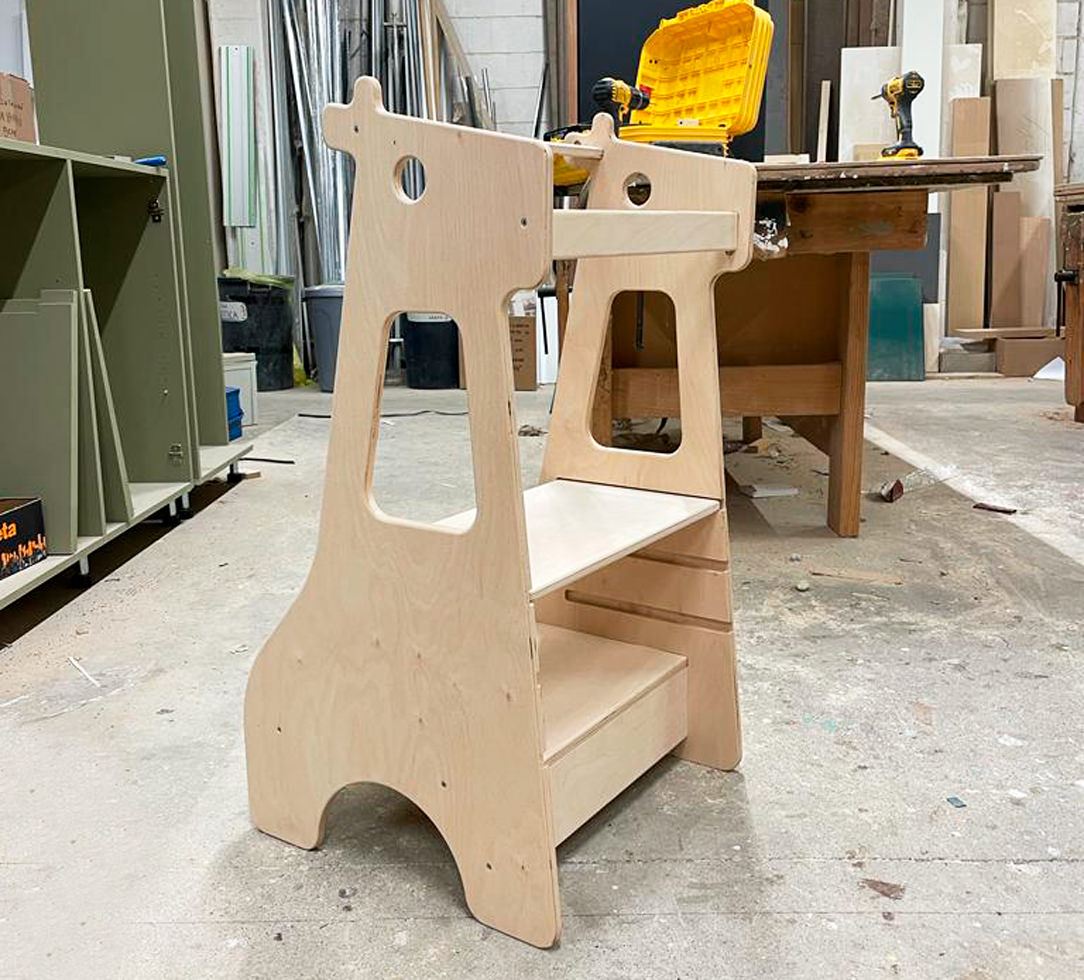
Here is our creation in the shape of a giraffe in which the second step is removable and can be raised according to the height of the child.
This turret is a useful accessory and can also be used as a stool; in fact, the child can sit on the first step and the second shelf acts as a back support.

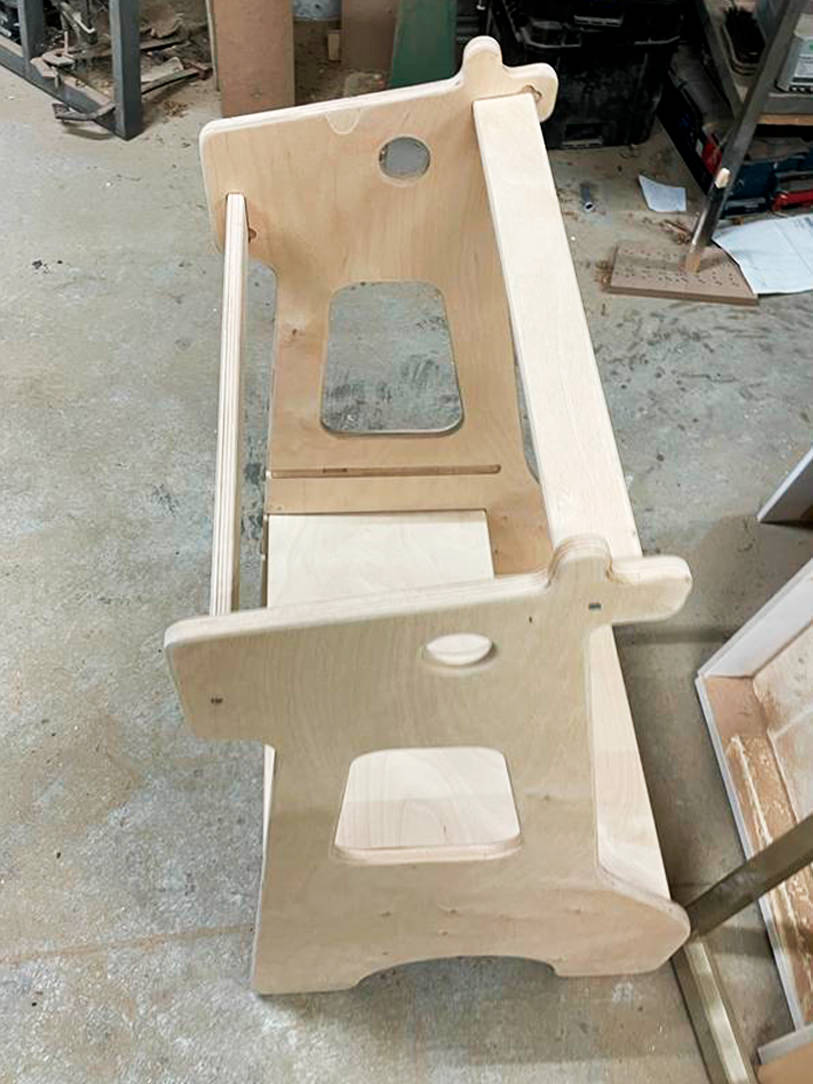
Montessori giraffe turret detail

An example is our giraffe-shaped creation in which the second step is removable and can be raised according to the child’s height.
A multifunctional element, it can also be used as a stool using the first step as a seat, while the second shelf acts as a back support.

MONTESSORI BEDS

The Montessori bed is mainly characterized by its height designed to allow the child to get on and off in complete autonomy.
There are no side bars to impede movement, freedom becomes a design metaphor for essential and intuitive furniture.
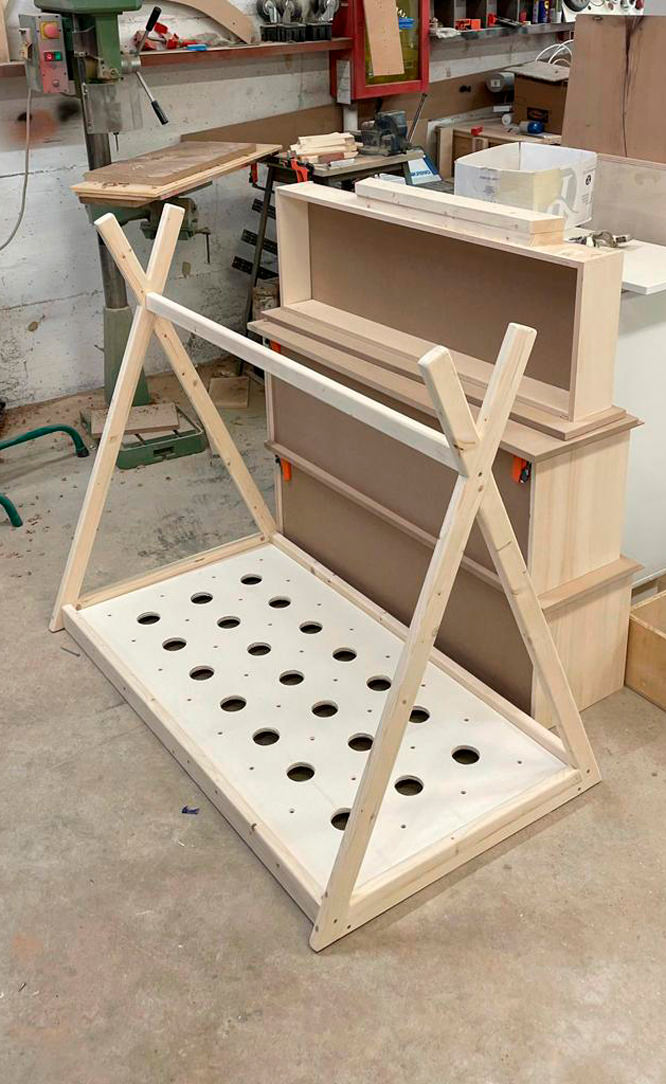
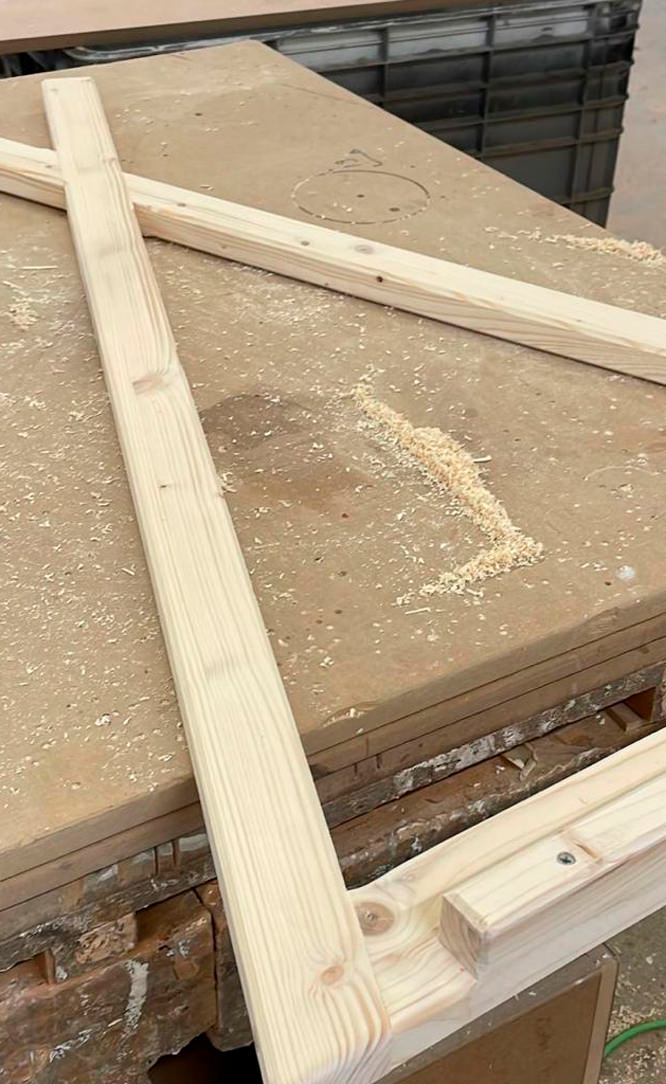
There is therefore no back headboard, but the mattress is rather embraced by the surrounding wooden structure.
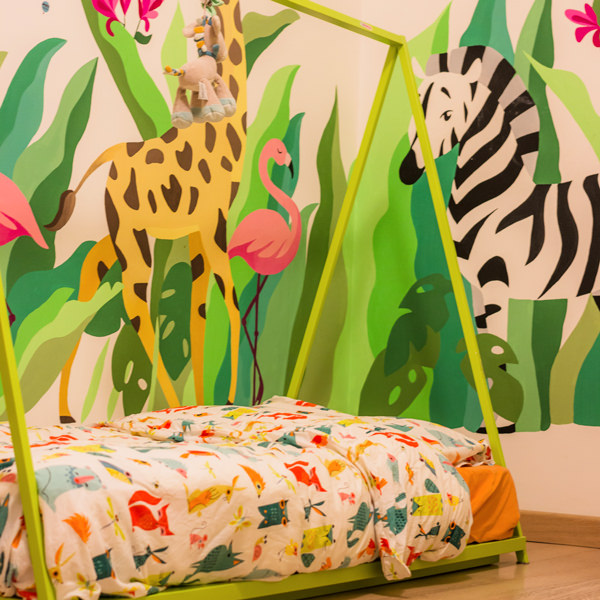
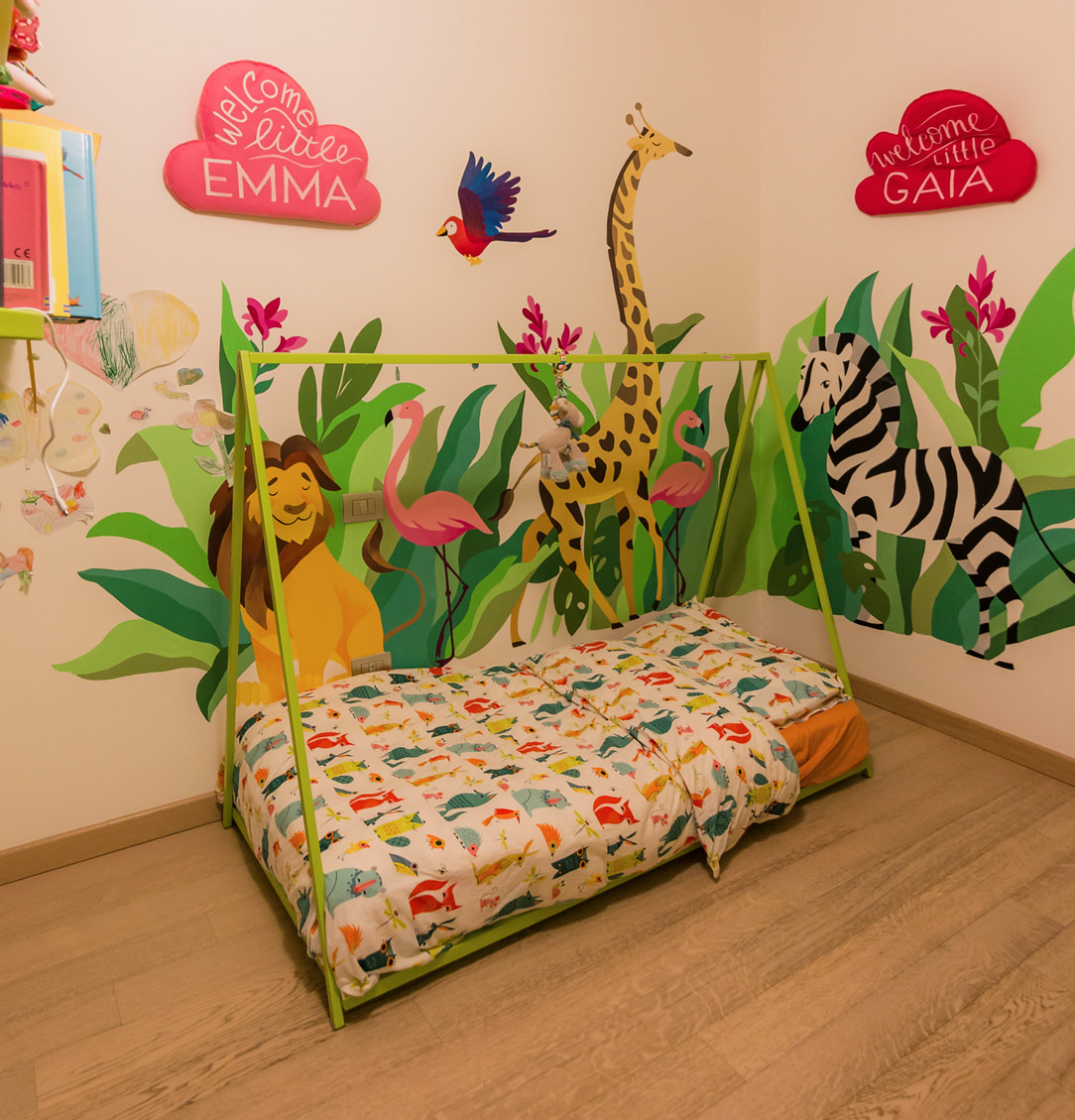
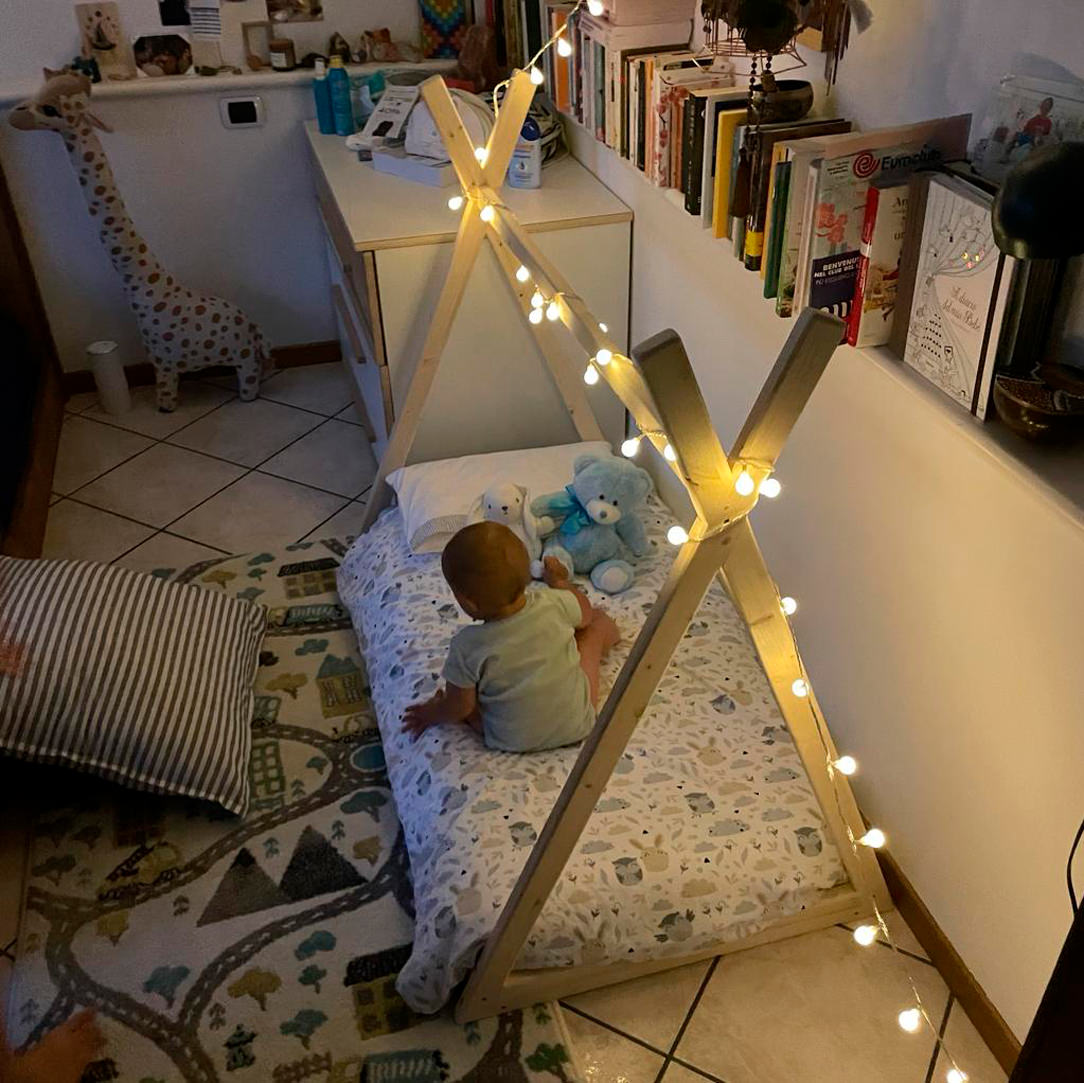
Montessori cribs can have side bars that give them a cottage look or, as in these cases, an Indian hut.

Montessori bed
Montessori bed details

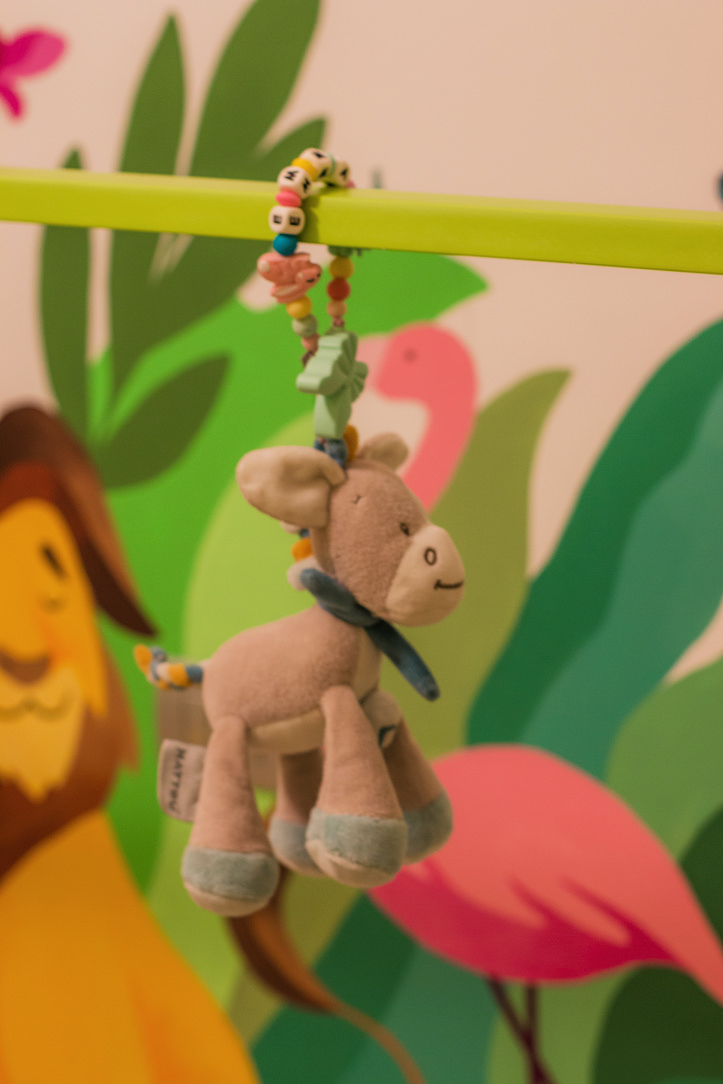
Lights, toys or possibly a sheet can be hung on the upper bar to underline the feeling of den and protection.
The vision and perception of the child inside his bedroom are therefore total visual freedom of the entire environment and his surroundings.

Montessori bed light
Montessori bed back
Montessori bed light

The bottom is rigid and breathable, becoming an excellent support for the development of the spine.
Although the Montessori bed is extremely safe, also thanks to the reduced height, a useful tip is to introduce it starting from the year of the child when he becomes independent in walking and moving.
Here is another of our articles dedicated to the safety of children in the home.

PIKLER TRIANGLE

The Pikler Triangle is a game-tool created by a Hungarian pediatrician, Emmi Pikler, based on the Montessori Method.
According to Pikler, it was important to follow the pace of development of each individual child, giving them the opportunity to move and experiment with the body and its movements in complete freedom.
In order to express their emotions, the child uses movement as the first means of communication.
For this reason, leaving them free to move and experiment is very important for growth and psychomotor development, as well as relational and emotional.

Triangol Pikler
Triangol Pikler
Triangol Pikler

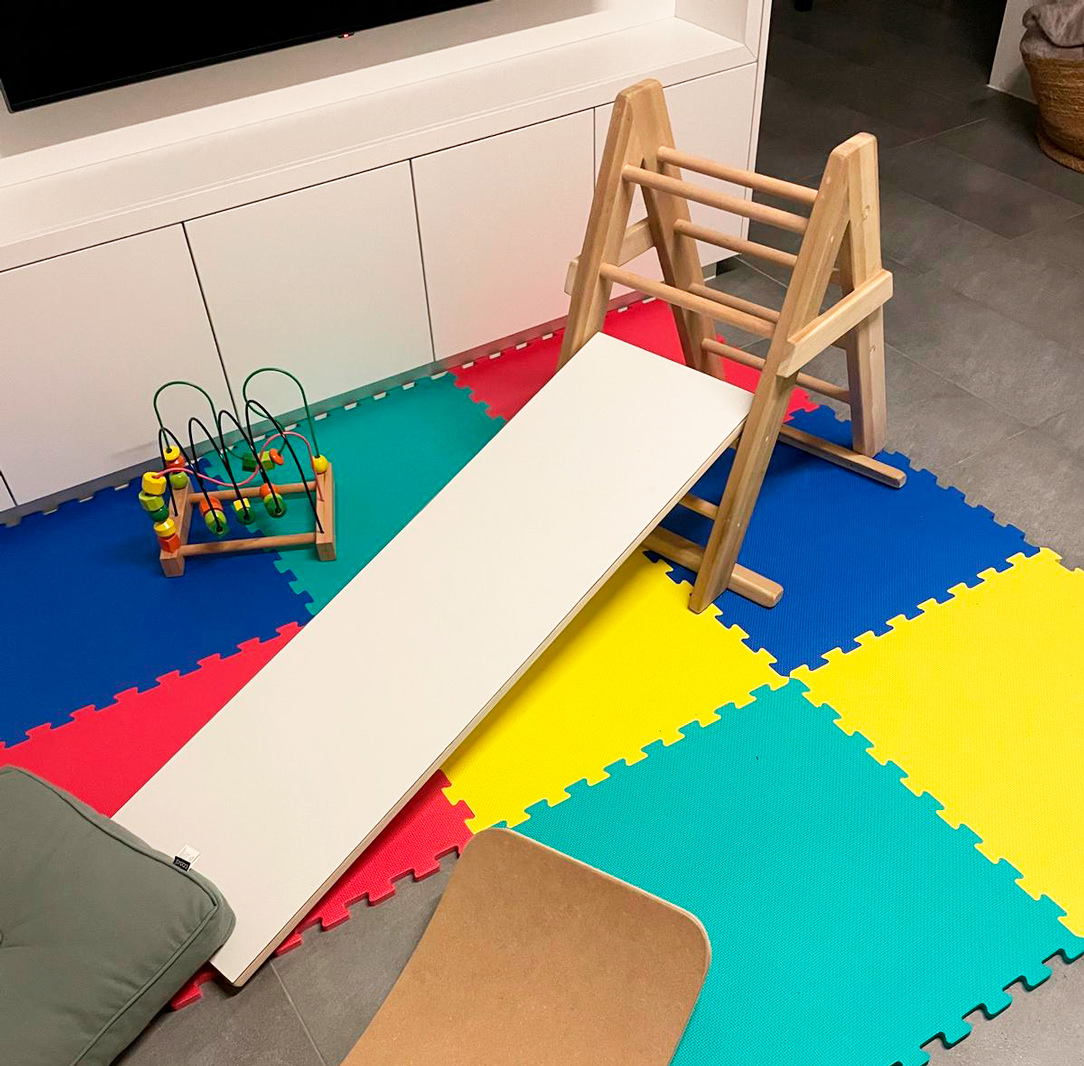
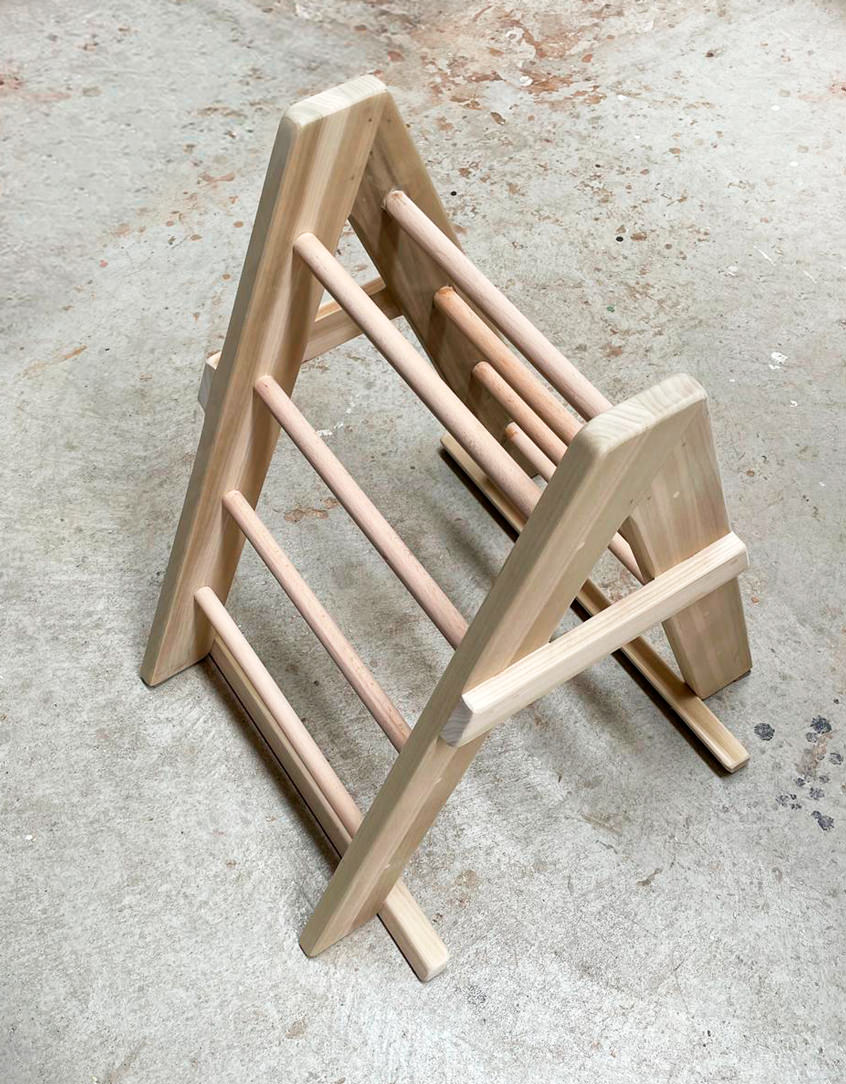
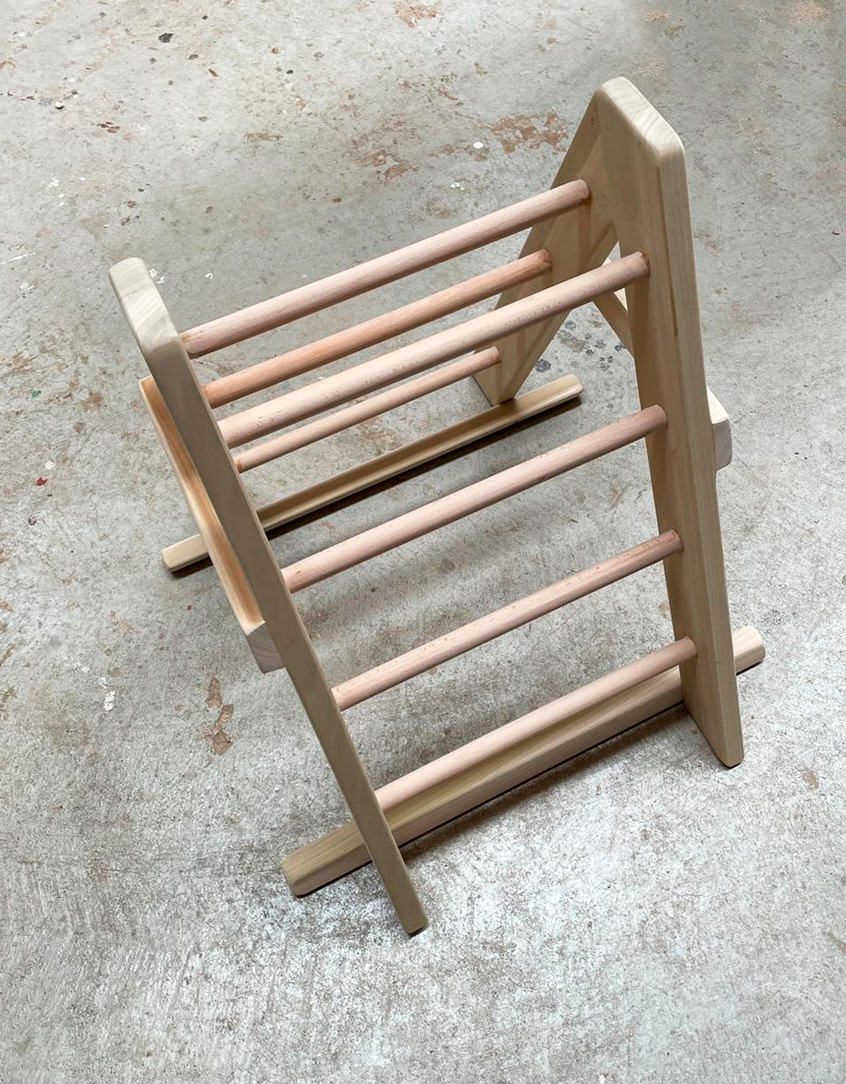
Here our Pikler triangle, characterized by a triangular-shaped wooden structure which can be associated with a platform-ramp, which hooks onto the pegs of the triangle. The latter can be used by the child to climb, go up or down and in a thousand other imaginative ways.
With this tool, children learn to discover and understand the movements of their body, control and manage movements, coordinate themselves.
It favors the development of the autonomous motor sense when used to climb, go up and down, but it is also an interesting stimulus for the imagination when used as a tunnel or hut, or much more.

CONCLUSIONS ON THE MONTESSORI METHOD

Montessori pedagogy is therefore not only based on independence, freedom and respect for the child’s natural physical, psychological and social development, but also on a sense of responsibility and awareness towards the network that links every small entity to a larger macrocosm.
Children deserve spaces where they can move, play and sleep, wake up and experiment.
Sometimes we think that a newborn baby is small, vulnerable and unable to open up to the world, but that’s not the case at all.
By trusting the child, right from birth, his growth will be balanced and independent and he will feel more secure in each new step.